A Tea Addict's Journal

Entries tagged as ‘young puerh’

Young puerh prices (1)

February 15, 2007 · 4 Comments

I went back to the Best Tea House today for my usual visit. I dropped off some of Rosa’s tea, although most of it is still with me. I also tried a bunch of teas, none of which I’ve had before. They got some new goods, and so I was eager to give them all a shot. Talking about them, however, would be boring. Instead, something else popped into my head today.

Prices at the Best Tea House, for young, raw puerh anyway, is all over the place. For example, I tried a very expensive new cake today from the Jingmai area that was entirely unremarkable and boring, not to mention weak and unappealing. Tiffany tried it once before, and thought she just didn’t brew it right because she was rushsed. After today’s tasting, however, she realized that it wasn’t so much that her brewing was bad, but that the tea was bad. The price, however, is mystifying. It’s much more expensive than some of the older stuff which are also better. No idea why, really…

Then you have some cakes that are really quite cheap (relatively speaking, anyway). The one I bought last time was one of them. Of course, then I discovered that I could get it off taobao for a slightly lower price, but given the hassle of using that service and the shipping cost, the price was basically the same… and this is from a store with a much higher overhead!

In some ways, this is sort of a microcosm of the young puerh market in general. Prices are all over the place for all sorts of reasons, most of which aren’t even logical. Much of this, I think, derives from a lack of information on all fronts. There is a lack of information on the side of the purchasers, of course. Services like taobao and access to markets like Maliandao (provided you’ve done a lot of walking on the street) will give the consumer a good idea of what might or might not be a fair price, but both activities take a substantial amount of time to do. Most consumers don’t have that kind of time. When you can only rely on your local teashops and when you only shop for tea once every, say, two weeks, it’s hard to know what’s a fair price for what kind of goods.

There is also a lack of information for the retailers as well. Many times the retailer is simply selling stuff that they got from whatever source they have, and mark it up the usual % and resell it. Quality is not always involved in the calculation of the prices. Much of this is also arbitrary and unpredictable, depending on many factors such as storage, fame of the cake, production numbers, etc, all of which affect the price of a particular tea. At the Best Tea House, for example, I have seen 15-20 years old cakes, wet stored, going for half the price of a 10 years old cake, dry stored. This is quite normal. I have also seen entirely new cakes be almost 10x different in prices, despite a similar quality. I cannot understand the pricing. I think how much the tea cost the retailer in the first place plays a heavy role.

On the other hand, there are the genuine attempts to deceive consumers. At a place like Best Tea House, you can be assured of a fair quote, no matter who you are. That is not true on the mainland, where everybody gets a different quote. For example, I have asked L to get quotes for me from the Haiwan Factory store for some of their cakes. He got them for me. I then went back with him a week later, asking the same question for the same prices. I think I got a different salesperson that day, and not surprisingly, the quote was different by about 15%. It was actually lower, but it could’ve been higher as well. We just laughed it off as a funny incident (especially since he’s actually a tea vendor, when I’m not), but without transparent prices, such things happen all the time. I’ve personally experienced them many times on Maliandao, and I’m definitely not alone.

While prices are lower at a place like Maliandao, getting the low prices involves substantial work and a reasonable amount of knowledge and experience in dealing with these people. I have seen a dramatic decrease in the prices I pay for puerh in Beijing over the coures of the year. Although you might think it is nice to get the low prices, in some ways, those buying tea from the US or Europe or elsewhere, especially those purchasing tea over the internet, have a much better and easier time. Even though prices are obviously higher through ebay vendors than what I could get at Maliandao, prices are also transparent and more importantly, stable. While prices do rise, they do so in a slow and predictable fashion. Whereas Dayi tea in China over 2006 has seen times when it was literally “one day, one price”, internet prices through ebay were the same for the same 7542, 601 batch. That itself is a bit of a blessing. In fact, some of the ebay items are selling at basically no premium over what the current market prices for the same tea in China. Since ebay consumers probably won’t tolerate a 40% price hike in the course of a few months, the prices can only stay the same, or more or less the same.

Raw material prices for old, big arbour trees in Yunnan have been shooting up by something like 50% a year. This year, from what I have heard second hand anyway, raw leaves prices are the highest in Lao Banzhang, reaching 550-600RMB for one kg of maocha. Yiwu is second, clocking in around 280-300 or so. Jingmai is a bit lower, and then you have the rest. This is only what I have heard. Work in some attrition of maocha during production, add in sundry costs like pressing and transportation and overhead and stuff, and you can roughly work out how much a cake of these old wild arbour trees should cost to make and to be sold at a profit by the people who first made them.

How much they retail for, however, is an entirely different subject. As I have noted, pricing is all over the place, but I think it would be quite unreasonable to charge anything more than 300% of raw cost of the tea for retail, more if it’s being sold overseas (as it’s been through somebody else’s hands). The more hands its been through, the more it would cost. Other factors come in, such as the kind of market the store serves (i.e. stores that are located in CBDs with pretty salesgirls and fantastic decor will sell the same tea for more, obviously). Factory reputation come in (the Dayi premium, for example). The stories, unfortunately, also come in (this is tea made by so and so when he discovered a new field of tea trees in xxx area, unharvested for a long time!).

More on prices tomorrow. This is getting too long.
Categories: Information · Old Xanga posts
Tagged: , ,

Hong Kong is wet!

February 13, 2007 · 7 Comments

I got back, got off the plane, and the familiar scent of a slightly damp city graced my nose. Hong Kong is always wet, and it seems like the super wet weather of spring is hitting early this year.

This leaves me a bit uneasy with my tea stash here. In Beijing I never worry about moisture, because it’s always too dry there (I put two bowls of water in my tea cabinet, so to make sure that the water doesn’t run out before I return). Here, though, you can feel the wetness.

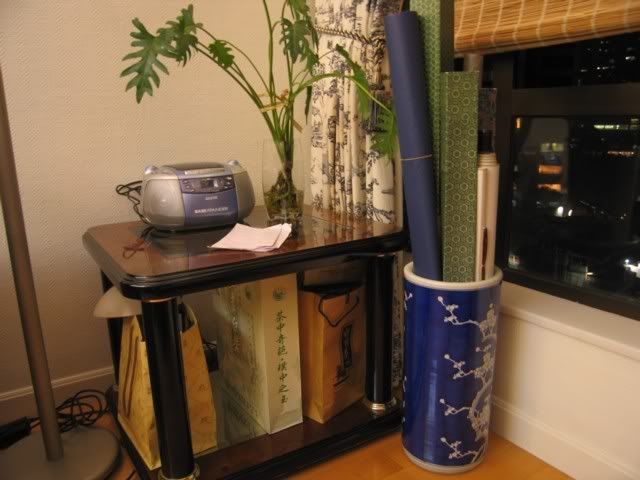
This is where the tea was stored

The place, as you can see, is not ideal. It’s next to the windows, so when the windows are open (as it was when I came back) there was a slight breeze. It brings a lot of moisture through the air. Although what’s stored there are just two tongs (the other loose cakes are in a paperbag on one of the bookshelves), I worry about it. I could sort of smell the tong wrapping. I opened one of the tongs up to check… the cake almost feels damp. It’s wet all right. Time to move them.

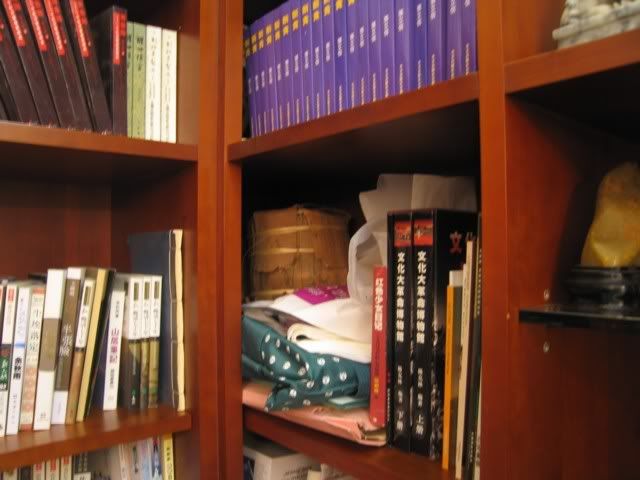
So I cleared out a little corner of one of the bookshelves and put my tongs there. Take a peek

I need to clear the area out a little better, but it will do. I am thinking of making one shelf tea related stuff, if my dad will let me. After all, I don’t have a room in this place and sleeps on the murphy bed in the study.

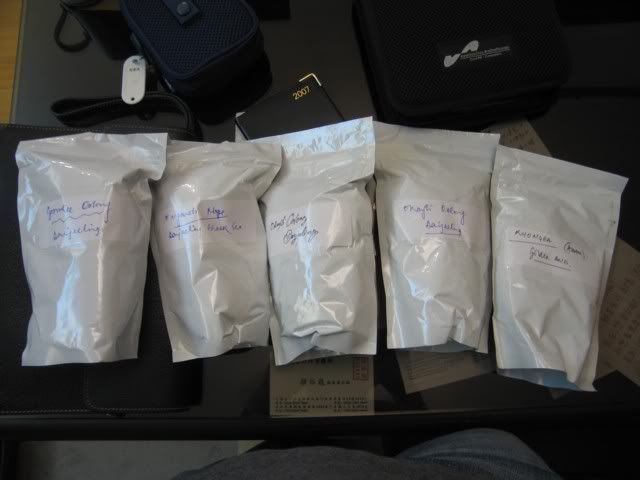
Other than my puerh stash, I also got a nice package in the mail:

These are tea samples from Mr. Lochan of Darjeeling. They’re actually all big bags… 100-200g each, I think. That’s a lot of tea to drink. I might give some to the Best Tea House folks to try.

Anyway, time to turn in. I think I am going to deliver Rosa’s tea tomorrow (which, incidentally… put my luggage over the weight limit…)

Categories: Information · Old Xanga posts
Tagged: ,

Maliandao again

February 11, 2007 · Leave a Comment

I went back to Maliandao again today, mostly because I have to do some more pre-holiday shopping. This is, after all, a few days before Chinese New Year (or as my girlfriend always reminds me, Asian New Year). I ended up with one cake of puerh, and also some more teaware. I still haven’t completed my purchases (things are just soooo much cheaper here than Hong Kong or the US). A friend, DY, is asking me if I want to go tomorrow. I just might….. since the library is not open anyway (yeah, they’re closed on Mondays).

I also tried some teas today, mostly young puerhs of various kinds, although I went easy on the amount of teas I drank. All in all… nothing too remarkable. Of interest was a Yiwu from 2002. It’s been sitting in Beijing for two years, and on a shelf in the store. Let’s just say the tea was extremely dry (i.e. the leaves are flaky and were crispy). The tea was terrible… bland, rough, and worst of all, it sucked all water out of my throat. I felt really unwell after drinking that thing, and needed to get some water to flush it out. There’s been a few times when I’ve tried these “on the shelf” teas from Beijing that have been sitting here for a while, and the result is almost uniformly bad. I think the weather here really is too dry.

I also tried my Yiwu tea again that I so coveted. This is probably the last time I’m going to drink it for quite a while, as I decided I shouldn’t waste it by drinking it now, but instead should let it age a bit before touching it again and see how it has progressed. It’s a little rough, but the body is full and the flavour deep. I’m still pretty happy about it :).

Categories: Old Xanga posts · Teas
Tagged: ,

Two teas today: darjeeling + Xizihao Mengsa

February 8, 2007 · 4 Comments

I was bad and drank two tea today.

I came home after lunch, and since I had an hour before the library opens again (they close for lunch), I decided to make some tea to kill time. I brewed up the darjeeling I got from Hong Kong this Christmas.

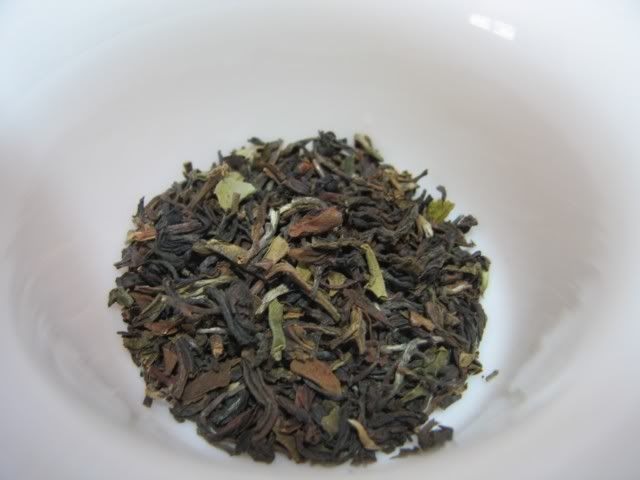
It’s…. a darjeeling, first flush, methinks. At least the way it tastes and smells and looks are first flush quality. No specific estate, so I have no information beyond that. It is quite tasty, and brews a slightly darker infusion than yesterday’s Lochan

3rd infusion

The tea is less rough than yesterday’s, although it could also be because I was managing it very carefully to try to make a tea that is less rough on the tongue. I managed to get about 5 infusions out of the tea, at which point it was clearly dying. The fragrance from this tea is less immediately stunning, although I think it has a deeper flavour than the airy aroma of yesterday’s. What taste is this? I don’t think I know how to describe it.

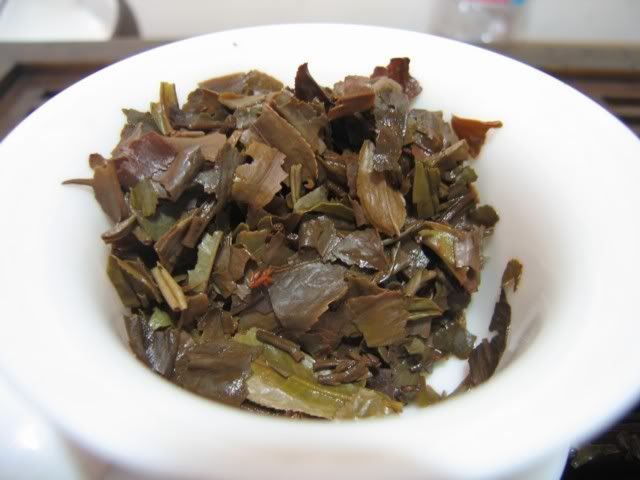
Wet leaves — typical Indian tea, very broken

After library, I got home… and felt like I didn’t drink any tea at all. 4-5 infusions of darjeeling just didn’t cut it.

I rummaged through my ever-growing collection of sample-sized teas, as well as tins and cans and bags of stuff. I’m sure most of you who read this blog know exactly what I mean — there’s always more tea than you can ever finish drinking. Among them, I saw a Hou De bag… one that I have completely forgotten for a while. This is a sample of the 1999 Mengsa from Xizihao. I looked in the bag… there was enough for an infusion! So…. out it came.

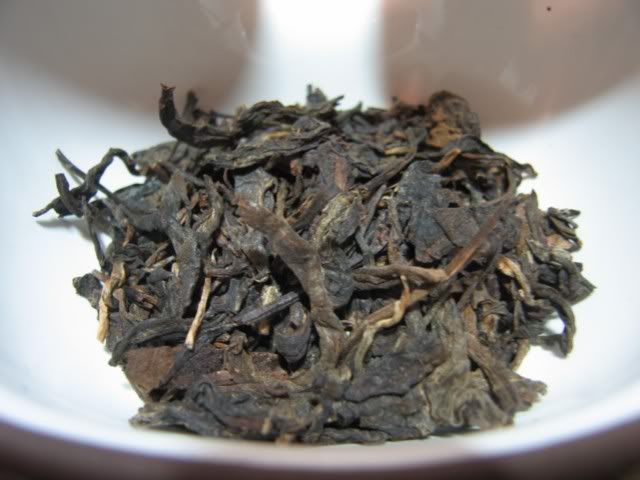
I was sniffing the leaves and noticed something — it seems to have absorbed some of the paper bag’s smell. After all, it’s been in the bag for more than half a year. It’s only natural that it soaked up some of the smell, but that is not a good thing. I immediately dumped the other Hou De stuff from the paperbags into little plastic bags that breath a little. I think that is a better option. I peeled off the labels so that they could be easily identified and threw those in the bags too… if you have Hou De samples lying around aging, you might want to check and do the same.

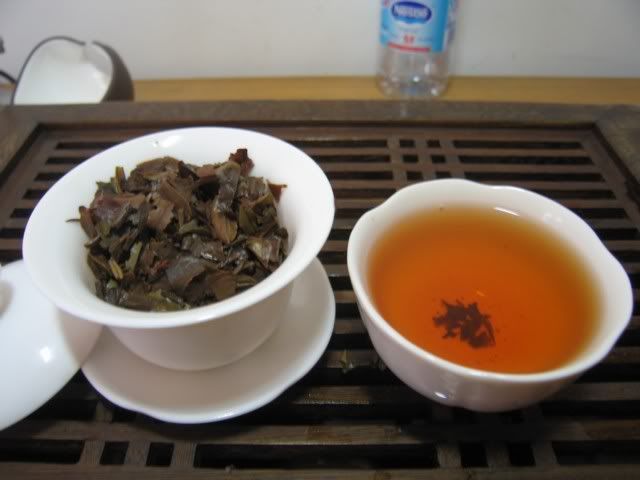
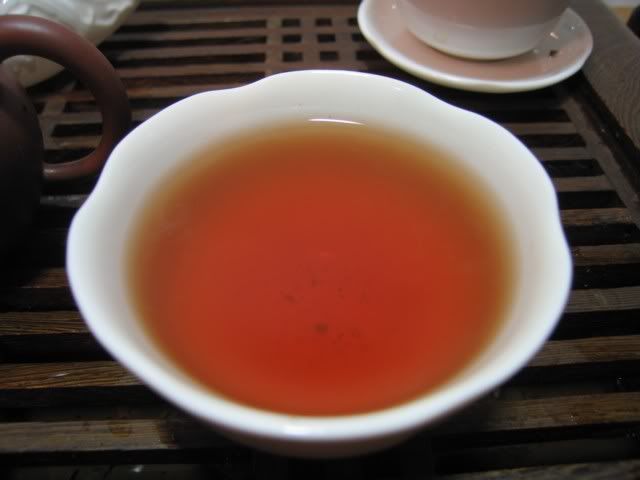
There was actually slightly too much tea for one infusion, but I didn’t want to leave a tiny bit of tea behind, so I brewed it all anyway. The first two infusions were a little off, no doubt due to the paperbag. It had an odd flavour, a little unpleasant, and bitter. The liquor looks nice enough

By the third the tea improved a bit. However, whereas I remember being quite impressed with the tea the first time I tried it, now I’m not so impressed anymore. Perhaps this is extra experience from the past year, when I’ve drank my way up and down Maliandao and Hong Kong shops. Perhaps it is poor aging. I’m not sure.

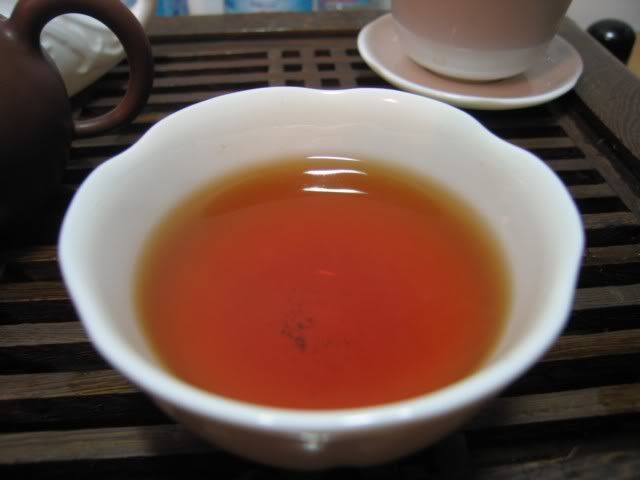
The tea retains aromas that are similar to what I remember it had last time I tried it. There is something that I didn’t notice last time though, and that was a little sourness… there’s some sourness in the tea, most prominent during the 2nd to 4th infusions. Dry stored teas can have a sour edge to it, and this one showed. It wasn’t very nice drinking puerh that was slightly sour. The sourness went away around infusion 5, and the more characteristic puerh sweetness returned, but it already left a bad taste in my mouth.

Infusion 3

Infusion 8

It generally seemed a little weak and thin, relatively speaking, especially considering the amount of leaves I used. It also went downhill relatively quickly, as puerh goes. It was still pretty flavourful when I was finished with it, but it wasn’t exactly impressive at any point of the tea.

One thing I noticed about the wet leaves is that the leaves of this cake seem quite heavily rolled, especially when compared with teas that are being produced now. Heavy rolling supposedly makes the tea a bit more bitter, but heavy rolling was the norm. In fact, rolling is getting lighter these days, because people like seeing their tea unfurl. I’m not sure that’s a good thing.

All in all, it was pretty interesting revisiting this tea. I remember the first time I had it, I thought this was better than the 1997 Yiwu. Then, on second try, I thought that the Yiwu actually was better than this. I no longer have a sample of the Yiwu left, but I think I would still hold the same opinion. Perhaps it’s just my taste that has changed.

Categories: Old Xanga posts · Teas
Tagged: ,

Late night tea drinking

February 7, 2007 · 8 Comments

I got some tea in the mail today, which would’ve made this blog entry, but then, I got called out by ZH to go tea drinking at around 7:30, so off I went.

By the time I got there it was already 8:30pm, but that didn’t stop us from drinking lots of tea. It was quite a nice little teahouse, actually. I really liked it, and regret not bringing my camera. Nice service, allows us to brew tea freely for a nominal charge, and really just a decent place all around. If only China has less smokers….

Anyway. First tea was a fired tieguanyin, supposedly with some years of age. It was difficult to tell, because, apparently, it was very recently re-fired, as they do from time to time to keep moisture out of the tea. That, however, means that it was harder to taste the subtle aged taste of a tieguanyin, and a lot of the roasted aroma instead. Not bad, quite mellow, and pleasant. Obviously aged. It’s just a matter of how much.

Then…. we had two Yiwus, side by side. One is ZH’s stuff, supposedly something like 8 or 9 years, I can’t remember now. It’s been in Beijing for about 4-5 years, and it shows. The tea, i thought, was only 3-5 years of age, because it looked young. When tasted, it had an odd aroma… something I’ve never encountered in a Yiwu before. It has a hint of what I know as the Yiwu flavour, somewhat aged, but it’s different in that the aroma of one particular aspect (sort of a spice… not sure what) is quite distinct. I think what it is is that because aging is slower here, it takes longer for the tea to pass through each stage of aging, and therefore what might be sped by in Hong Kong storage is instead accentuated here. Different flavour, for sure. It’s a little bitter and a little astringent. I think in some ways I prefer the Hong Kong taste.

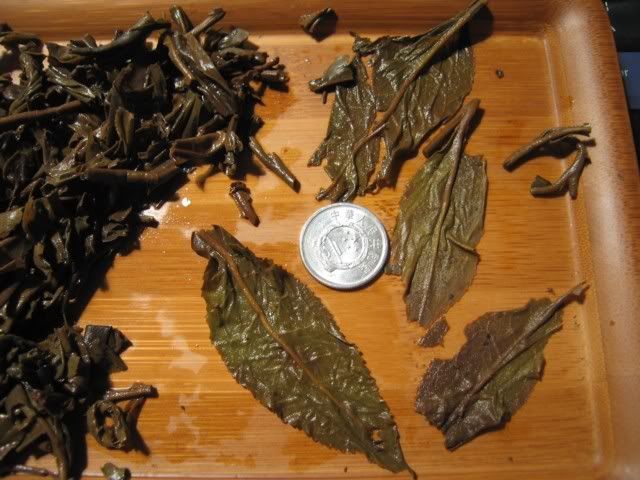
The other Yiwu is this — something I received very recently as a sample

The coin is there mainly for comparison, it’s about the size of a nickle. This is a 2006 fall Yiwu small arbor tree, made with tea that is about 20 years old, supposedly. This is stuff that many vendors try to pass off as “old tree”, “ancient arbor tree”, and stuff like that. I specifically asked for this so I could use it as a basis for comparison. Of course, if a tea tastes like this it doesn’t mean it’s necessarily a small arbor tree, but what it does mean is that it is small arbor tree quality tea, so it should command a similar price…

Anyway, the tea is nice, sweet, very very mellow, and very Yiwu. It is slightly on the thin side, compared with better, old arbor tree teas from Yiwu. It’s less aromatic as well. All in all though, not a bad tea. I might even consider getting a few just to see how they taste when aged, especially in comparison with all the other Yiwu I have right now.

After we went through some rounds of the Yiwu, we moved on to a cooked brick from the 80s in ZH’s possession. Oddly enough, it tastes somewhat like the Guangyun Gong I’ve had recently, with the exception that the GYG had a lot more yun, or aftertaste, than this one. This one is sweet like the GYG, but is not as “long” as the GYG. It also doesn’t last quite as long, and by about the 10-12th infusion, it was going downhill, losing the sweetness. It will be good for some more infusions if one were to boil it. Nice tea though, and very enjoyable.

Next was the “30 years loose puerh” from Best Tea House. I am now of the opinion that this tea is probably more like 15-20 years. Not 30, but then, it doesn’t really matter. It’s quite enjoyable, and quite nice, especially for a loose raw puerh that doesn’t cost an arm and a leg. As ZH mentioned, he feels indulgent when drinking stuff like his brick and this kind of tea. It’s old, and at the end of the day, the market price for this stuff is not low.

Meanwhile, we talked about teas in general, plans for Zhongcha this year, etc. The conversation is better than the tea, and that’s what really makes these gatherings.

Just when we were about done (I was all tea-ed out), we were thinking “is there anything more to drink?”. I was going through his bags of samples that he has (he has lots), and found an interesting item… Lochan Darjeeling. Hmmm, didn’t expect to see it here.

He got some through his work. Since I told him I have been chatting with the owner of the firm on the internet, he said “why not?”, and off we brewed. We didn’t use much leaves. It was a first flush taste — very light, green, almost white tea like. An unmistakable Darjeeling flavour profile. ZH comments how Indian teas in general can be so consistent, whereas Chinese teas are less so, usually. The aromas are quite pleasant, and quite strong. The liquor is light in colour. The tea is a bit on the thin side of things, and with one quite noticeable flaw — the tea, when drunk, is VERY rough. You know how some teas leave your tongue roughed up? Well, this is one of them, and quite seriously so. Part of this is a water issue, and playing with the water can help fix it. Part of it, though, I suspect is just the tea itself. This is extra apparent, probably, because we’ve been drinking a lot of very smooth teas today, so the roughness stood out.
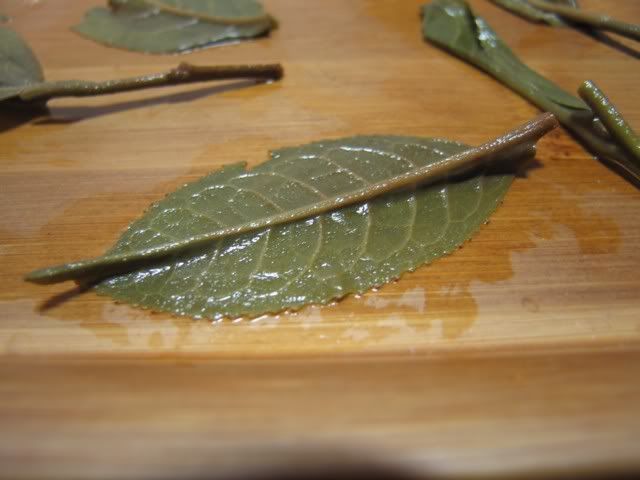
Then again, this is not a tea that was produced for gongfu brewing, I think. Instead, it’s made for a different style of drinking, where such roughness would be much, much less apparent and tolerated. Priorities are different as well. This in some ways exemplifies very well the different preferences of Western versus Chinese tea drinking. Western tastes are very aroma focused, with typical descriptions of a tea surrounding a particular tea’s taste — it’s about how a tea literally TASTES and SMELLS. Chinese drinkers, however, don’t only go for the aroma and the taste, but also how it FEELS in one’s mouth, on one’s tongue, and down one’s throat (or even after it’s been swalloed). These are equally, if not more, important to a tea’s overall quality and appraisal. For example, in Hong Kong when drinking tea with Tiffany & Co., if a tea is rough on the tongue, no matter the aroma, they will rate it as a bad tea. That is not to say it is really that terrible, necessarily, but to them, that’s enough of a sin to make it not worthwhile to drink. The same tea, given to another group of people with entirely different tastes, will receive very different reactions.
Categories: Old Xanga posts · Teas
Tagged: , , , ,

Lots of young puerh

February 3, 2007 · Leave a Comment

I had a lot of young puerh today while shopping at Maliandao. I think I need a week to recover.

I first stopped at a Keyixing distributor, and tried two of their Yiwu cakes. One is an attratively priced cake at around 70 RMB. It’s slightly high, and slightly on the bitter side for a Yiwu, but something about the tea made me think it’ll be good for aging. It’s got strength and it’s got smoothness. Gotta think about it. The other tea, from 2003, was lacklustre, and really not worth the price they were asking.

Then I walked over to the Ruirong store, but on the way there, a cake caught my attention… and I tried it. It’s a store that sells mostly Biluochun and Tieguanyin, which means that puerh is, at best, a side business, and that prices are likely to be high. It’s a Mengsong cake that I haven’t noticed before, so I gave it a try… not bad, not great. It’s bitter, and a little rough. Price… 180RMB. Wah. I then noticed that there’s a small Ruirong sign on the wrapper… which…. means I should be able to find it at the Ruirong store.

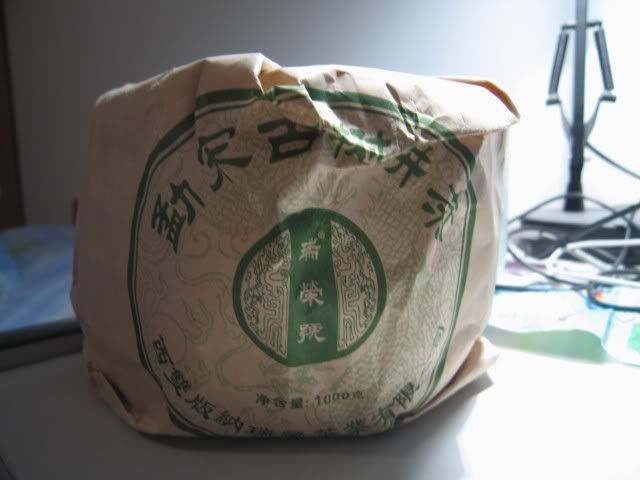
Which I did, although I went there for another Mengsong cake, a smaller cake that I saw elsewhere and which is reasonably priced. I tried it… and I liked it enough to buy 6 of them. These are 200g cakes, so 6 isn’t as many as it sounds. It also comes in a tong of 5 like this

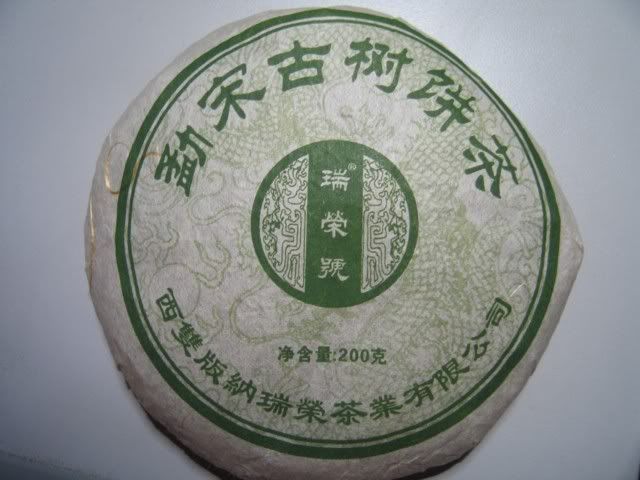
While each individual cake look like this:

I also tried a Bulang cake there that was decent, as well as a Youle cake that was ok. The Youle cake was slightly expensive, but the Bulang cake is quite tempting. I might go back and buy some of that. The Mengsong cake I saw elsewhere was selling at this store too… for 20RMB, which is 1/9 of the price being quoted at the other store, and they are literally 50m away!!!! Lesson learned — always buy from the factory store if I can help it (although, sometimes, factory stores actually cost more, because they update the prices quickly whereas retailers sometimes bought their stock a long time ago so they can still sell at the lower price).

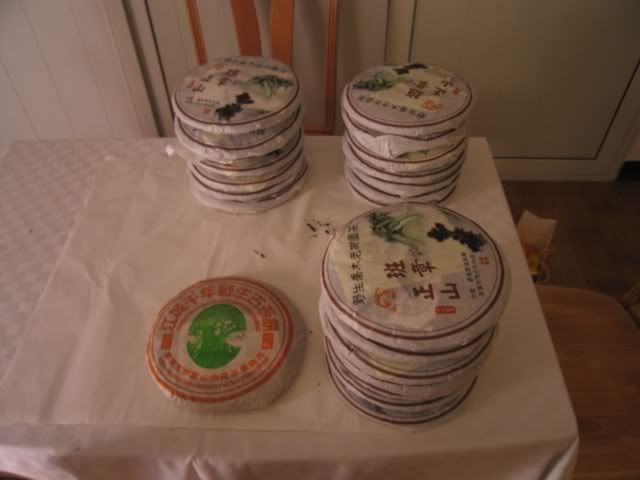
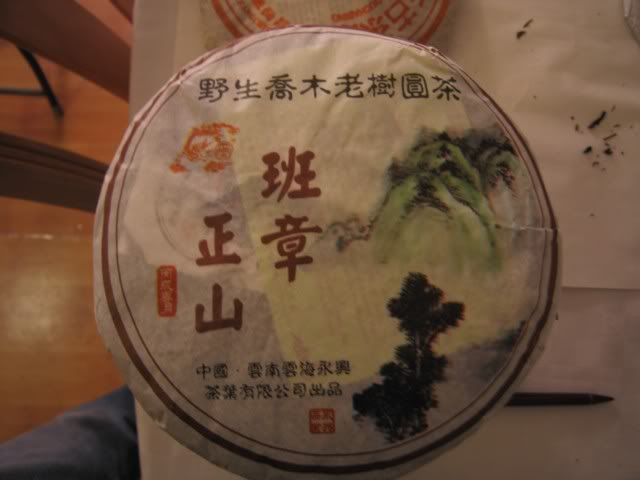
I then went to L’s store, just to drink some tea and have some conversation. ZH also showed up, and so we drank and chatted. Among the topics — how Zhongcha’s recent production of Banzhang was all snapped up. They are selling for quite a bit of money…. and so I took some pictures

Compared to my “Banzhang” that I bought last week…. the 3 tongs of stuff I bought could buy about 1 cake of the above

Is it really 20 times as good?

Categories: Old Xanga posts · Teas
Tagged: ,

No tea today

January 30, 2007 · 3 Comments

Yes, you heard that right.

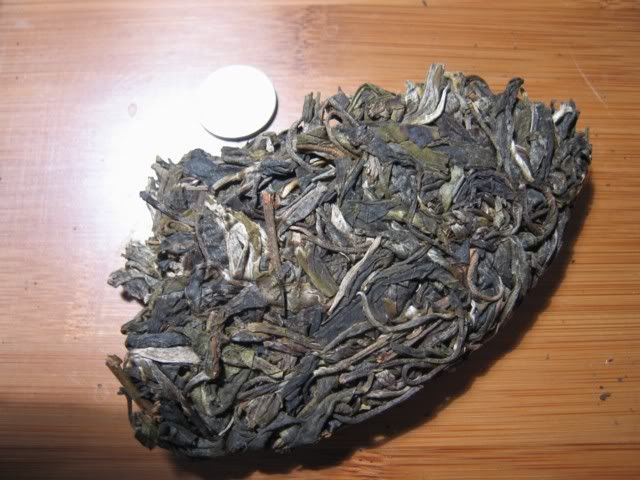
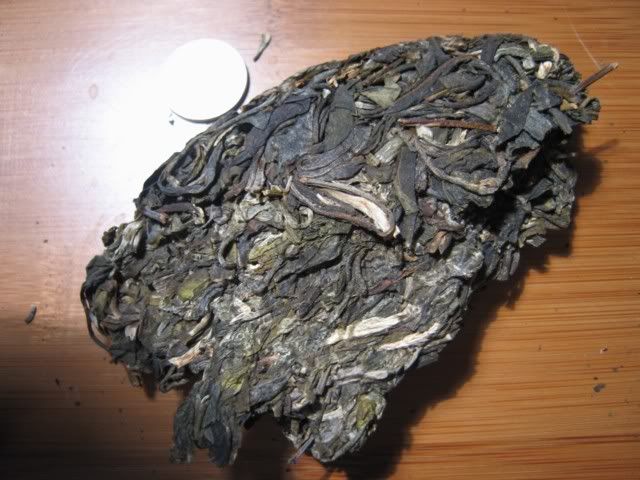
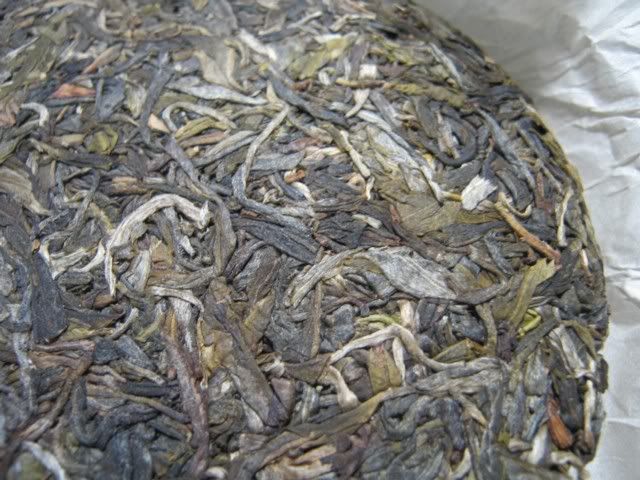
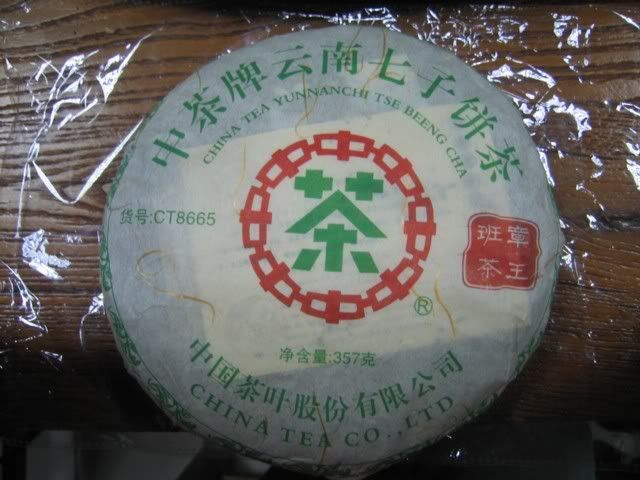
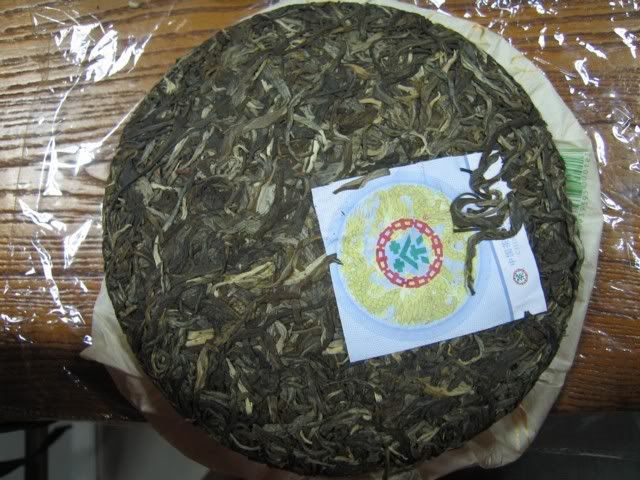
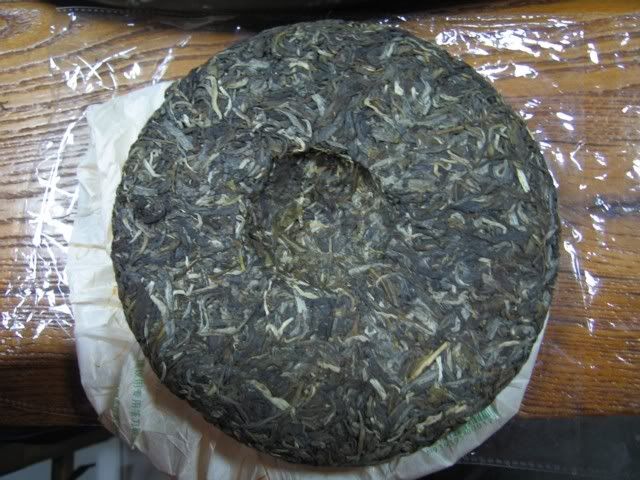
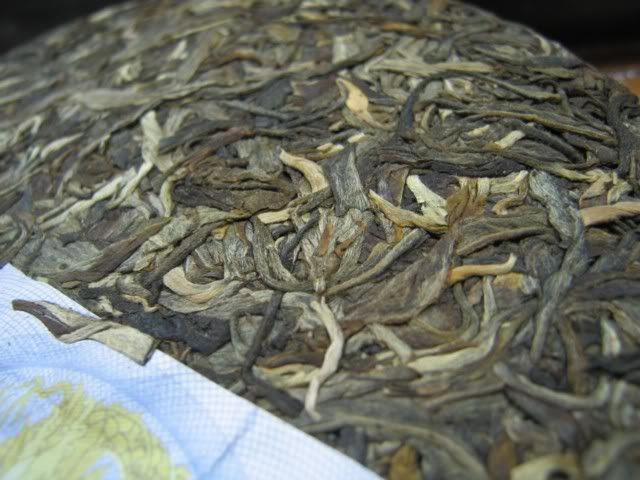
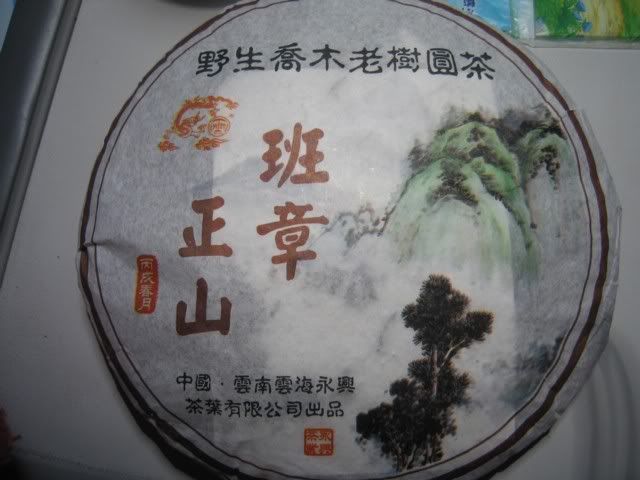
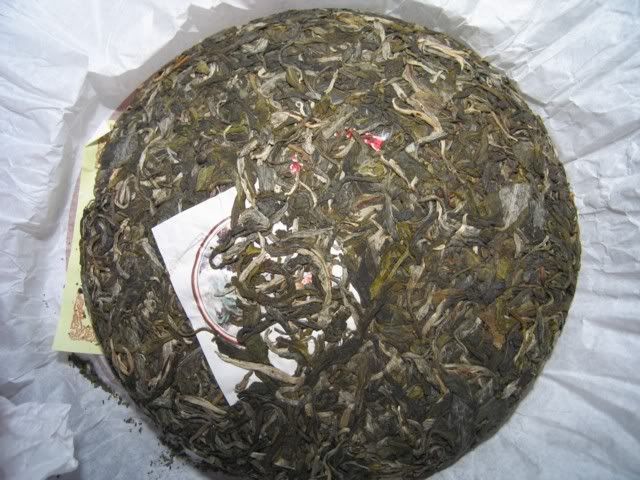
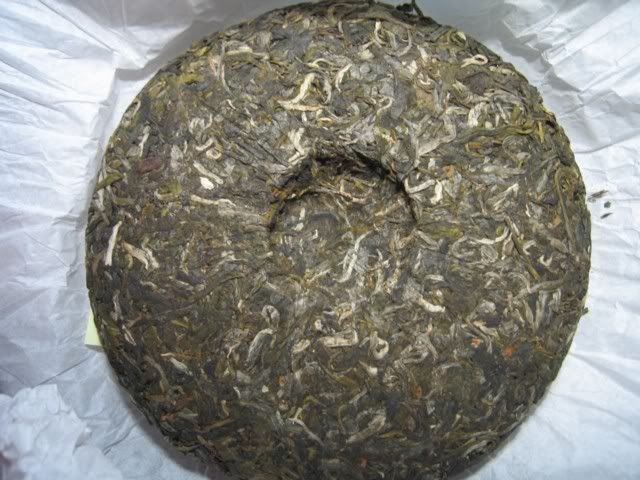
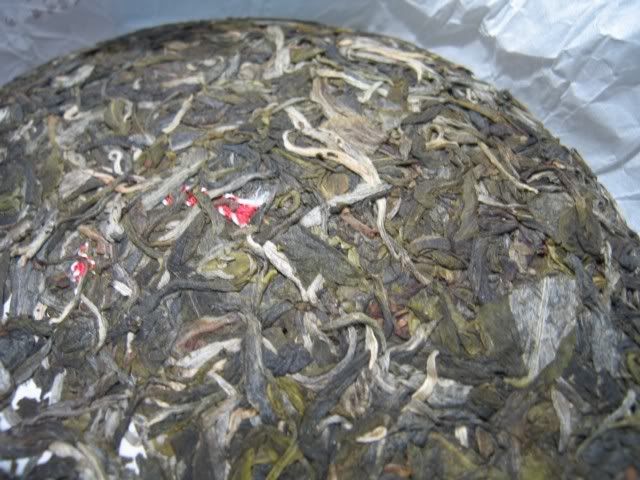
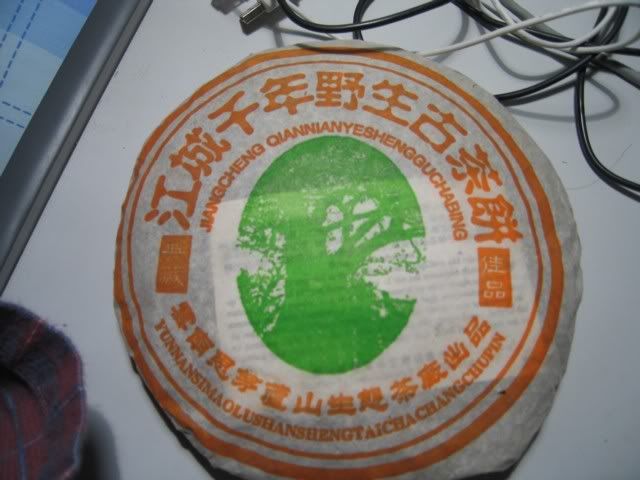
So to feed my caffeine addiction, I decided to take some pictures of a cake that I got with the 3 tongs of “Banzhang Zhengshan” (which, by the way, I think only has a small % of actuall Banzhang leaves in there, but the price makes that irrelevant). Not that it will cure any headache that might be incoming, but it provides for blogging material, if nothing else.

This is a cake that I basically got as a freebie along with the 3 tongs.

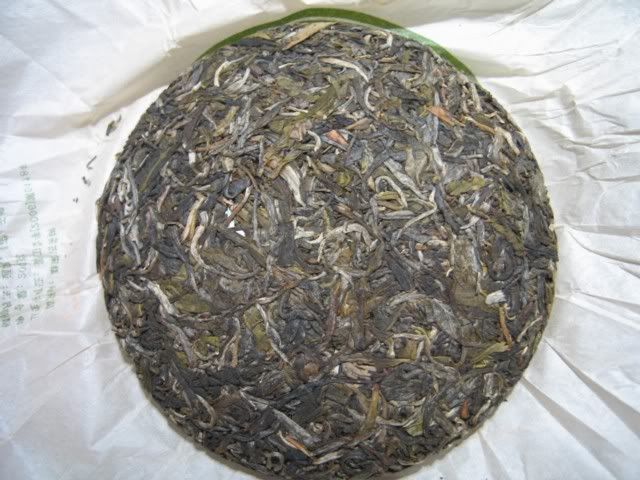
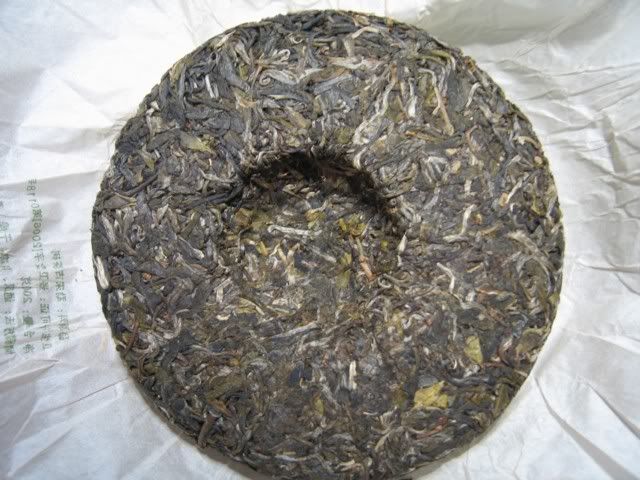
“Jiangcheng Thousand Year Wild Growth Old Tree Cake”. Right….. Jiangcheng tea, as some of you know, is often used to make fake Yiwu cakes. Supposedly, the leaves look similar, although I’m not sure about the taste profile. When I opened up the wrapper it smelled fruity. I couldn’t pinpoint which fruit, but fruity is not a bad description of what I was smelling. Trying it for taste and seeing what a real Jiangcheng tea tastes like is the primary objective of getting this cake. It will give me some basis for comparing against other teas. After all, there’s very little reason to fake a Jiangcheng.

Looks good enough, and if someone else told me this is a Yiwu cake selling for $20 USD, I might believe you. Except that it’s not… it’s only $4.

Categories: Old Xanga posts · Teas
Tagged: ,

Immune to bitterness

January 30, 2007 · 6 Comments

Among the many side effects of tea drinking, especially young puerh drinking, is that I don’t really taste bitterness as acutely as before. It was obvious when I tried the Banzhang Zhengshan that I bought recently, when I thought it was only mildly bitter while my girlfriend was screaming bloody murder. More obvious though is my recent taking of some cough syrup… I didn’t even need a chaser. It went down smoothly enough, with just a hint of bitterness and a rather mild nastiness from the fake cherry and whatever else flavour there is in there. I didn’t exactly squint. In fact, I don’t think it’s much bitter at all. I’m sure two or three years ago I would’ve thought differently, but I think now my tongue is more numb to the bitter taste…

Is that a good thing or a bad thing? It would seem to me that this is a bad thing, since it means I’m missing out on some flavours in a particular tea. What can one do to restore one’s sense of taste?

Categories: Old Xanga posts · Teas
Tagged:

Lots of tea

January 26, 2007 · 5 Comments

I went tea shopping today with my girlfriend, mostly to buy stuff for somebody in Hong Kong, and to also show her around where I hang out so much. Let me not bore you with the details…. but let me show you what I bought

Yes, a lot of tea. There was also 500g of Shuixian.

Most of the puerh and all of the Shuixian is for that HK friend. I just bought myself one tong of the puerh. The tea is supposedly “Banzhang Zhengshan”.

The friend’s request was simple. She wanted a bitter and strong tea, for a cheap price. That’s not too hard to do, although it was harder than I thought. Mostly because to meet the price criteria it was not that easy, and to find a tea at the right price bracket that was bitter and strong enough was also tough. I found a cake today for 20 RMB (2.5 USD) but it was just weak. This one, however, is good enough, and still under 4 USD. So I bought a tong for myself, and 2 for the friend as requested.

There was also a bunch of teaware that we got, among which was a puerh plate — those bamboo things that you open cakes on.

During dinner, I brewed tea this way:

Using the Yiwu maocha that I got. It was nice and sweet, no bitterness despite long brewing times. You should all try it 🙂

Some tea leaves

Categories: Old Xanga posts · Teas
Tagged: ,

Tea tasting again

January 21, 2007 · 1 Comment

Every tea outing in Shanghai seems to be a long tea tasting session, mostly because it tends to be with more people and also because L’s place has a lot of different kinds of tea… today is no different.  Quite a few of us were there, including Bearsbearsbears, L, and J.

We mostly drank Bearsbearsbears’ teas today, stuff he brought back from Taiwan.

We started with the 2003 Wild Yiwu from Stephane Erler, which BBB got a sample of.  The leaves are a bit dark, but nothing too distinctive.  We had a lot of people, so we used a big gaiwan with about 10-11g of tea in there.  I flaked the piece as best I could, layering it so that none of the leaves are broken unnecessarily.

The tea is very smooth and sweet, and very drinkable right now.  It’s got an odd flavour, with little bitterness and no astringency.  In fact, it doesn’t taste like puerh at all, of any kind, that I’ve had.  The polite way of saying this is that this is different, the not so polite way is to say this is probably not puerh done in the traditional way.  The leaves are very broken, despite my best efforts, and were quite chopped up.  Although the flavours are generally pleasant, they are thin, and weak, and stay only on the tongue with absolutely no aftertaste of any kind.  Not exactly a good tea in my opinion, but good for those who want to drink their puerh now (not that I’m sure this is actually a puerh), but if you are paying that kind of money for one cake to drink now…. why not buy an oolong?  Much nicer in taste.

Then we had two teas by Chen Zhitong, the guy who wrote The Profound World of Chi-Tse.  The first is a “Yiwu” wild tea, supposedly, which consists of what seems like older leaves that is generally cosnidered as lower grade stuff.  The taste is a little spicy initially, with some aftertaste in the throat, and a deeper flavour than Erler’s tea.  Still a bit weird, and sourness developed after a few infusions.  It’s a bit of an odd tea, and I’m not sure if I’ll ever buy something like that.

The second one is better.  It’s got a good, strong aftertaste, a full flavour, and very nice qi that was immediately obvious.  Not too expensive for what it is (something like $20 USD or so).  I liked it, and if I see it, I might buy it, but that will have to wait till Taiwan at the second half of this year.  Both of these teas were brewed using about the same amount of tea.

Then…. it was a tea by Zhou Yu, the owner of Wisteria in Taipei.  It was an interesting tea — very long leaves, and apparently quite prized by Zhou Yu.  Expensive, but quite good.  We used very little leaves.  The tea, though weak (because of the extremely low amount of leaves), was flavourful and interesting.  Not sure I know how it will turn out in a few years though…  gotta give it to the Taiwanese for making up all these new gimmicks.  I think I am more conservative and just want to have more regular teas.

The last one was a loose puerh from Zhou Yu as well, from the 60s, supposedly.  It’s cheap… and the reason is clear.  It tastes cooked, for some reason, and I think it’s just a poorly stored tea that basically got cooked over time.  It’s nice, and very drinkable, and for the price is not bad at all.  It’s just not what you might be hoping for in a 60s tea if you were imaginging some great stuff.  Good, and nice 🙂

So thanks to BBB for all the teas…. and we might meet again before I leave, or if I decide to come back to Shanghai after going back to Beijing.

Categories: Old Xanga posts · Teas
Tagged: