A Tea Addict's Journal

Entries tagged as ‘black tea’

Deadly black tea

June 15, 2026 · Leave a Comment

Taiwan produces black tea today, but much of the stock of assamica varietal trees in Taiwan actually were imported during the 1920s and 30s by the Japanese authorities. Back then, the hope was to create a Taiwanese black tea industry that could compete with the rest of the world. Up until that point, Taiwan mainly exported oolong and baozhong (baozhong back in the day was scented, like jasmine tea). Oolongs went to North America mostly, while baozhong were sold to SE Asia. Black tea, however, had worldwide appeal, and if only their colony could compete!

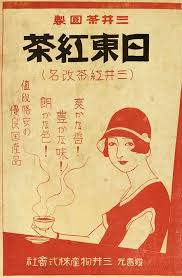
So, at the government’s expense they imported a bunch of trees from South Asia, as well as modern machinery that were designed to make black tea en masse. This tea was mostly produced by Japanese owned companies – chief among them Mitsui, which still exists today as a going concern. Mitsui was heavily involved in the Japanese colonial enterprise and had their hands in everything. Tea was merely one of the many, many products they sold.

Here’s another wrinkle though – it was not legal for most people to export tea directly. To export you had to have a license, and to get that license required you to pass certain capital and technical thresholds which normal tea farmers would never dream of making. This also was way back in the day, when traveling from the mountains to the big city already took a long time. The tea industry was quite different, where logistics reared its ugly head all over the place. In this way, big companies dominated.

This is especially true at the final export stage, where the sales overseas were controlled mainly by a handful of foreign-owned firms. Jardine Matheson was one of them, but they were not the biggest. Among their competitors was Tait & Co, Carter, Macy & Co, Anglo-American Direct Tea Trading Co., Boyd & Co, and of course Mitsui. Quite a few of these have been in the tea business for almost a hundred years by the 1930s. Among these only Jardine Matheson, Mitsui, and Tait & Co still survive at least in name only. Anglo-American is, in a way, still sort of alive as a former subsidiary of Finlay’s.

Thing is, these export companies traditionally did not involve themselves too much in the production side of things – it’s too complicated dealing with all the farmers up country. Instead, it’s better to just have some operation where you buy raw leaves, or you can buy maocha or done leaves from the farmers and then blend/finish yourself and then export. There were lots of middlemen in the business, but that was part of the deal.

Given this, you can sort of see how Mitsui occupies a unique position because all of a sudden you have the first true vertical conglomerate. They wanted to monopolize their position as the biggest (but not only) black tea producer in Taiwan. So, they forbade their factories from selling black tea to their competitors, and tried to offer Taiwanese black tea for a more competitive price on the world market. Other firms who wanted in on the action had to buy from other suppliers, but those alternative suppliers usually didn’t have the technology or skills, so their teas were less good. You can still compete on price, but it’s tough work.

Up until around 1932, Jardine Matheson’s operations in Taiwan was run by a man called Hugh Lachlan. He had been at the company for thirty years, focusing on the tea business, but by this point he was sort of a broken man – in poor health, low in energy, and the decade plus he spent in Taipei had sapped him. Taipei back then was seen as a true backwater, especially when compared with the cosmopolitan cities of East Asia like Shanghai, Tokyo, or Hong Kong. According to J.J. Paterson, future Taipan of Jardine: “Remember that Taipeh is a hell of a place for a white man to live, and it is only fair to allow them to get away for the sake of sanity, health and morale.”

Lachlan retired at the end of 1932, and was replaced by a man called C. S. Hayley. He was coming from the Shanghai tea department, which was the center of operations for all tea businesses in East Asia at the time for Jardine – they bought mostly green teas there for export. Hayley was much younger, single, and seemingly quite energetic. The Taipei branch had been losing money for years at this point, with HQ wondering if they should shut it down for good despite doing decent amounts of business. Hayley’s job was to increase sales and so to pull the division into profit.

The first year there Hayley did seem to succeed – the division made a profit for the first time in years, and successfully exported some black tea from Taiwan, which was a first, because up till that point only oolongs were sold. Generally speaking, Jardine was quite conservative in how they operated, and only bought tea to export when they have an order coming in from an overseas client. They almost never exported teas “on company account” meaning that there was never any real financial risk of selling the tea – it was a volume business. They were merely acting as agents and earning a commission on every trade. It was a safe but slow business.

Hayley tried something new, which was something that hadn’t been attempted in years. He tried to export some black tea on company risk to Australia, attempting to open a new market. Those 100 packets of tea sold pretty quickly, at a modest profit. That worked! Next year, in 1934, Hayley got ambitious. He had pre-ordered 7000 packets of black tea from Chinese producers not associated with Mitsui, with the Australians agreeing to buy 5000 of them and the rest planning to be shipped to the US. While these were not as good as the Mitsui ones, he was confident he can beat them on price. Besides, all the farmers were switching to black tea production because the market was doing well, so he was confident it would work.

Well… it didn’t. The producers he contracted with couldn’t come up with enough packets of tea for him to sell, so Hayley was forced to buy on the open market, but because of that, he had to pay market price, which was substantially higher than the price he had contracted to sell to his customers. In other words, he had to cover his own order at a loss-making price. It was going to lose him tens of thousands of yen – multiples of what the Taipei branch made the previous year (it made a modest profit of something like 15k yen the year prior). This would’ve wiped out all the profits and then some, and would represent a substantial loss. Keep in mind this is still a world economy reeling from the Great Depression. Things were not looking great.

Hayley panicked and wrote a few letters plus telegrams to Hong Kong asking for help. J.J. Paterson, the boss, sent a man named Pollack to go to Taipei to see what they can do. Pollack was an experienced tea man based in Hong Kong, and helped at least sort out the basic crisis at hand, fulfilling orders as possible and comforting Hayley in the fact that the firm will lose some money – but it can easily withstand it. After all, Jardine was one of the premier trading firms with over a hundred years of history by then, and some losses over some Taiwanese tea wasn’t going to put it under.

Hayley cheered up and Pollack, after having finished the business in Taipei, decided to go take a look at Kaohsiung at Hayley’s urging. He went down south on the night train, spent the day, and took the next night train back up to Taipei, and upon his return, he found Hayley had shot himself in the head after downing a whole bottle of whisky. He had written a few letters in his very drunken state, one to Pollack. I’ll quote a little bit of it here:

“I’m getting rather drunk but I’m trying to state that its my own fault that I’ve got myself into the present jam. You have been awfully decent in telling me that the firm didn’t care a bit about losing money (this isn’t strictly true) but my brain is kinked and I can’t think already.

Cheerio Pollack and this will be a new and interesting experience for you.”

In the end, the firm’s trading losses weren’t nearly as much as initially feared, and customers, while they received teas inferior to what was promised, were able to make do with the goods and made smaller claims on the price paid. There were still losses, but it was entirely manageable.
Categories: Information
Tagged: , ,

Gold leaf, garlic powder

June 13, 2026 · Leave a Comment

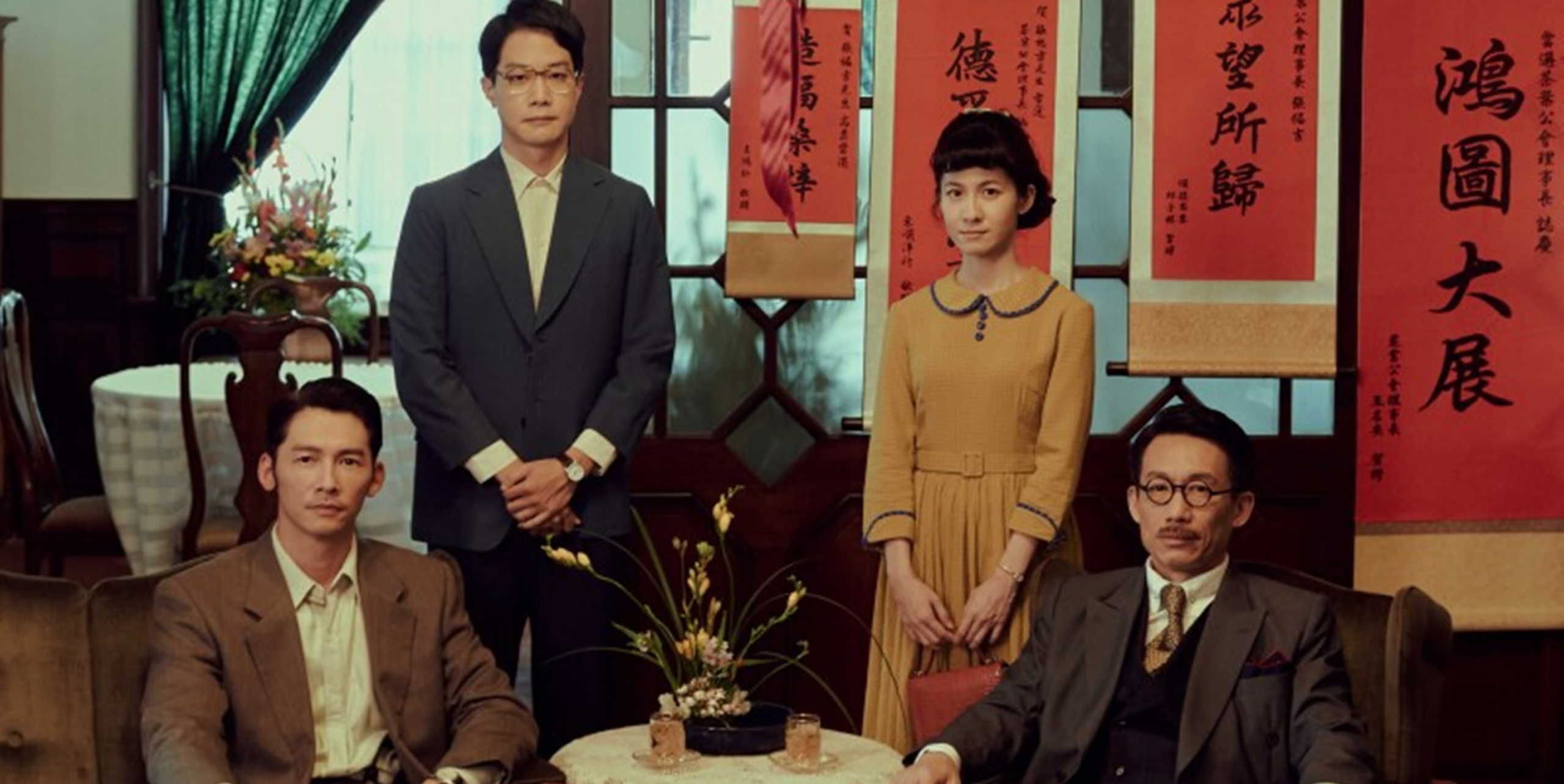
About four years ago there was this TV show in Taiwan called Gold Leaf. Some of you have probably heard of it, as it became somewhat popular for a while. The story revolves around a fictionalized character based on the tea producer Khiong A-sin (I’m romanizing it this way because that’s what my sources called him), a Hakka based in Beipu. The show itself wasn’t very good – I watched maybe 3-4 episodes before deciding it wasn’t worth pursuing any further, partly because the tea parts of the show was nonsensical.

However, for the past week or so I have been here at Cambridge looking at archival documents from Jardine Matheson & Co. Jardine, as many of you probably know, is the trading firm that got its start smuggling opium into China. A big part of their trade, however, was tea. They traded teas of all sorts – Chinese, chiefly, but also teas from Taiwan. Since I’m working on a history of the tea industry in Taiwan, I came here to look at what they were doing.

The TV show also alludes to this a bit, but starting around 1950 Jardine and Khiong entered into a partnership of sorts, where Khiong produced quite significant quantities of tea for Jardine to sell overseas. Tea in Taiwan during this period was still largely for export – over 90% of it was sold overseas, with very little retained for local consumption. Khiong produced both black tea and green tea for Jardine, depending on the year and the orders. The black tea, later branded as Hoppo tea, was fairly successful, and seemed to have found a market footing.

What’s interesting though is that Khiong, for reasons unclear from the Jardine files, was not a very capable businessman. Year after year, he asked Jardine to front money for his operations so that he could enter into production for the firm, presumably because he did not have enough cash on hand to pay the farmers and the workers for their work. More seriously, when it came time to deliver teas, he was frequently late and not delivering quantities sufficient to fulfill the original orders. Jardine was frustrated by this – they had, after all, invested quite a bit into this relationship and propped up Khiong’s firm (Yung Kuang). Somehow, though, he was not quite holding up his end of the bargain.

Now, Jardine certainly was not running a charity here, but it was also an interesting case because over the years, their tea business in Taiwan really achieved very little. Although the numbers are scarce, from what I can gather in the archives the tea department in Taiwan post WW2 never made any money, consistently losing money instead. Even in the pre-war years, profits were slim. The Taiwan operation for tea was justified as part of a portfolio of service they provided to customers overseas who want some access to these teas when necessary. Also, it was run as a pretty lean operation, with only a half dozen or so employees, usually consisting of one British man in charge, a Chinese buyer, and then some lower level staff. They were hoping to cultivate Khiong as a stable production partner (since Jardine really didn’t want to get involved directly in dealing with farmers and production, which was a whole complicated mess). Khiong, however, didn’t quite deliver.

It all started seriously cracking in 1964 – over a dozen years after they first started their relationship. Mid-year, Khiong told Jardine that he was having some liquidity issues, and instead of paying down his debt with cash or even tea, he would give them…. garlic powder, 27 tons of it in fact. The Jardine side realized they didn’t really have much leverage, and aside from getting his factory and other assets as collateral for his loans, they took the garlic delivery. So, a company that never sold any garlic before all of a sudden is saddled with a lot of garlic powder sitting in their godown, trying to figure out how to move this stuff. Their taipan in Hong Kong complained about how things got to be this way – and asked his staff to please avoid running into situations like this in the future.

Unfortunately for Khiong, he ran out of runway. Within a year, his company declared bankruptcy and the factory was wound down. This wasn’t an easy time for a lot of producers – Taiwanese tea was in a very awkward phase, competing on price against other producers but still far too expensive. The tea men at Jardine were actually quite astute, commenting that they think the future for their business (if not the industry) was going higher price, high quality oolong teas. In about ten years time, that was indeed what would happen, but in the meantime, businesses like Yung Kuang died.

Today the Khiong mansion is still standing, and open to the public as a tourist destination. Descendants of Khiong A-sin bought the house back, and now you can see it after making a booking online.

Categories: Information
Tagged: , , ,

Memorable places

November 9, 2019 · 6 Comments

Let’s face it, a Darjeeling teabag from Dammann Freres is never going to be that great, nor is it remotely worth the price of admission. I had some Dongding in my backpack that I would infinitely prefer to drink instead, but that would be rude. Their water wasn’t really hot enough anyway, and adding Taiwanese oolong to water (instead of pouring water over the leaves) is a loser’s bet. The overly aggressive pigeons trying to eat my apple pie were also not particularly welcomed, with me having to fend off their attacks while attempting this photo three times. I gave up trying to take a better one, lest I lose my pie to the indomitable birds.

I still thoroughly enjoyed my tea. The pie was good. The tea was serviceable. The view was excellent. The weather was almost perfect, if only it were a little bit warmer. I won’t remember this tea session for the tea itself, but it’s hard to beat St. Mark’s Square for location. The where and when of a tea session is often just as important as the what.

I’m in town for a colloquium on tea, which was organized by the Ca’Foscari University and the Confucius Institute here in Venice. As an academic with a research project in tea, it is rare to actually meet others similarly interested, more so as almost everyone was coming from a different disciplinary angle. Maybe I should’ve posted about this before the colloquium actually happened. But then, if you are from the area you might’ve already heard about it, and not rely on some long dormant blog to tell you. If you’re passing through like me, don’t waste your time in this gem of a city by spending a day listening to some academics talk about tea. Besides, the Italian Association of Tea Culture’s YouTube channel has posted the 2016 and 2017 renditions of their colloquiums for all to see. So maybe if you wait two years the 2019 one will be there too.

Categories: Teas
Tagged: ,

Talent and skill

May 14, 2018 · 7 Comments

Every tea farmer’s association in Taiwan holds competition. Some of these are huge – the Lugu one, for example, attracts over 6,000 samples per competition (twice a year). Smaller ones get hundreds or a thousand entry. Every member of the association could enter a certain number of samples (often 10) per competition. Then, they are judged in groups with a panel of judges tasting them quickly and eliminating ones that are not good enough. Finally, there’s one “Special Prize”, which is the top prize, a tier of “First Prize” (number of which depends on the size of the competition), “Second Prize” and “Third Prize”, and also “Three Plum Blossom” and “Two Plum Blossom” for the competitions that have these grades. For Lugu, for example, you send in 22 jin of tea. 1 jin is used during the competition – tasting, etc. 1 jin is basically payment to the farmers association. The rest, the 20 jin, is tea that you’ll get back whether you win or lose. If you win, they get packed in the competition packaging of the right class. A “Special Prize” will sell for something like $3,000 USD a jin. The others are a lot lower in comparison, but still represent a markup compared to normal tea prices. So, entering and winning is good money.

The competitions are also there to reward skills. They began during the colonial period as a way for the government to encourage better quality production – to publicize people who made good tea, and to get farmers to strive for higher quality product. This purpose continued after Taiwan was returned to China in 1945. These days, it’s less of a quality issue and more of a marketing scheme, but there’s still an element of rewarding skill that’s involved – if you win the higher grade prizes, for example, you’ll get a plaque that goes with it saying what year, what competition, and what prize you got. A farmer who can hang a bunch of them in their shop (or, as is sometimes the case, has so many that they start stacking them up against the wall) can claim to be a better tea maker than others and sell their teas for more.

These days some vendors love to tell stories, almost more than selling tea they’re selling the farmer, especially when it comes to vendors who face a Western audience. So here’s a guy who you should probably at least try tea from:(Source)

Two young punks? Yes. Well, the guy on the right is called Zhuang Rongpu and is barely 30 years old, and he’s been in the tea production business for five years. His dad was a mushroom farmer, but he wanted to be a tea producer. So his dad helped him set up a brand new factory, which I visited on my trip this time. He’s won a number of “Special Prizes” in the last five years – at least one a year, from what I gathered. Considering that there are producers who never win one in their entire career, this is pretty remarkable.

Granted, he’s not in a hyper-competitive area like Lugu – he’s in Yuchi, a black tea production area. In terms of production procedures, black tea is really quite simple – withering, rolling, oxidation, drying. That’s it. As the local farmer association secretary said to us, “you can make it too”. He’s not wrong. We could. It won’t taste good, but we could.

If you ask a tea farmer/producer how to do something, they can tell you in great detail. They’re also often willing to tell you too – there really aren’t any secrets, so to speak. The devil is really in the details, and with something as simple as black tea, it is no exception. When we visited, for example, they just harvested some new leaves and were withering it.

The tea is just sitting there on a bed with air blowing underneath, and it’ll sit there for almost a full day. Unlike oolong, there’s no need to disturb it – in fact, you shouldn’t disturb it. The real trick, of course, is how to manage this – how much leaves to put on? How long do you wilt it for? When is the right time to move them to the roller? How long do you roll them for? At what speed? When do you stop the rolling and re-wrap the tea to roll again? How much longer? When do you stop rolling all together and move to oxidation? How long do you oxidize it for?

All of these have a simple answer – “depends”. They can give you ballpark figures, but precisely when is dependent on so many variables, it’s impossible to say with any kind of certainty. For example, in the trough above, they didn’t fill it to capacity – it is designed for a maximum 150 jin of raw leaves, but they only filled it about half full, because it’s easier to control the withering process. Since they had room anyway, they spread the leaves out on multiple troughs. It’s the tea producer’s job to assess when the tea is done withering and move on – and there’s no real objective measure that you can use to tell when that is. There’s no machine, at least not yet, that can replicate a human touch for these determination. So, our man here decides when it goes downstairs to the rollers. And his judgement at multiple steps along the way determine the quality of the final product.

Of course, this isn’t just about the producer – with bad leaves no matter how good a producer you are, the tea is still going to come out inferior. Farm management is also crucial. These guys don’t own any farms – they contract with farmers whose job is to grow the tea trees. They work together  on a plan for managing the plants, and to make sure they get what they need as raw materials. It’s a collaborative process. They’ve obviously got something good going.

Still, this is a producer with five years experience and no family history of tea making. It doesn’t sound like he should be making great tea, but he obviously is. While skill is something that accumulates over time as you get more practiced at doing something, there is also another factor – talent. Mr. Zhuang clearly has it in spades.

Categories: Teas
Tagged: ,

Tea Geek Paradise

May 11, 2018 · 4 Comments

I spent the past three days in central Taiwan doing fieldwork visiting tea farms and such. Once you’ve seen a few tea farms, they all start to blend in – farms on their own are not particularly interesting unless the farmer is doing something really interesting, or there is something weird about the farm. Likewise for tea production facilities – the machines are mostly the same, the processes similar, and the only real difference lies in things you can’t see – the producer’s skill, timing, weather, leaf conditions, that sort of thing.

And then there are places like this:

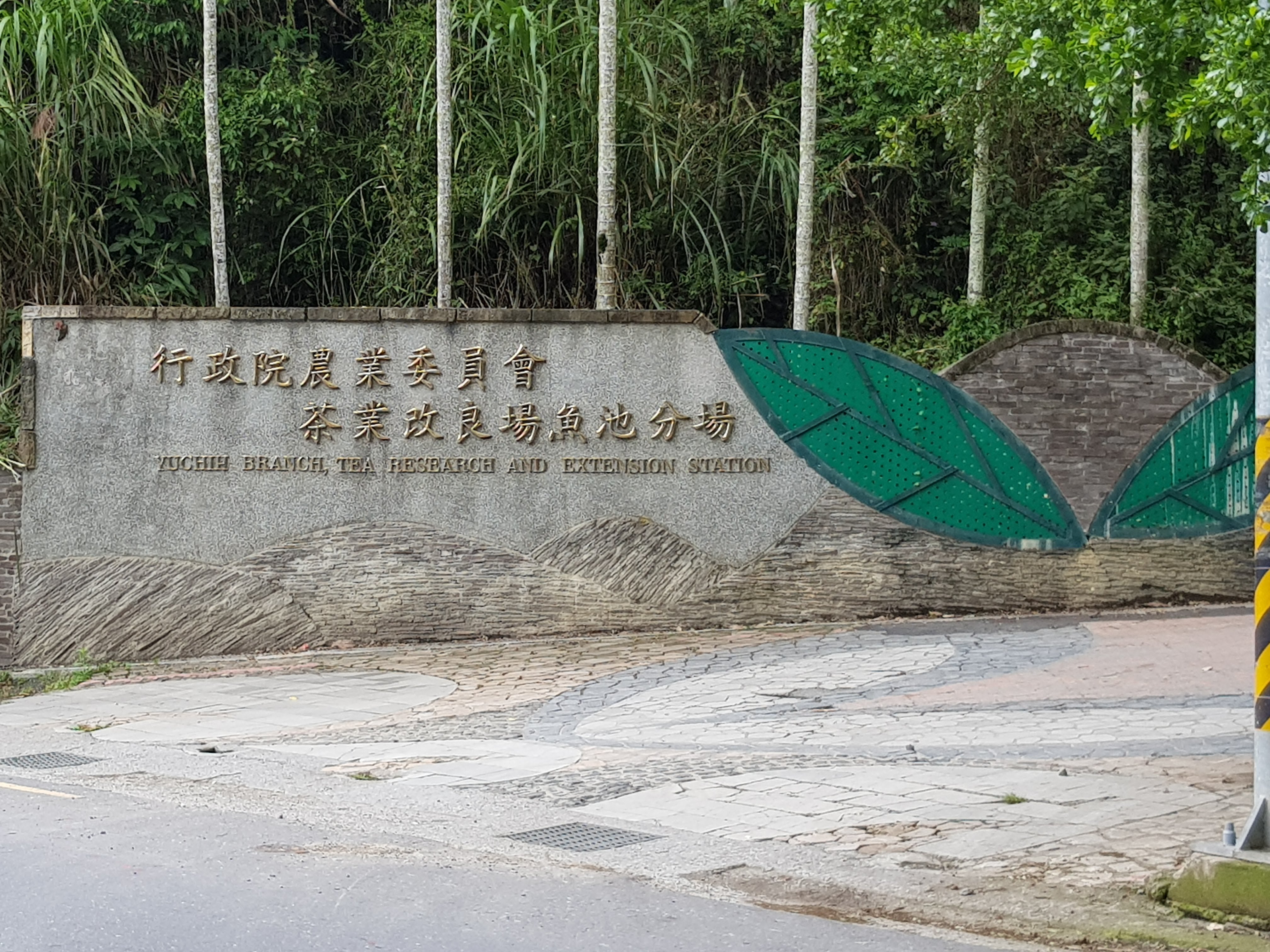
This is one of the five tea research stations of Taiwan, official units of research into all things tea – from developing new tea varietals, to cultivation techniques, to production improvements. This place isn’t open for public – you need to have a valid reason to request a visit in advance.

The tea station is quite large – they only use about 10% of the land they have because they don’t really have enough manpower to use any more. This is the place that developed Taiwan tea #8, #18, and #21 – the station was originally set up in the Japanese colonial period for developing technologies related to cultivation of assamica varietal imported to Taiwan. #8, #18, and #21 are all black tea varietals, with the #18 being the most popular these days for a variety of reasons.

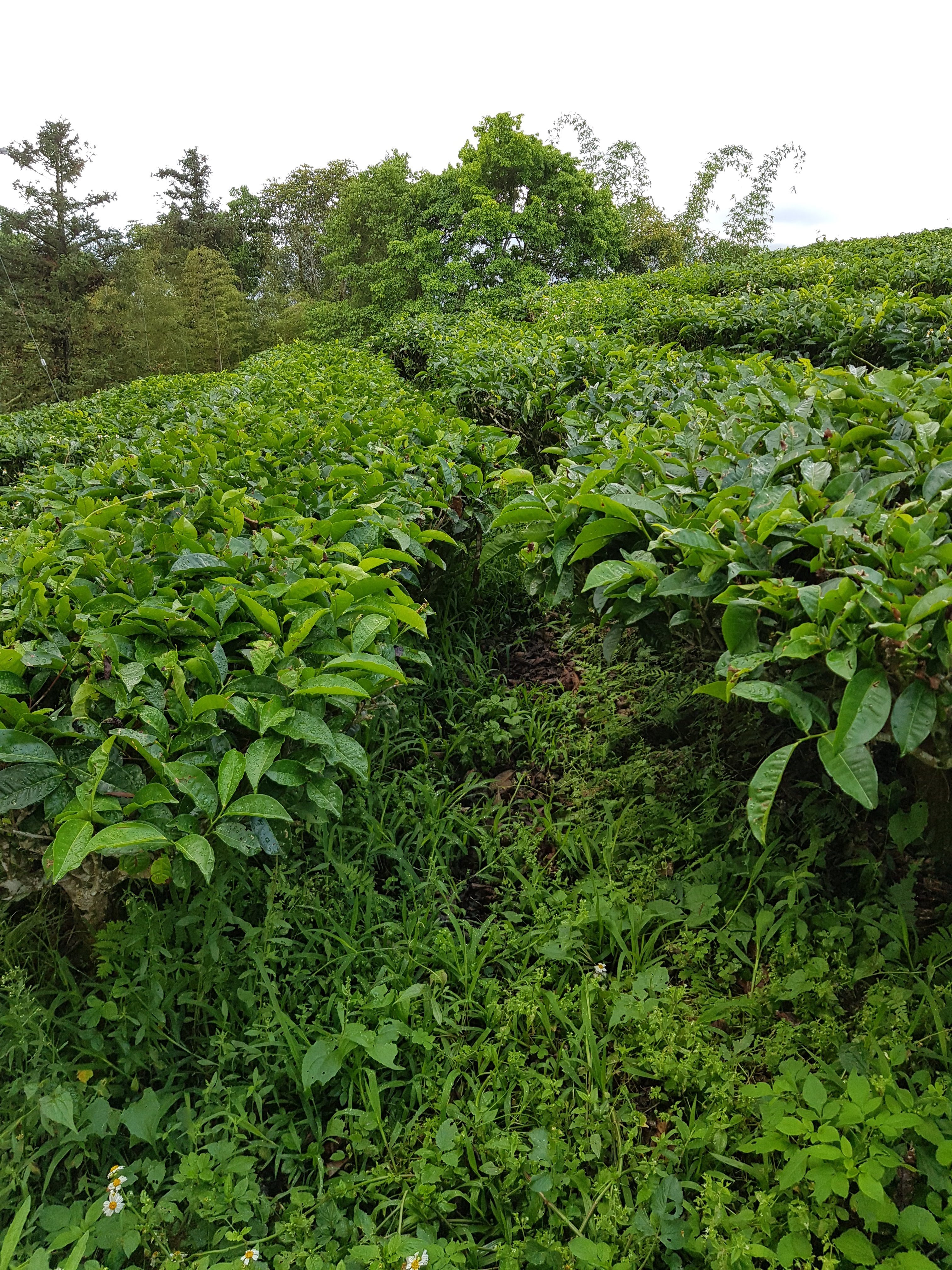
The station is quite interesting – they don’t use any pesticides and herbicides, and only organic fertilizers from what I understand. The point, after all, is to test the plants’ abilities to withstand various growing conditions and select the strongest trees for selective breeding. Using pesticides and such will mask their weakness. In the above picture you see how there are lots of random plants growing under the trees – that’s what a farm that uses no herbicides look like. In most pictures of tea farms you’ll see the soil around the tea trees are barren and brown. Likewise, the leaves are full of marks of insect damage. This is of course because they don’t spray pesticides. They do use something called “tobacco water” – a natural concoction with an infusion of tobacco (leftover bits from the cigarette industry). The nicotine helps repel insects a little, but only lasts a couple weeks and spraying is a lot of work. Most farms wouldn’t use it, but they do because it helps control the insects somewhat without any chemical pesticides.

They also do all kinds of tests with production methods. This is necessary because for each varietal of tea the processing may be different – a certain tea may come out better with longer oxidation cycles, or needs slightly less time during withering, or so on. The Tea Research Station might not know what is the best method of making a certain tea – after all, that is dependent on a lot of factors – but they certainly do try to figure out new ways of production that will help farmers along. Different varietals also have different growing characteristics that changes production methods. #21, for example, has buds that will grow too old quite quickly, so the harvest window is relatively short. If it happens to be raining on those days, then a farmer may be forced to harvest in sub-optimal weather (normally, nothing is done during harvest on a rainy day). Those teas will be inferior. For someone who has a smaller field who wants a tea that is easier to work with, #18 is preferable.

They also offer classes – introductory, intermediate, and advanced ones on tea making skills. Unfortunately, sons and daughters of families of tea farmers have priority, and leftover spots (if there are any at all) are filled by people in the tea industry. Younger people in the tea making business I talk to generally have done some of these courses at some point – they learn the basics and use those skills at home when they help out. In many ways, this is probably their most important active service to the tea production community, even though it may be underappreciated.

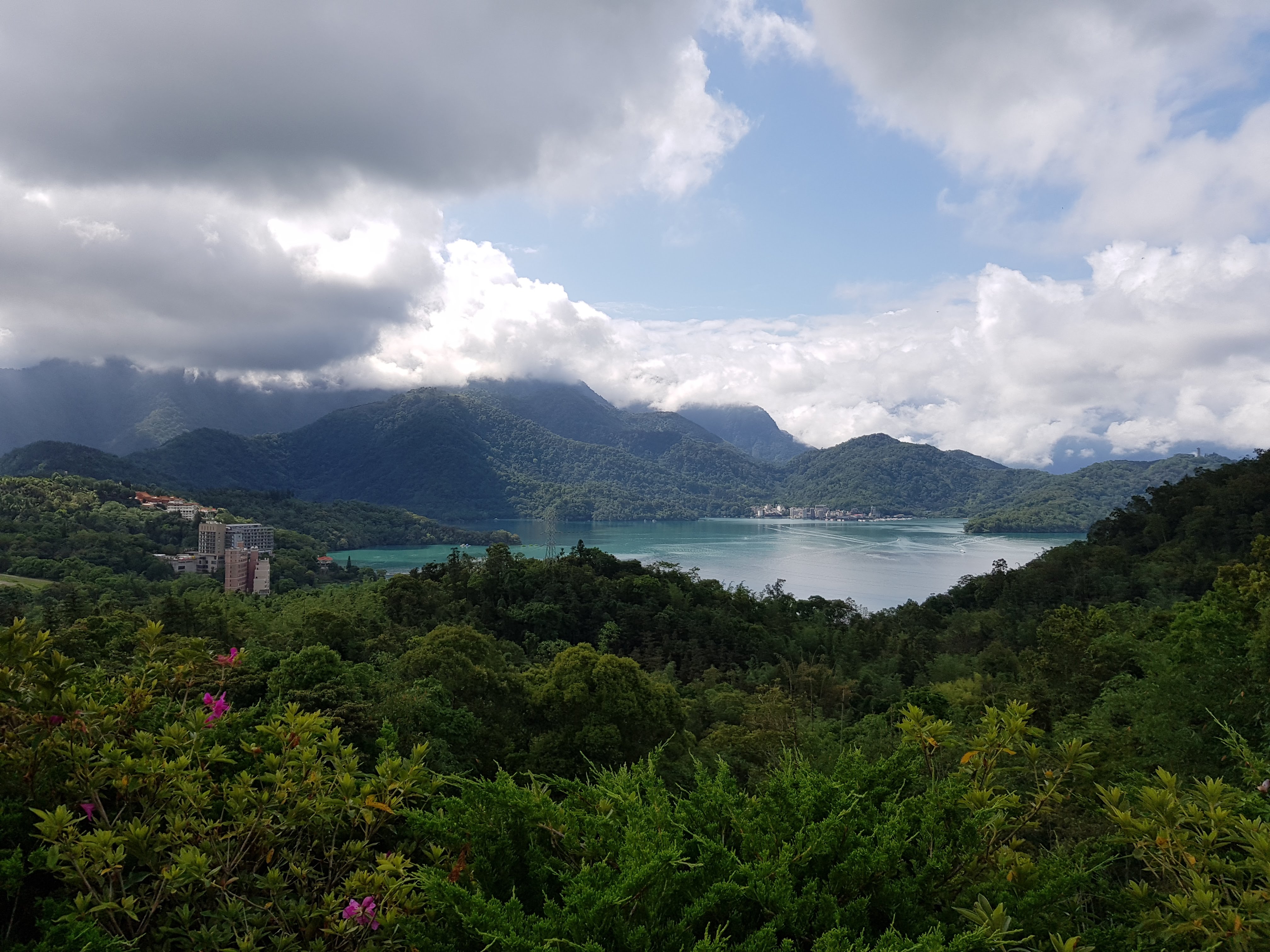
As one of my colleagues said, this is the “Tea Geek Paradise.” It was very interesting visiting and talking to the staff there, surrounded by tea trees while geeking out about tea history. Doesn’t hurt that they have an amazing view of the Sun Moon Lake as well.

Categories: Teas
Tagged: , , ,

Nowhere to buy tea

January 19, 2016 · 2 Comments

A few days ago a group of Korean students came as a delegation, and during lunch we somehow got on the topic of tea, and specifically, where one could buy some Chinese black tea in Hong Kong. Funny enough, after thinking about it a little, my answer was basically – nowhere.

It’s of course not really true that there was nowhere to go. You have your choice from supermarket tea to specialty food stores to specialized tea shops, but a place that I can truly recommend for good, reasonably priced, Chinese black tea? It doesn’t really exist.

That in and of itself is sort of odd – after all, Hong Kong is big on tea drinking. However, people here don’t drink much Chinese black tea. When drinking black tea (hongcha) they generally prefer “western” teas – usually from the Indian subcontinent, but often probably mixed in with stuff from Africa or elsewhere. They are drunk in more formal settings, such as afternoon tea service at cafes and hotels, or they are drunk in the Hong Kong style mixed drinks – in which case the teas are blends created expressly for the purpose, and are usually devoid of origin. They also come in containers meant for food service, like these guys. I doubt anyone wants 2 packs of 5lb teas for home use.

So when you want to buy loose leaf black tea, other than the usual suspects at the supermarkets, you have your choice of overpriced foreign vendors and overpriced local vendors. Buying keemun from, say, Whittard of Chelsea, seems exceedingly silly when you’re in Hong Kong. Local stores either don’t stock very high grade black teas, because there’s no real market for it, or they stock reasonable quality ones but then charge you through the roof for it. Also, Hong Kong tea stores are not great for packaging. It’s fine when you want it for yourself, but if you were going to gift it, it’s not so good.

Similar dynamics are at play when looking for tea elsewhere in greater China as well. When you’re in Taiwan and you want green tea, you either buy Japanese green tea or you go home. Chinese greens in Taiwan, from what I’ve seen anyway, are in pretty much the same position as black teas in Hong Kong – you can either get really low grade stuff or you can be prepared to be charged through the roof for teas that are often not that great anyway. Local taste is not in it, so there’s no real market demand. You can say the same for puerh in Shanghai, for much the same reason – much of the puerh I’ve seen there is not great, or too expensive. I’m sure there are more private vendors in Shanghai who deal in this stuff, but as a visitor looking for stores, it’s terrible.

In the end, I took the students to a local tea shop that I like and they were quite happy to buy some white tea and some tieguanyin instead. Everyone went home happy.

Categories: Teas
Tagged: , ,

Tea fair in Kyoto

June 14, 2015 · 3 Comments

While I was doing research and waiting for my books at the Urasenke School‘s library, I discovered that there was, that day, a tea fair across town at the Yoshida shrine near Kyoto University. Since the library closed at 3 anyway, I decided to hop over and take a look.

The tea fair was a decent size – about 20-30 booths from various sellers. What was perhaps the most surprising was that about half of them were selling Chinese teas of various sorts. Like these guys:

Or something like this:

The Chinese tea they sold and were pushing were mostly oolongs of various sort, with some greens and puerh thrown in. Many are Taiwan based or Taiwan inspired. But I wasn’t here for Chinese tea.

The Japanese tea sellers were mostly from the area – selling Uji produced tea. I tried some and bought a few bags, although given my glacial rate of drinking Japanese greens, I don’t know when I’ll ever get to them. More interestingly though, I ran into a stall with sellers from, of all places, Miyazaki prefecture. Miyazaki is next to Kagoshima, which is now a major producer of Japanese teas, but Miyazaki, relatively speaking, doesn’t do much tea. These guys claim to be organic and all that, and more importantly, they make black tea. The few I tried were quite good – one almost reminiscent of Darjeelings. Needless to say, I came home with quite a few bags of tea.

Having a tea fair at a shinto shrine has other advantages too. It’s nicely shaded but still feels like a park, it’s got a hill behind it and I actually hiked over the hill to get to the fair, and it’s reasonably accessible. There was also a sho performance while I was there.

There are also some things that I’m reminded of as someone who doesn’t drink a lot of Japanese tea – first, that Japanese greens are brewed strong, and the idea is to coat your mouth with the taste, at least when they make it for you. It’s a sharp contrast with Chinese greens, which emphasize that refreshing lightness. Second, these people shake their teapots violently to get every last drop out. No such thing as a gentle tip – they literally hold the kyusu with two hands and shake the thing like it’s going to drop you money to get every last bit of water out, usually stopping when the last shake produces a lot of tea leaves. Finally, Japanese greens, in the grand scheme of things, are pretty cheap, even decent grade shincha. This partly has to do with the yen dropping like a rock in the past few months, but also reflects how prices have really risen in China, which is the other main source of green teas. They are also so different that direct comparisons are basically pointless.

Categories: Teas
Tagged: , , , ,

Aged Margaret’s Hope Darjeeling

February 11, 2011 · 7 Comments

A few years ago, Mr. Rajiv Lochan of Lochan Tea sent me a few really big bags of samples.  I’ve had some in the intervening years, but never quite finished any of them despite my best attempt, mostly because I don’t drink black tea very often.   Since I’m on the road today, I pulled out the bag labeled Margaret’s Hope Black Tea, and had it grandpa style.  The tea, I must say, has aged very gracefully in the four years that it’s been under my possession.  I’ve always known that blacks often taste fuller with age, at least in the first year or two, but this tea, drunk in this way, was just really, really nice.  Long gone are the aggressive notes that you get with Darjeeling — that bitter bite that comes with the territory of drinking Darjeelings grandpa style is not to be found.  Instead, a very welcoming sweetness pervades the tea, coats the mouth, and slides down the throat.  The sweetness is not too different from the type of taste you get from a good, somewhat (but not very) aged puerh — a 5-7 years tea that’s turning the corner.  You can still taste the typical Darjeeling scent underneath, but this is much better than, say, a young 2nd flush.

This makes me wonder if I should stock up on some Darjeelings and just let them age.  Might not be a bad idea, actually.

Categories: Teas
Tagged:

Black tea headache

September 20, 2008 · 22 Comments

I had some keemun yesterday in a mug. Nothing harmful, I thought, but at the end of that, I could start to feel a little of that same headache creeping in. It was not yet a major concern, nor the rather annoying headache that I’ve had recently after drinking blacks, but nonetheless… it’s there.

It’s a strange thing. I’ve never had a problem like this before, where drinking one type of tea leads to a headache. I deliberately used less leaves than usual and maybe that’s what allowed me to avoid a full on headache, but the mere presence of it is disturbing, to say the least.

Then I drank some of my aged baozhong, which always serve me well in a pinch….and no problems.

What could black tea have that causes this? Pesticide?

Categories: Old Xanga posts
Tagged: ,

Headache…

September 6, 2008 · 5 Comments

It’s odd. I had some Yunnan gold today, and a slight headache showed up a little after I drank the stuff.

That is, in and of itself, not too interesting. Afterall, there are lots of things that can cause a headache. What’s odd is that I normally don’t have headaches, and I noticed that last time when I drank a bunch of black teas (i.e. when I was drinking those Keemuns) I was suffering from headaches during the day.

I have no good explanation for it, except that they seem to be correlated — and drinking those teas seem to precede the headache. Too much caffeine too quickly? Too concentrated a dose? Something else?

Categories: Old Xanga posts
Tagged: