
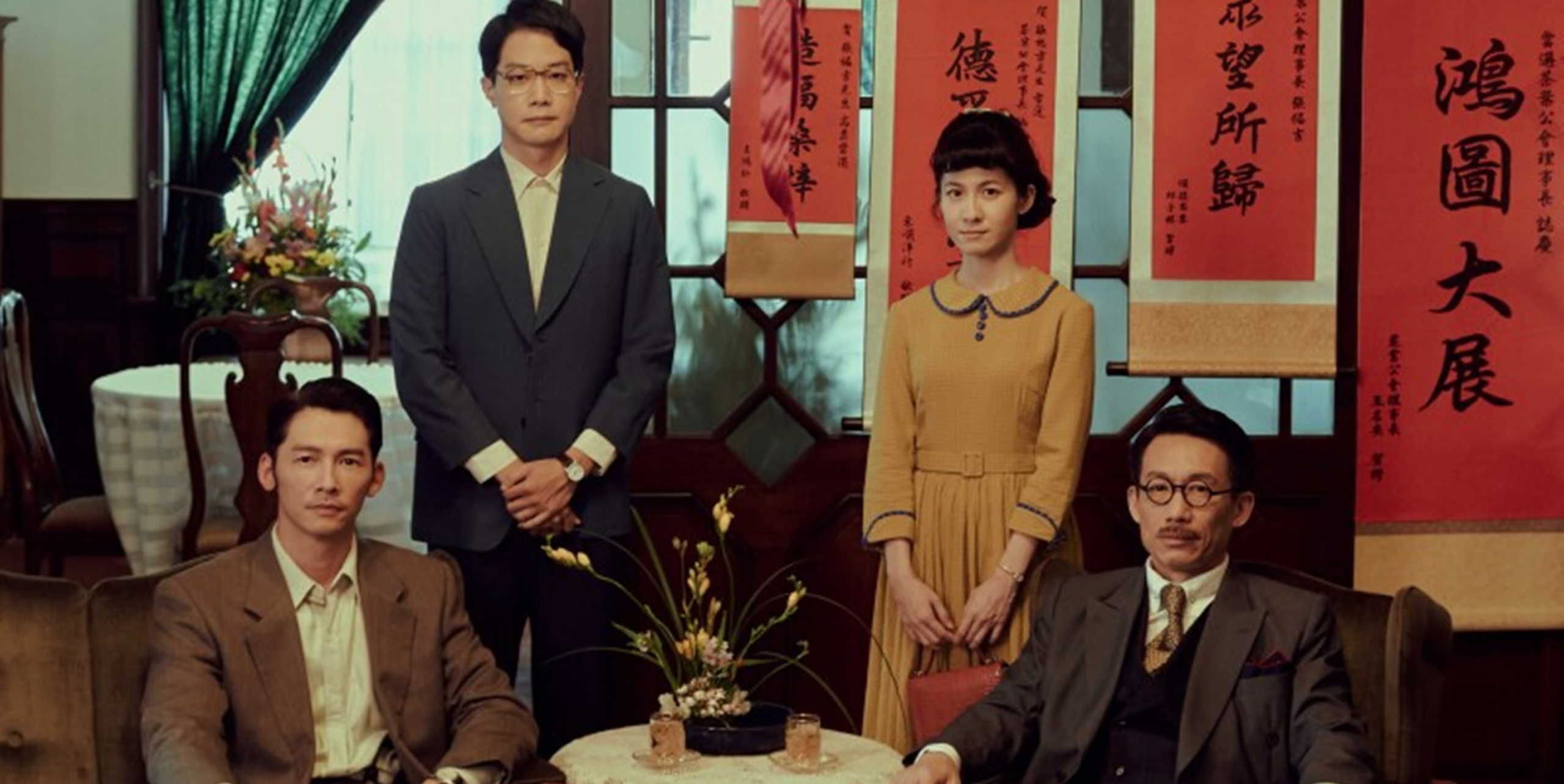
About four years ago there was this TV show in Taiwan called Gold Leaf. Some of you have probably heard of it, as it became somewhat popular for a while. The story revolves around a fictionalized character based on the tea producer Khiong A-sin (I’m romanizing it this way because that’s what my sources called him), a Hakka based in Beipu. The show itself wasn’t very good – I watched maybe 3-4 episodes before deciding it wasn’t worth pursuing any further, partly because the tea parts of the show was nonsensical.
However, for the past week or so I have been here at Cambridge looking at archival documents from Jardine Matheson & Co. Jardine, as many of you probably know, is the trading firm that got its start smuggling opium into China. A big part of their trade, however, was tea. They traded teas of all sorts – Chinese, chiefly, but also teas from Taiwan. Since I’m working on a history of the tea industry in Taiwan, I came here to look at what they were doing.
The TV show also alludes to this a bit, but starting around 1950 Jardine and Khiong entered into a partnership of sorts, where Khiong produced quite significant quantities of tea for Jardine to sell overseas. Tea in Taiwan during this period was still largely for export – over 90% of it was sold overseas, with very little retained for local consumption. Khiong produced both black tea and green tea for Jardine, depending on the year and the orders. The black tea, later branded as Hoppo tea, was fairly successful, and seemed to have found a market footing.
What’s interesting though is that Khiong, for reasons unclear from the Jardine files, was not a very capable businessman. Year after year, he asked Jardine to front money for his operations so that he could enter into production for the firm, presumably because he did not have enough cash on hand to pay the farmers and the workers for their work. More seriously, when it came time to deliver teas, he was frequently late and not delivering quantities sufficient to fulfill the original orders. Jardine was frustrated by this – they had, after all, invested quite a bit into this relationship and propped up Khiong’s firm (Yung Kuang). Somehow, though, he was not quite holding up his end of the bargain.
Now, Jardine certainly was not running a charity here, but it was also an interesting case because over the years, their tea business in Taiwan really achieved very little. Although the numbers are scarce, from what I can gather in the archives the tea department in Taiwan post WW2 never made any money, consistently losing money instead. Even in the pre-war years, profits were slim. The Taiwan operation for tea was justified as part of a portfolio of service they provided to customers overseas who want some access to these teas when necessary. Also, it was run as a pretty lean operation, with only a half dozen or so employees, usually consisting of one British man in charge, a Chinese buyer, and then some lower level staff. They were hoping to cultivate Khiong as a stable production partner (since Jardine really didn’t want to get involved directly in dealing with farmers and production, which was a whole complicated mess). Khiong, however, didn’t quite deliver.
It all started seriously cracking in 1964 – over a dozen years after they first started their relationship. Mid-year, Khiong told Jardine that he was having some liquidity issues, and instead of paying down his debt with cash or even tea, he would give them…. garlic powder, 27 tons of it in fact. The Jardine side realized they didn’t really have much leverage, and aside from getting his factory and other assets as collateral for his loans, they took the garlic delivery. So, a company that never sold any garlic before all of a sudden is saddled with a lot of garlic powder sitting in their godown, trying to figure out how to move this stuff. Their taipan in Hong Kong complained about how things got to be this way – and asked his staff to please avoid running into situations like this in the future.
Unfortunately for Khiong, he ran out of runway. Within a year, his company declared bankruptcy and the factory was wound down. This wasn’t an easy time for a lot of producers – Taiwanese tea was in a very awkward phase, competing on price against other producers but still far too expensive. The tea men at Jardine were actually quite astute, commenting that they think the future for their business (if not the industry) was going higher price, high quality oolong teas. In about ten years time, that was indeed what would happen, but in the meantime, businesses like Yung Kuang died.
Today the Khiong mansion is still standing, and open to the public as a tourist destination. Descendants of Khiong A-sin bought the house back, and now you can see it after making a booking online.


 RSS - Posts
0 responses so far ↓
There are no comments yet...Kick things off by filling out the form below.