
 See all the flaoting leaves? This is a sign that your water wasn’t hot enough, and the only way to remedy it is to drink this as fast as possible and reinfuse with hotter water. Although, in actuality, this is sort of a failed cup already. In the cup is some 30 years old aged oolong.
Grandpa style tip
July 31, 2013 · 1 Comment
→ 1 CommentCategories: Teas
Tagged: aged oolong, grandpa, skills
It’s sad when….
July 30, 2013 · 10 Comments
… you break a piece of teaware you use every single day
… you turn on the kettle, only to find the heating element is wonky and you don’t have hot water
… you are traveling and there’s no hot water anywhere within 100km
… your favourite tea shop you visited last time is now a McDonald’s
… you discover that you didn’t seal your bag of tea, and now it’s stale
…or you left it out in the sun and now it’s baked
… you realize that your favourite tea is down to fannings left in the bag
… and it’s sold out
… and the tea you bought instead turns out to be a real dud
… which is beaten by the tea you drank yesterday, on its 25th infusion
… when tea producers promise you so much, and give you so little
… when you can’t decide what to drink for the day, and end up drinking something really bad
Which unfortunately is my case today.
→ 10 CommentsCategories: Teas
Tagged: musings
Two new teas from Wisteria
July 26, 2013 · 6 Comments
I recently acquired two new cakes of tea, with many thanks to the generous help of Tony of Origin Tea. They are the two new productions that Zhou Yu supervised, and I believe these are the first new teas he’s made since about 2007. They are the best new teas I’ve had in recent years.
The first of the two teas is called Zhenren yufeng. This one’s hard to translate properly, but roughly, it means “Regal style of the enlightened man”.
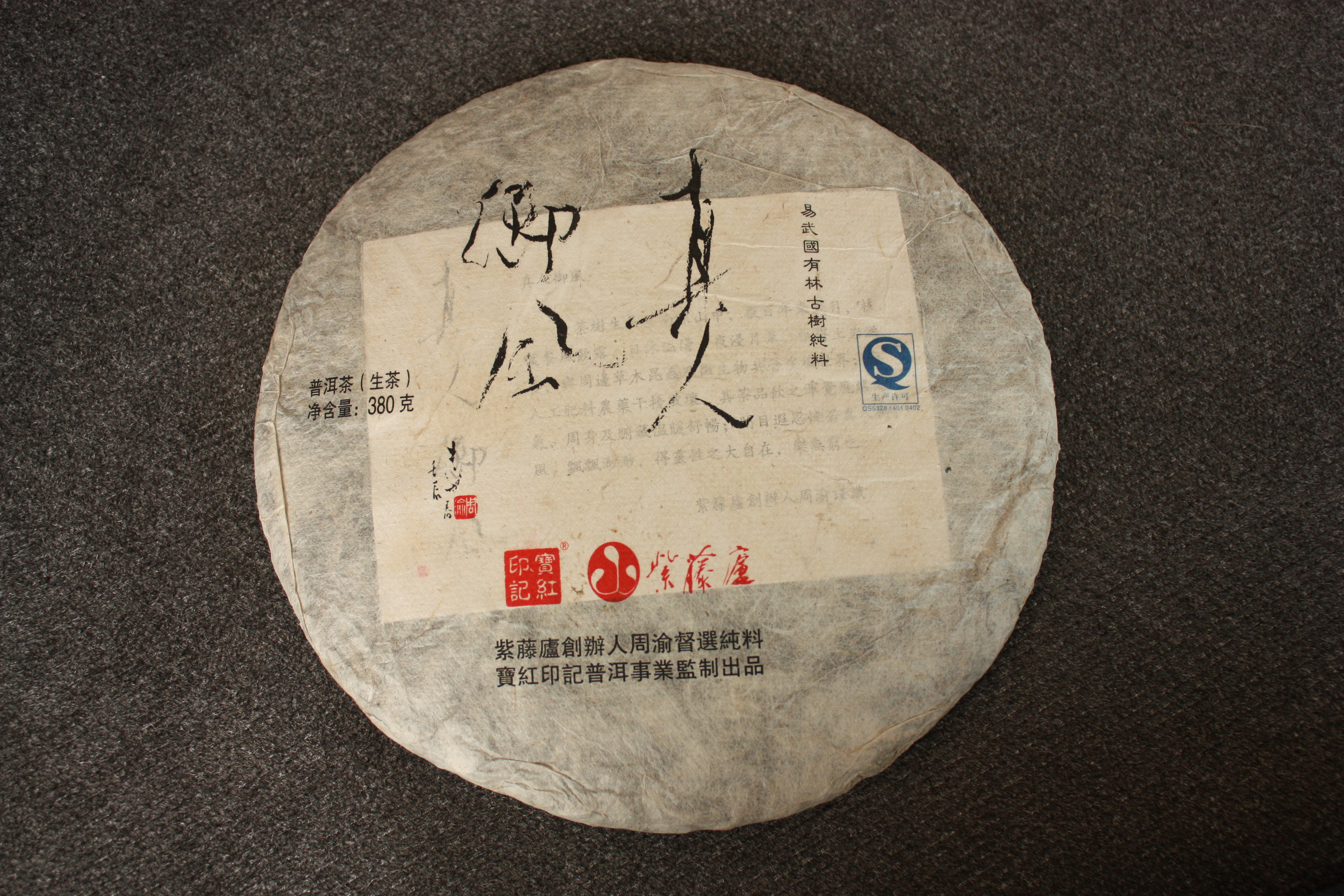

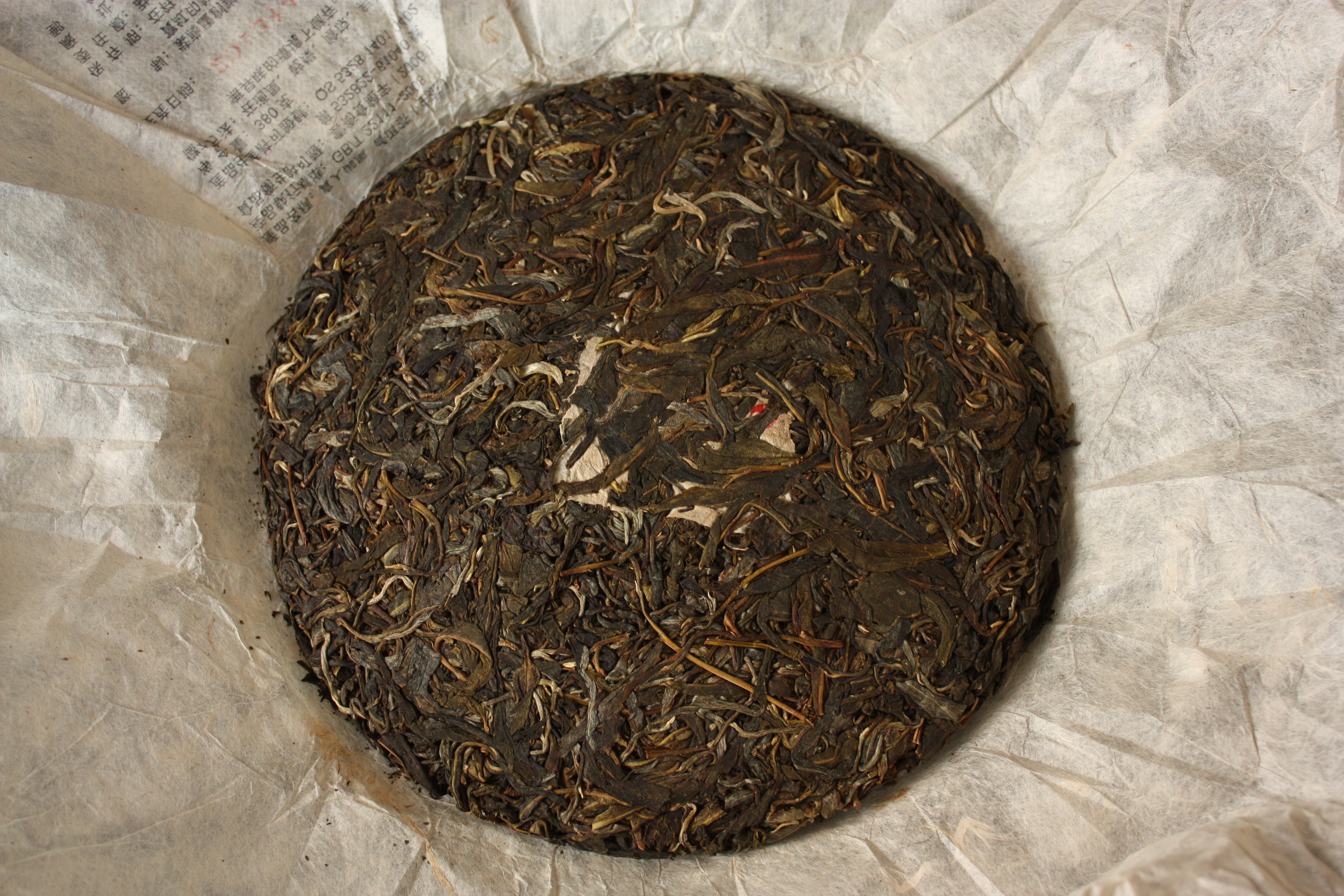
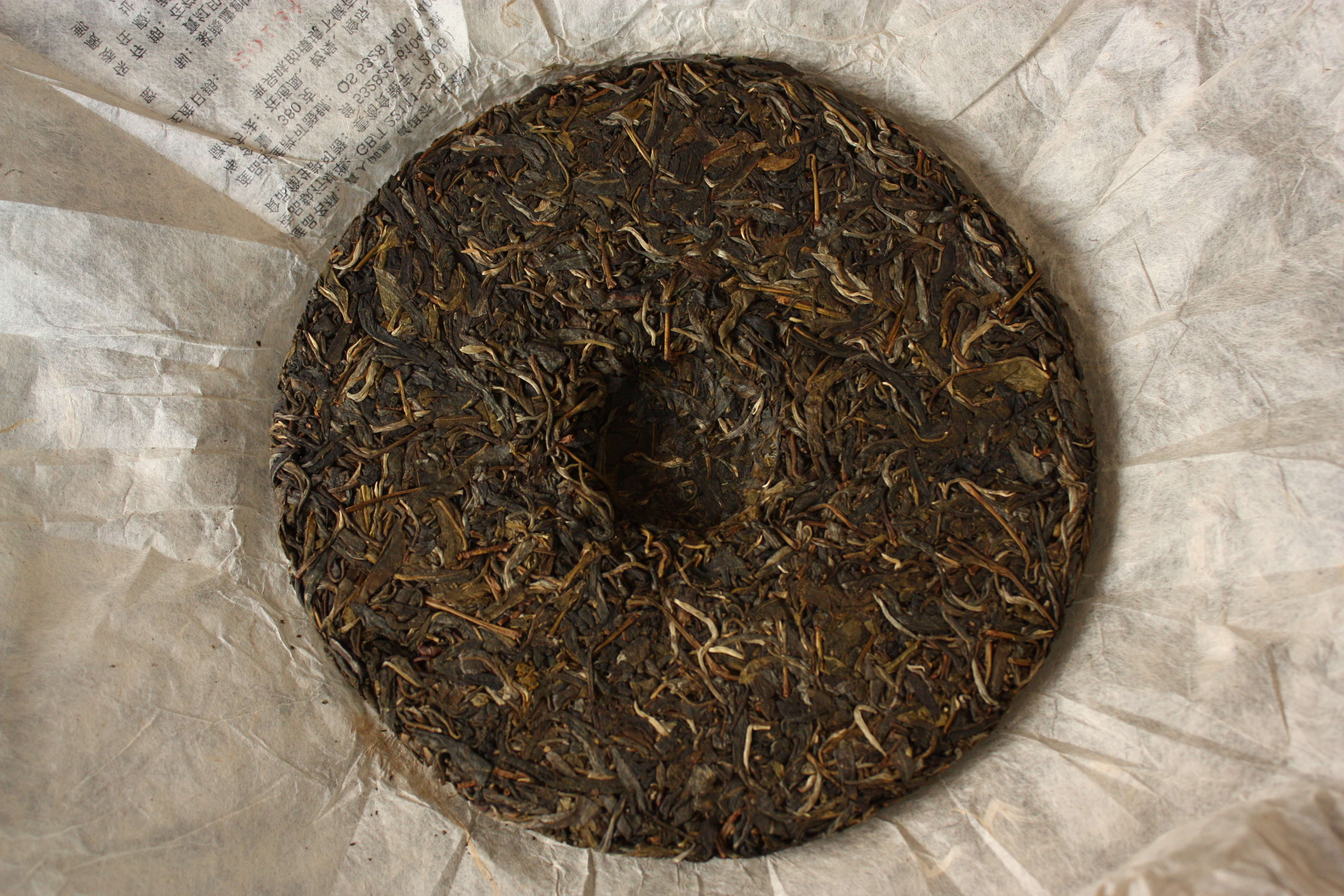 I bet you the name wasn’t conjured up by Zhou Yu himself – it’s very pretentious, and is mostly a marketing ploy, I think. The run is only about 1400 cakes, so at 380g each, it’s 532kg, so they collected maybe something like 800kg of raw maocha to get this much stuff. It’s not a big run. I don’t know where the tea is from, but it’s somewhere in Banna. It says it’s from nationally owned forests in Yiwu, but that’s actually quite a big area.
Then, the second one, is called Yuema wangong. Of course, this is a play on words – the literal meaning of this name is “Jumping horse, bent bow”, with a man suitably doing exactly that in the picture. The real point is that this is Wangong tea, also a small village in the greater Yiwu area that’s been getting a lot of attention these days. This name is something that the actual maker of the tea (Zhou Yu took a supervisory role), an outfit called Baohongyinji, has been using this name for their Wangong tea for at least the last two years, I think.
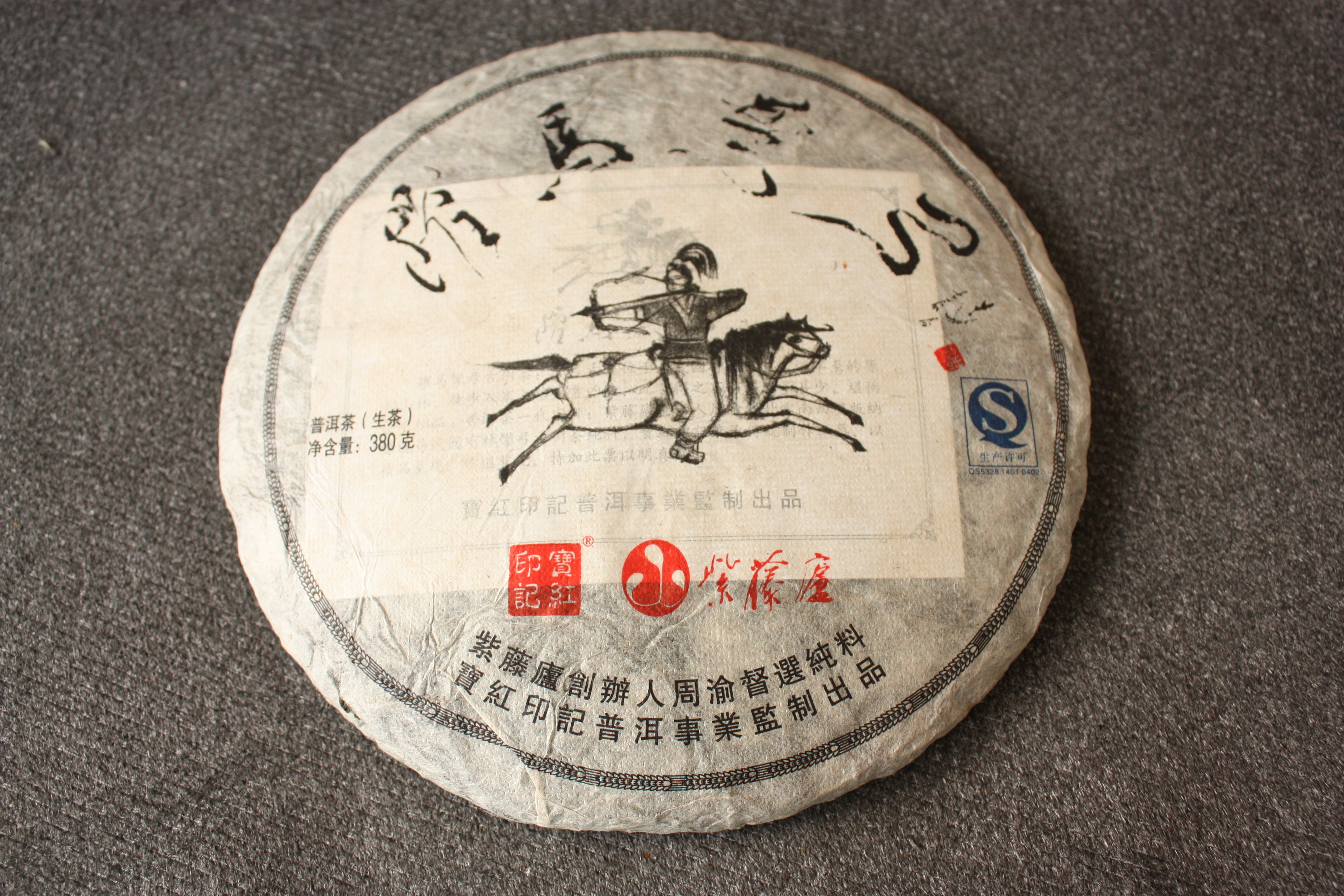
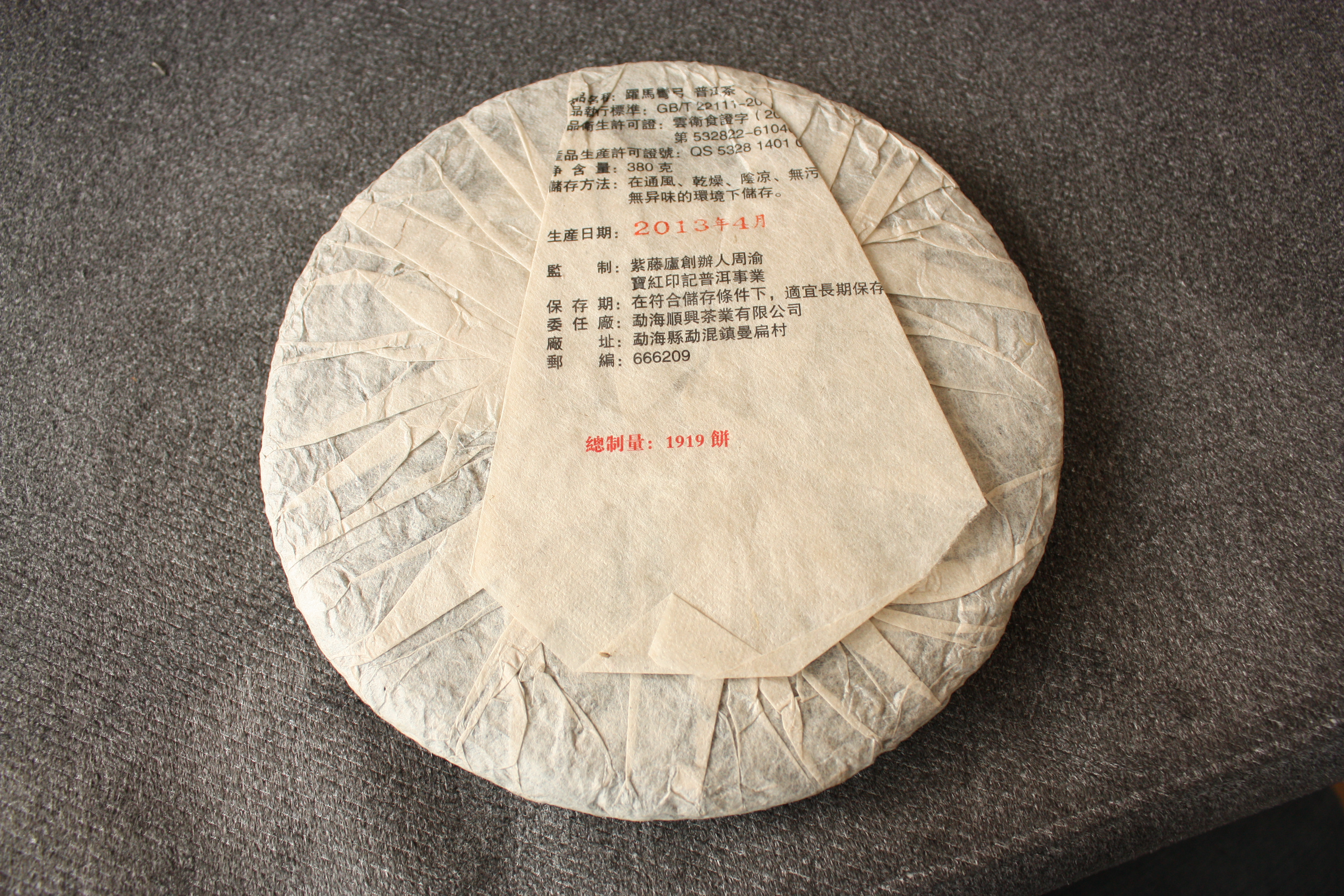
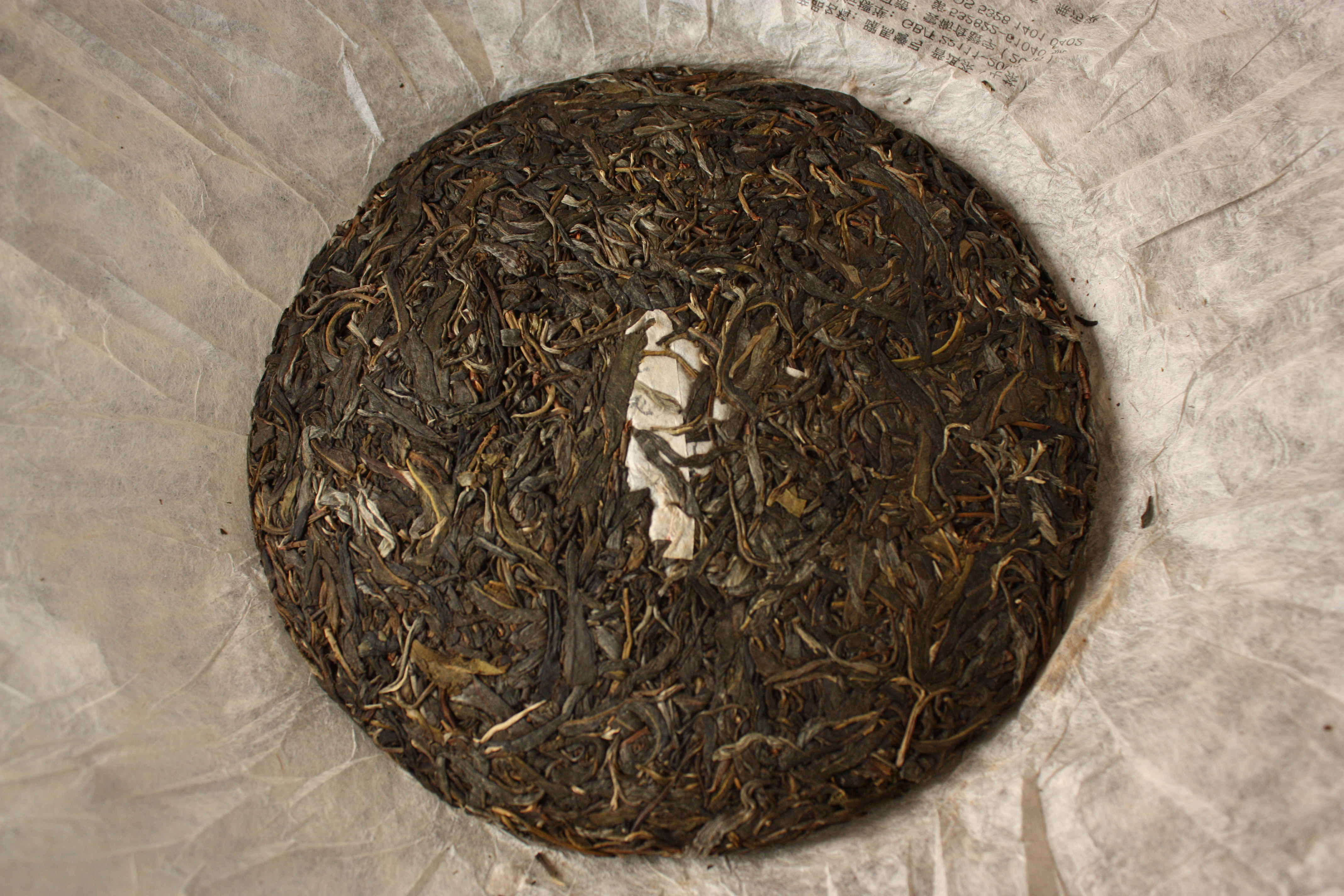
 Taste wise, the second is more immediately appealing – nice aroma, etc, but the first is the better tea. The first tea has relatively mild taste, but it has strong body and good qi. It will age well. Not that the Wangong will age badly, but given a choice, I’d pick the first one.
Too bad the cost of the tea, at over $200 a piece, is rather high. The first second cake is slightly more expensive, but neither are easily within reach. That said, there are way more expensive teas out there that are terrible, like this 5000 RMB monstrosity that is basically green tea puerh. Thank god I didn’t pay for it. There are few people out there who have more experience with puerh than Zhou Yu, and these two cakes show (not that he needs to prove anything) that he knows what he’s doing.
→ 6 CommentsCategories: Teas
Tagged: young puerh
Need tea? We deliver
July 24, 2013 · 3 Comments
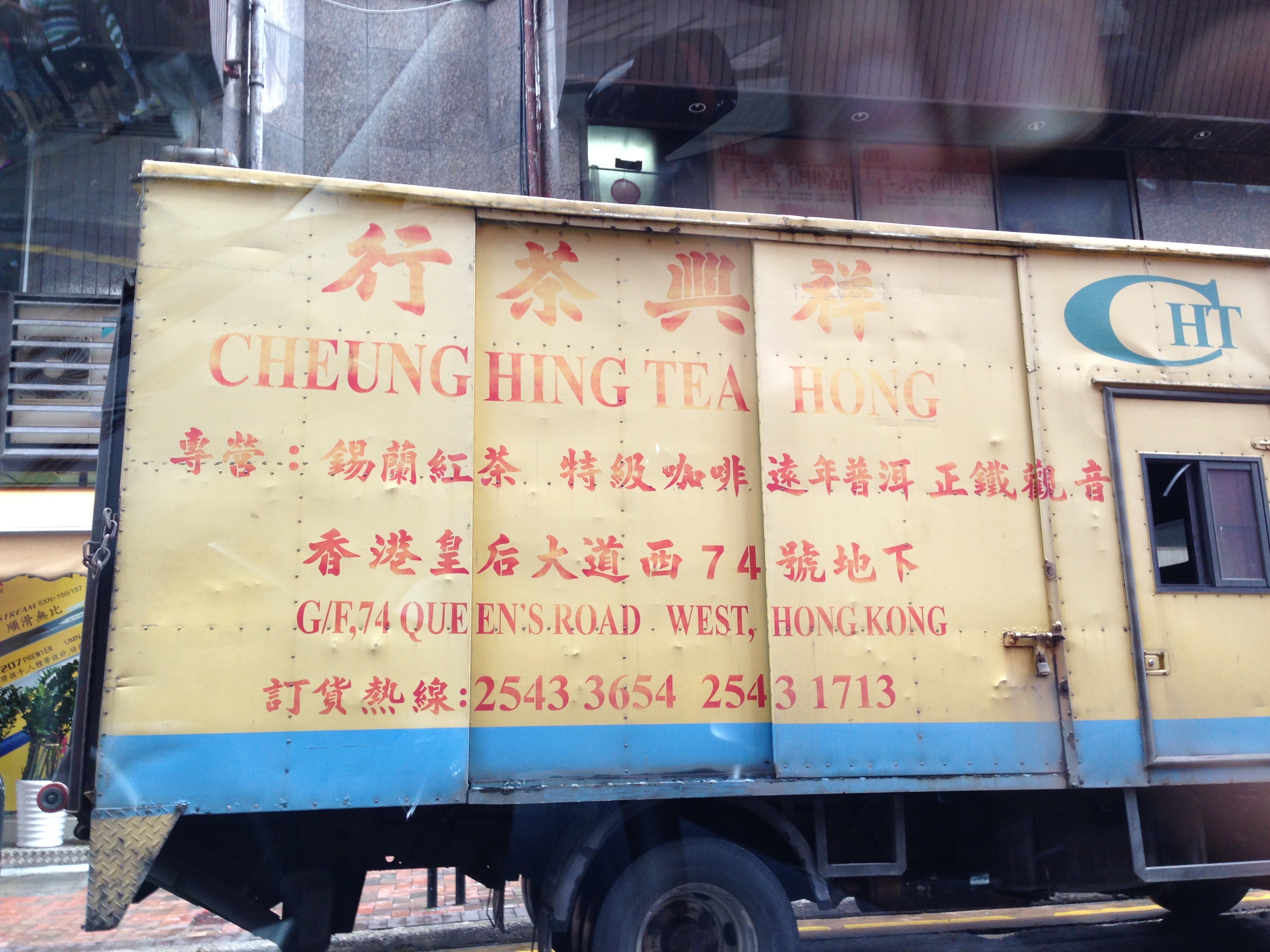 Cheung Hing teahouse, “specializing in Ceylon black tea, specialty coffee, aged puerh, and real tieguanyin.” This, by the way, is the same Cheung Hing as the one named on those yixing pots.
Of course, I think they only deliver if you want a few hundred kilos of tea.
→ 3 CommentsCategories: Teas
Tagged: shopping
A small curiosity
July 16, 2013 · 3 Comments
Over the years I’ve collected some pretty odd looking teapots. This is one of them
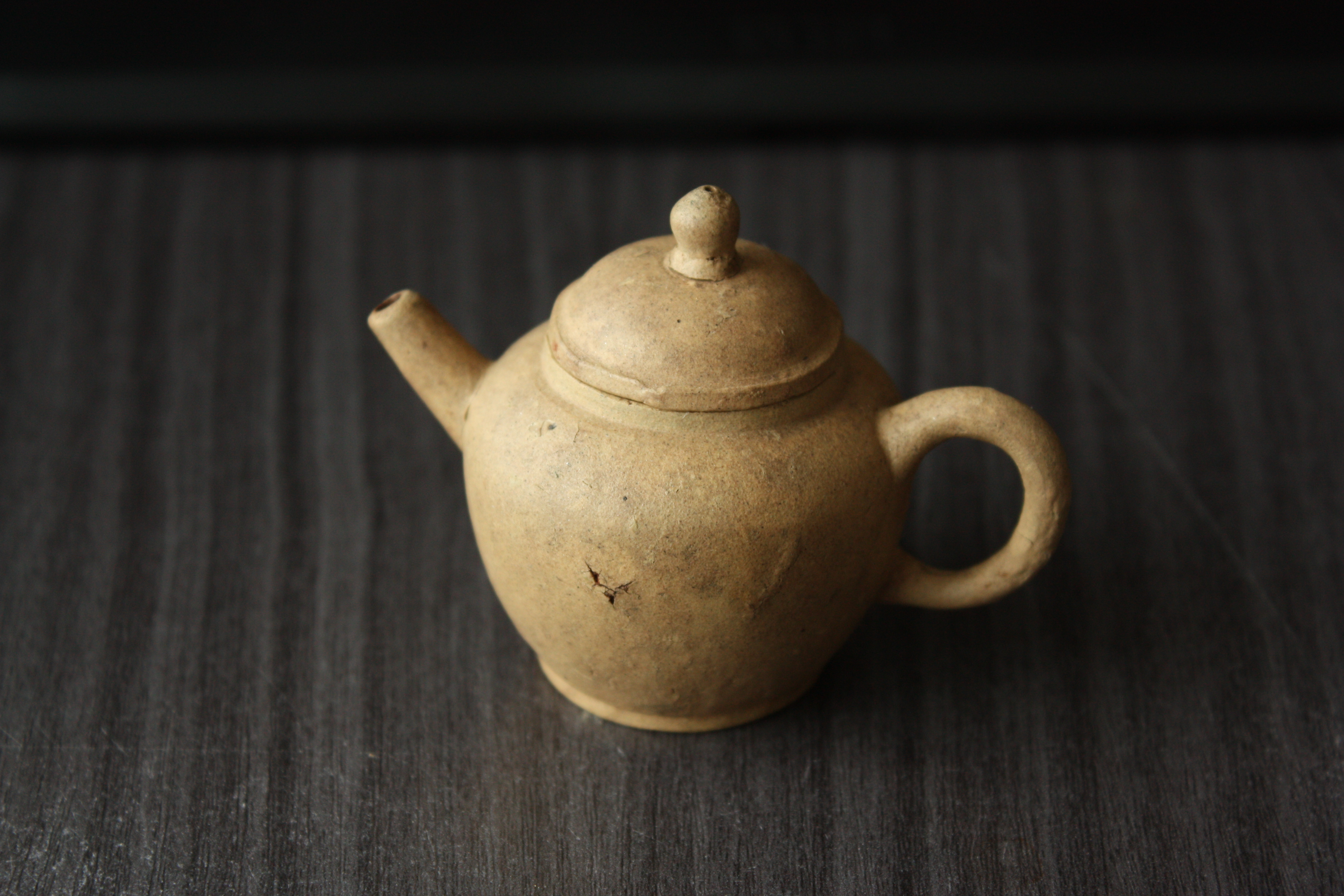
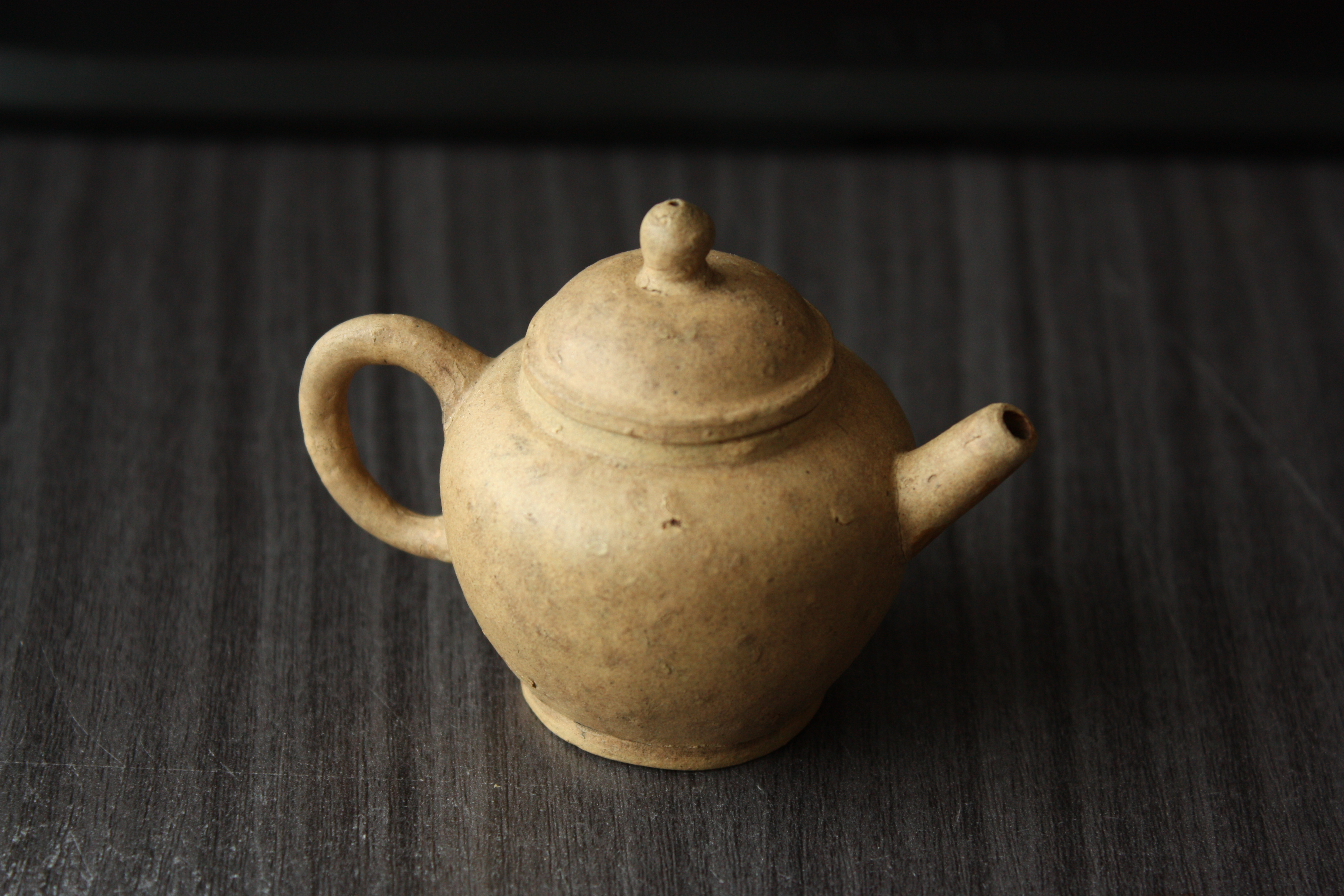 I have no idea what this is. The thing is tiny – it measures 8cm from tip of spout to end of handle. It is unglazed, and construction is Yixing-like – it’s clearly slab built, and probably molded by hand/fingers instead of using many tools. The thing probably leaks a little – there are some tea stains on the exterior of the pot that looks like minor bleeding that happens when you use, say, a Hagi cup. It has that Yixing sandy smell when you wet it. I’m inclined to believe this is a Yixing pot, although I don’t know of its origins or anything.
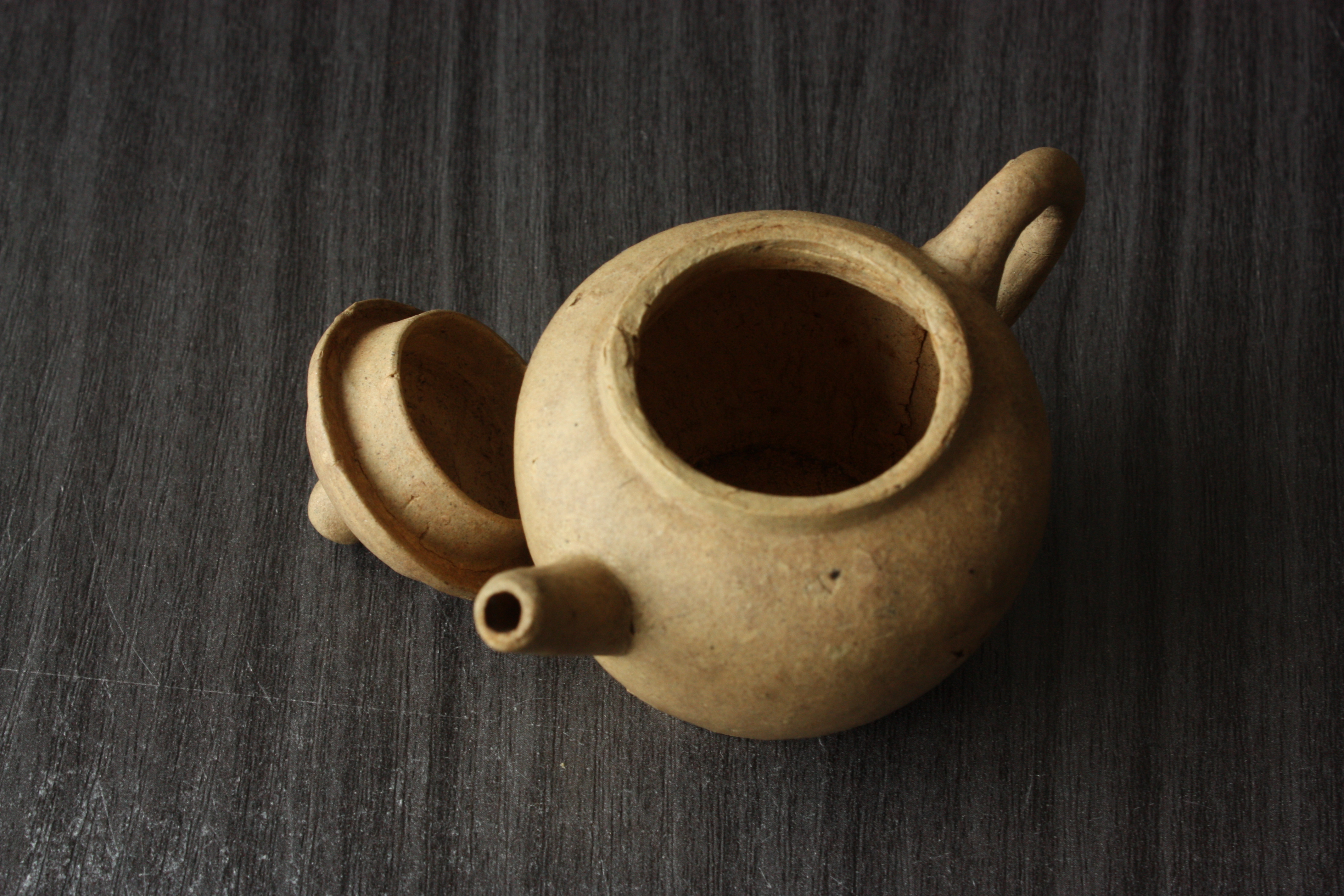 Small pots like this always pose a problem. I know they have fans – people always ask me where to get these tiny pots, but I personally find that anything below about 80ml to be too small to be of practical use. First of all, leaves often don’t fit. Then the small size makes control quite difficult. I prefer things in the 100ml range, which puts this just below. I doubt I’ll be using this pot much, but it’s a lot of fun to look at and play with.
→ 3 CommentsCategories: Objects
Tagged: teaware, yixing
The retaste project 16: 2006 Fall Jixiang Chashe Yiwu Dingjiazhai
July 9, 2013 · Leave a Comment
So after that terrible, terrible tea from Jabbok, I had to have something else to clear my mouth of the bad taste. I opted for an old reliable – this 2006 Yiwu I bought, online, from a small time maker of puerh who seems to have disappeared since then.

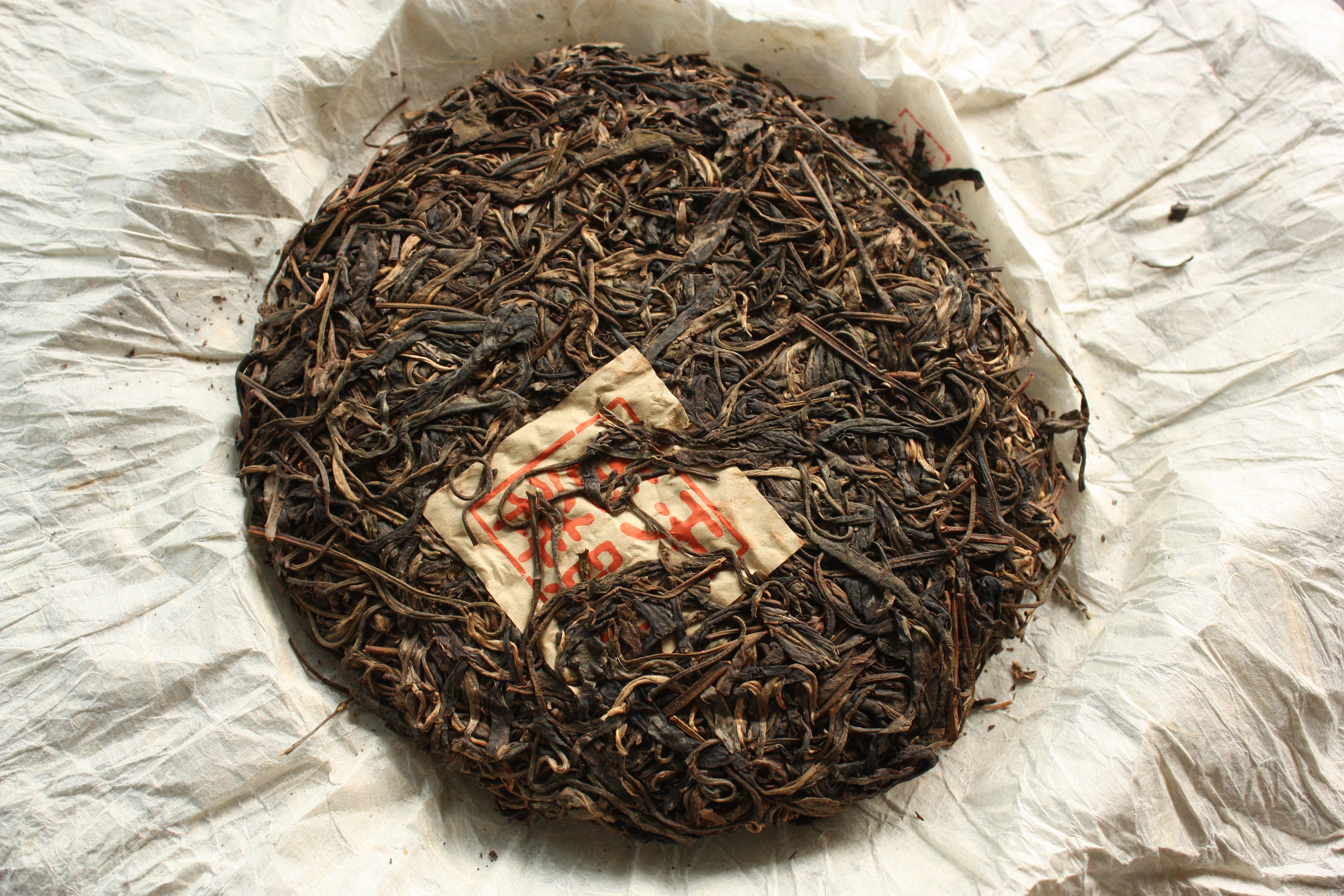
 This guy’s business model was basically to press cakes and then sell them via the various discussion forums on tea. I bought maybe half a dozen cakes from him, all pretty decent things. I’ve written about this tea some years ago. I think the main things to note now are as follows:
1) The most obvious thing is that the smoke is gone, totally gone. There’s no more smoke in the tea, at all.
2) The tea is not quite that strong, now that I have more comparative experience. It’s fine, but it’s not awesome.
3) I really should dig out the other cake and try it side by side with this and see what happened 6 years down the road.
 What I can say with confidence though is that my storage conditions seem to be advancing the tea steadily. That’s reassuring, because the last thing you’d want is if the storage of your own teas is ruining it. It’s happened to other people before, and I sure as hell don’t want it to happen to me. This isn’t even remotely close to the same tea as the one I drank almost seven years ago, and in the intervening times, I’ve only tried it maybe a few more times. It’s a pleasant enough drink, and I will happily drink it all up in one go. For the price I paid back then, which was about 200RMB, it seemed like a lot of money, but nowadays I think something of this quality will already set you back far more, unfortunately. That’s the market for puerh these days. Oh well.
→ Leave a CommentCategories: Teas
Tagged: retaste project, young puerh
A clear and present danger
July 5, 2013 · 16 Comments
One of the problems I find quite common these days is what I’d call “green tea puerh.” This is stuff that, basically, have been through too much/too hot a kill-green process, and the tea has consequently turned into green tea. Some of you might ask “well, isn’t puerh basically green tea?” Well, yes and no – greens, such as Longjing, have been through higher temperature firing than things like puerh. Whereas puerh will age into something because it’s still alive, teas like Longijng are cooked – fixed in form, and need to consumed as soon as possible.
It’s not entirely clear what the reason for the proliferation of green-tea puerh is, but as Scott of Yunnan Sourcing recently described, it’s as if all the farmers bought a tumbler machine to help them fry the tea leaves, and nobody learned how to operate it properly. So what happens is that they do it too hot or too long, and the tea gets cooked.
The result of such cooking is bad, very bad. Initially, it will yield a pleasant tasting tea with good floral or beany aromas, sweet, and perhaps smooth. What hits you though is if you try the tea two, three, or four years down the road – it’ll be bitter, nasty, thin, sour, all the things you don’t want in an aged tea, because it’s aged green tea. I recently tried a sample given to me by a vendor two years ago. At that time the tea tasted a bit off – but it’s called “honey sweet.” Well, honey sweet has now turned into massively bitter. It’s terrible, and it’s a shame, because the raw materials were good.
I just had a tasting with some friends of five newly made teas. Of the five, three were of the “way too green” variety. This is not a regional thing – this is a processing problem. Two of the teas are fine – one is from Xishuangbanna, while the other is from Menghai. The rest were all green teas in disguise, and no doubt, in a few years, the people paying good money for them (and good money it is – one is selling for 5000 RMB on Taobao a cake) will regret it. Or, they can keep fooling themselves and say it’s aging well.
Pictures were taken with the phone, so pardon the varying lighting.


→ 16 CommentsCategories: Teas
Tagged: young puerh
The retaste project 15: 2005 Jabbok “Select aged tea”
June 30, 2013 · 2 Comments
This tea is something I bought in 2005/6. The cake is a bit dark now.
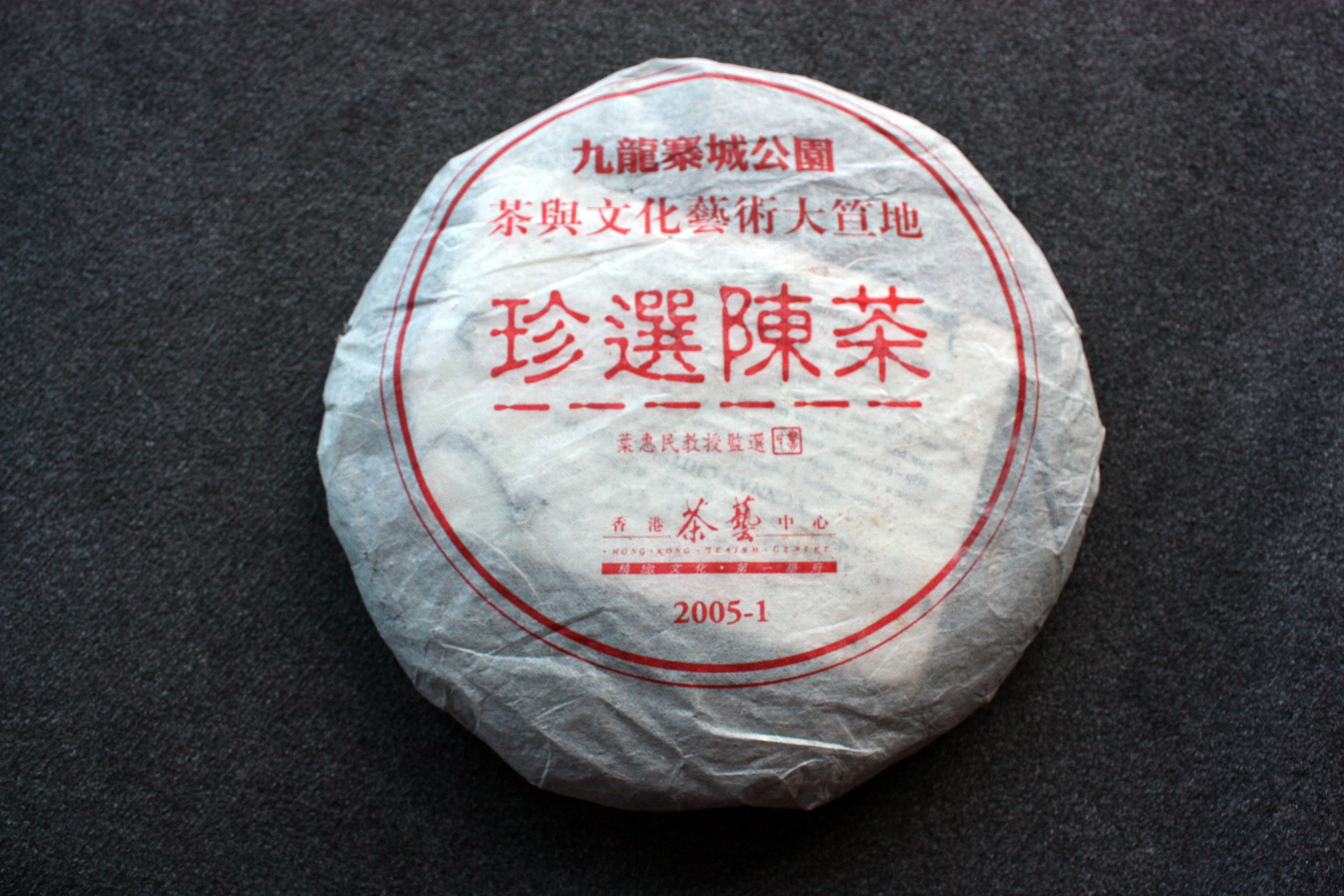

 The tea is similarly dark when brewed.
 Alas. That’s it. It looks fine, but it tastes terrible. It starts off sour, with some really weird off notes. There’s no real body. I suspect this tea was made with some really low quality leaves, and then sold. I bought it at the time because I didn’t know any better, and also because it was cheap enough. The guy who made this calls himself “The Professor,” because he’s been invited as a visiting professor at one or two places in China. He has a bit of a reputational problem here in Hong Kong, and I can see why. The tea left such a nasty taste in my mouth I went to something else also immediately after to wash it out. Thankfully, that tea has also been in my storage for the last six years or so, and isn’t turning out badly. At least it’s not me.
→ 2 CommentsCategories: Teas
Tagged: retaste project, young puerh
A blast from the past
June 22, 2013 · 7 Comments
As I was sorting through old files today, I ran into this
 For a few years Hou De was the suppler of choice for a lot of people in North America and Europe as well. He sold a lot of tea from Taiwanese puerh producers. In the last few years his sales of puerh has really slowed, and he hasn’t brought over much from that side anymore. I think he continues to do some business in yixing and Taiwanese oolongs.
I can’t seem to find any of my notes for the 2005 sample. I do have my notes for the 2004 version. I was in Beijing at the time, and I don’t think I really knew what I was doing. I did, however, like the tea. The 2005, if I remember correctly, was not nearly as good as a tea. I think back then each cake was selling for $70-80 USD a cake, which at that time was really high, but in retrospect, it’s not that bad.
I’ve been trying to go through some old samples, some of which are from Hou De that I have kept in little glass jars. Some were labeled, others not. There was one, the 1999 Yiwu Zhengshan from Dayi (not Green Big Tree), that really tasted good. Now if I could only find the thing without costing an arm and a leg…
→ 7 CommentsCategories: Teas
Tagged: young puerh
Hitting hard with a hammer
June 19, 2013 · 11 Comments
When I was in China in 2006 doing research, I was a poor grad student and generally couldn’t afford to buy a lot of tea. I sampled a lot, and tried as many things as I could. I bought some things that I thought I liked. Looking back now, the biggest regret from those days is probably me not being able to buy enough of what I like. Some of the teas I bought obviously turned out to be crap. Others, however, I wish I have more of. A more experienced tea friend in those days told me that whenever she was buying stuff, she liked to “hit hard with the hammer,” meaning buying lots of the tea. Otherwise, you run the risk of not having enough of it when you want it.
Having learned that lesson, these days when I run into a tea I like, I tend to buy a lot of it. There are a few teas like that that I have. This is why I recently ended up with 50 of these.

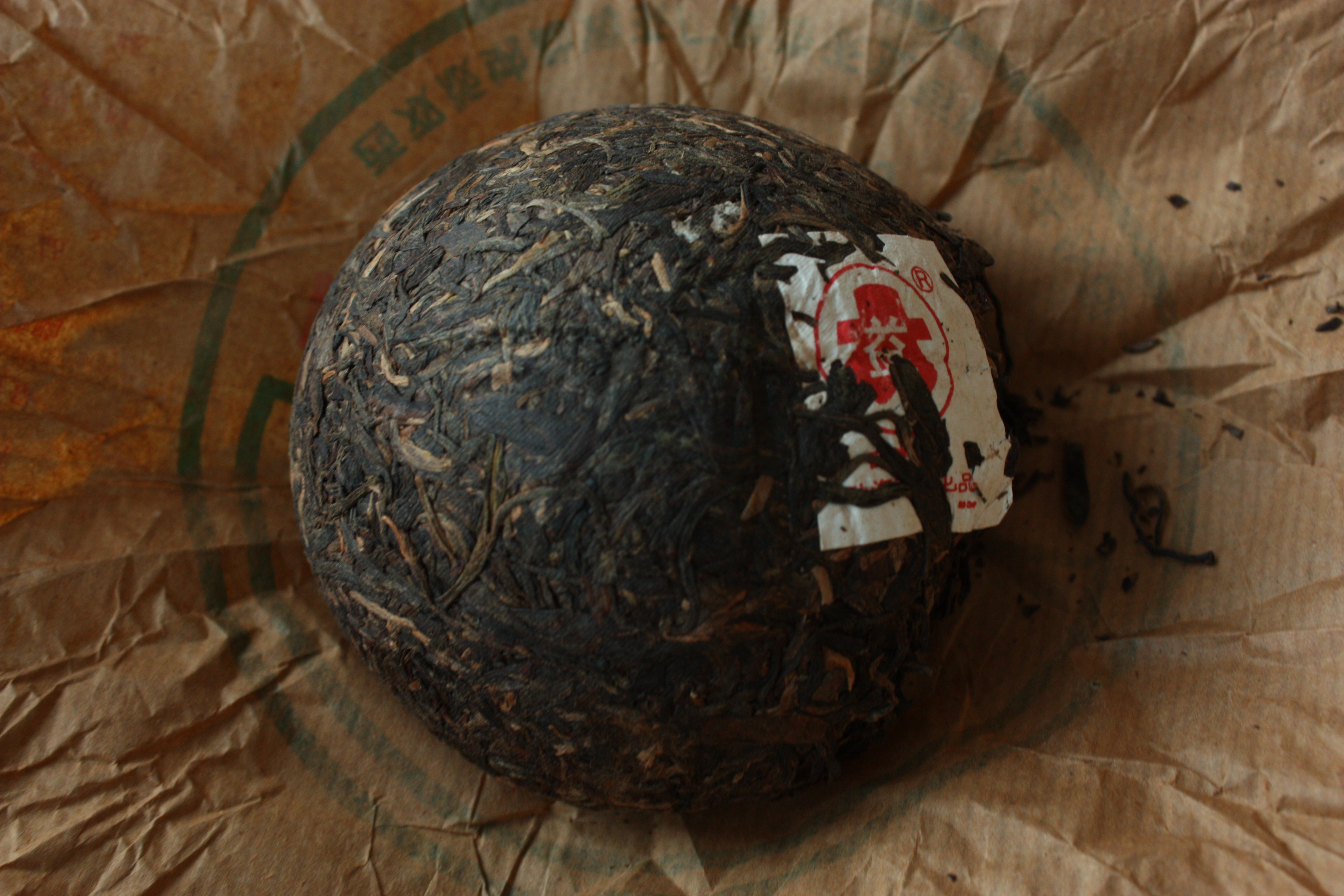 This is a tuo that is supposedly from 2003, 250g each. It’s something a local store sells here for a measly $10, which is an impossibly low price in this day and age. The tea is naturally stored, and when they open that little cupboard storing the tea you can smell it – as you can also when you open the wrapper. With these early 2000s teas one’s never quite sure exactly what it is, but at least the wrapper and neifei suggests its Dayi, and it does taste like Dayi. It’s still a bit sharp, but that’s mostly because it’s a tuo – tuos tend to be slower to age, and it also has that nice, robust Menghai area taste. It’s a little similar to the Menghai early spring, but minus the smoke and a little bit lighter. I like these teas that have a bit of age on them – you’ve weeded out the ones that are going to turn bad. Usually within two years you can tell if something is going to be bad or not – if it’s already getting bland, yellowish, or just bad. If it gets past that point unscathed, then it’s probably going to be all right. If it’s good ten years down, then it’s going to be just fine to age. Finding these at an attractive price – it’s a gift. I can’t let this gift go.
 It’s risky to buy a lot of the same thing when one’s not sure, but if you are sure, don’t hesitate. Hit it hard. Otherwise you’ll regret it.
→ 11 CommentsCategories: Teas
Tagged: young puerh


 RSS - Posts
I took you at your suggestion and have been reading some of your old post-Covid posts. I haven’t been to…