A Tea Addict's Journal

Seasoning pots

February 17, 2008 · 13 Comments

So yixing pots are supposed to be seasoned over time as you use it… but how exactly does that happen?

I’ve been more than puzzled by the exact process. Supposedly, the pots will slowly gain a shine as you use them. You’re supposed to use a wet cloth to sort of buff the pot, basically, after using them and while they’re still hot, ideally. But there are many, many theories out there about the way you raise a pot. Some say you should just leave leaves in them. Some say you should clean them out right away. Some say it’s good to polish them often. Some say it’s good to not do it very often. Some say it’s important to use only one tea in them. Some say it doesn’t really matter how many kinds of teas you use in your pot.

The information has been, on the whole, contradictory. I cannot help but feel though that much of it is magic, and not really true.

What I can say is this — that over time, at least for the pots that I have raised myself, they do slowly gain a shine. I usually pour the wash over the pot while I am brewing my first infusion. Otherwise, I just pour hot water over them. I rarely rub them with a towel — maybe once a month, if even. I don’t usually leave leaves in them over night. I clean them out after using them. The most obvious change happened to my young puerh pot, which was fresh from the kiln when I got it. Now it’s actually got quite a sheen to it after about a year’s use.

There is also the matter of the clay’s quality. I am currently running an experiment on a cheap pot that broke on its way from Taiwan to here. Basically, I’m soaking it in my spent tea leaves every night before I go to bed. I have noticed that it started doing what they call “spitting black”, basically, black spots that show up on the pot. They don’t go away. Supposedly, from what I’ve read online, they are the result of under-firing of the pot. The pores are too big, and the iron ions of the tea (supposedly one of the things in it) will infiltrate these pores and somehow a reaction happen and it turns black. All pots eventually do this, but really underfired ones are more likely to do this, and at a faster rate.

This is only what I’ve read. I don’t know if it’s true. It’ll be pretty interesting if it were true. The black spots, I should add, are quite numerous. Maybe I’ll show you all a picture when I get better lighting. The thing though is that before I used it, the pot doesn’t look that different from many other ones. I could sort of tell it was slightly on the low density side of things, but it was not obviously so.

Anybody got pot-raising stories to share?
→ 13 CommentsCategories: Objects · Old Xanga posts
Tagged: , , ,

Cups

February 16, 2008 · 3 Comments

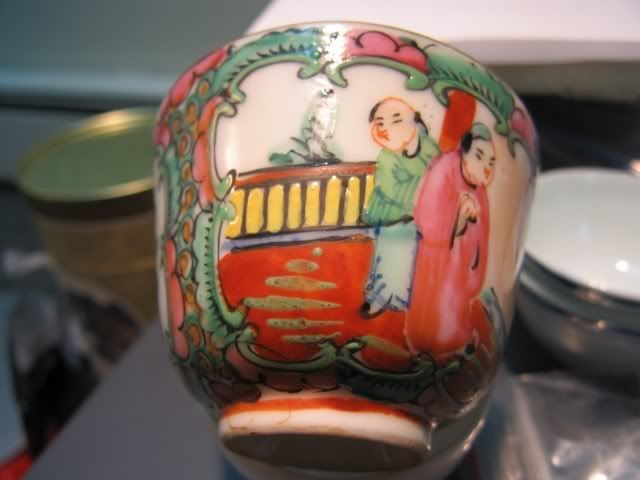
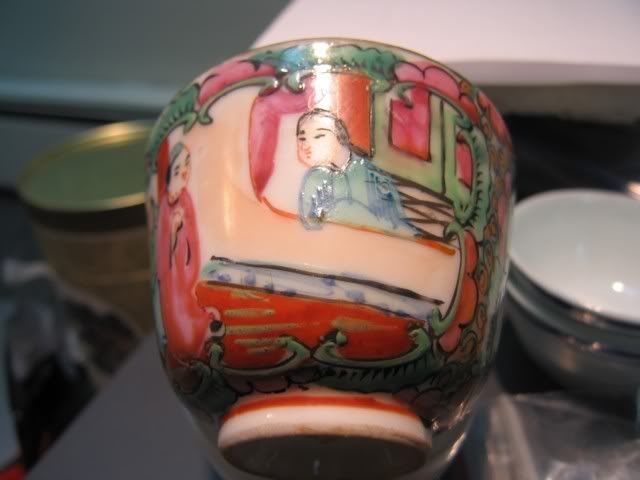
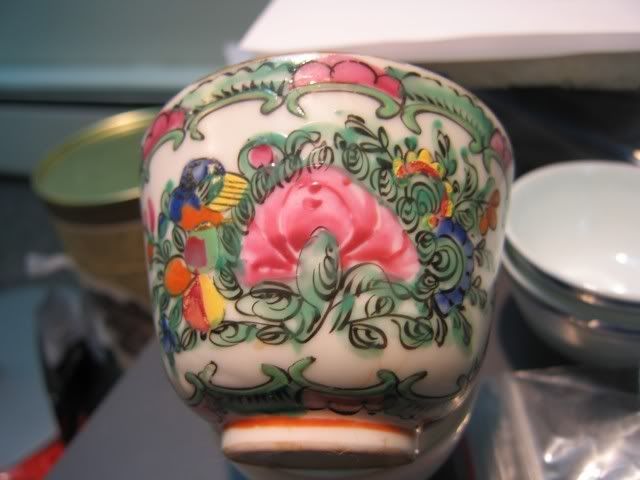
I bought a new set of cups recently — a set of 4. Here’s one

Hand painted, methinks, since they are all substantially different (but same patterns). I think it’s actually quite old, at least a few decades. Stamped “Made in Hong Kong” of all places.

They’re actually big — almost 3 inches in diameter. I like bigger cups personally. I find not having to use a fairness cup much more convenient and just over all being a nicer thing to do. The presence of those fairness cups, now that I think about it, really detract from my enjoyment, for some odd reason. I must say I don’t find much of a difference between different kinds of cups, but once in a while, I do think different cups make a difference. Very small cups and larger ones do make a difference in how you perceive the tea — I think mostly it has to do with the nose and whether you’re smelling it while sipping, or not.

But I’m enjoying these cups today, drinking my aged dongding. One infusion, one cup… just the way I like it.

→ 3 CommentsCategories: Objects · Old Xanga posts
Tagged: ,

Mystery Wuyi

February 15, 2008 · 1 Comment

My tea closet is full of little bags, not so little bags, and big bags. Many of them, especially the little ones, are unlabeled. That’s because they are samples from one place or another, and they always come in faster than I can drink them. More often than not, they’re from tea shops, or from people I meet, or whatever, and they just shove you a sample and you take it home. You throw it in the box where all the other samples are smouldering…. and there it lies, waiting for you like a little puppy at an animal rescue center, until you pick it up and give it a new name….

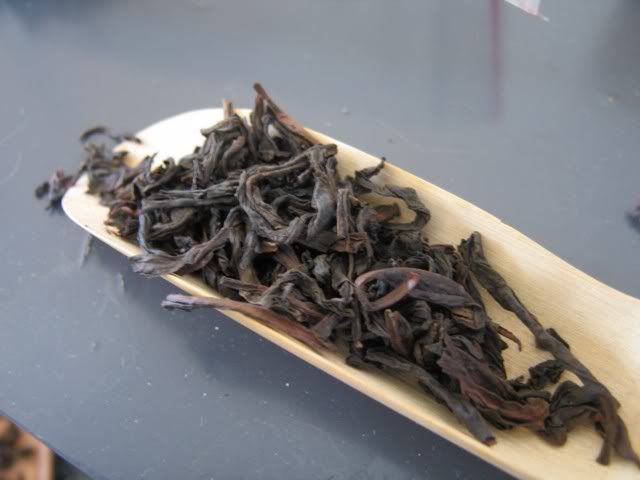
Today’s lucky tea:

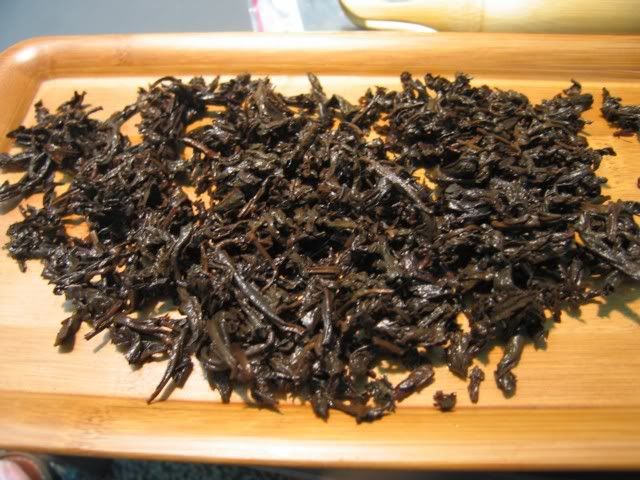
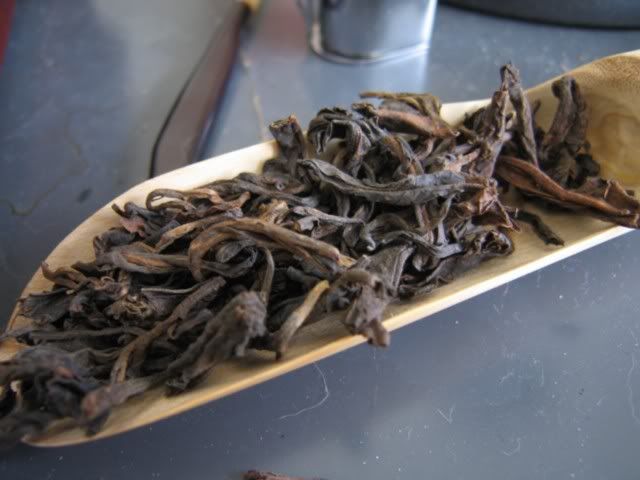
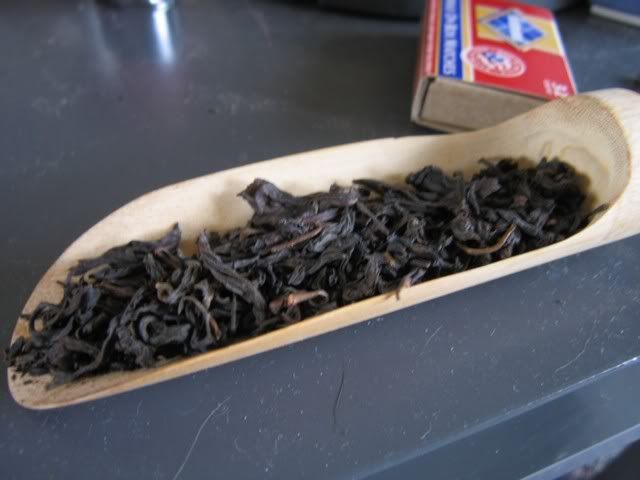
I have no idea what it is. There are no indications of any kind as to where this came from. I know this is a Wuyi tea by its looks and smell, but that’s about it. Probably not a shuixian — maybe a dahongpao? But I don’t remember getting a dahongpao sample. Maybe one from my friend L in Shanghai? I have no clue.

There wasn’t much, so I threw it into my Wuyi pot and brewed.

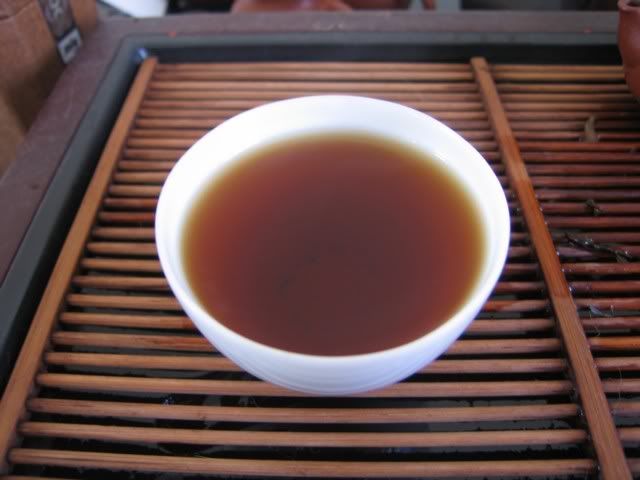
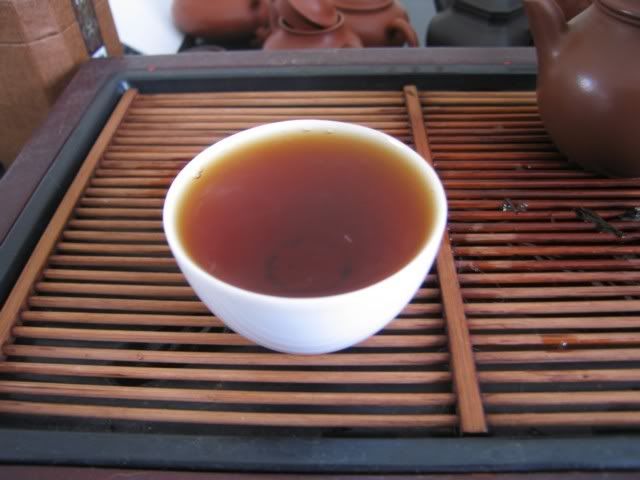
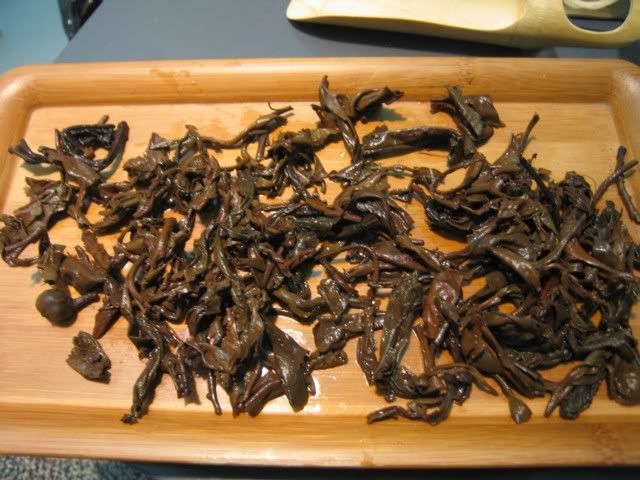
Sour in the first infusion, but the sourness went away after the second cup. Good. Solid rosated Wuyi taste, probably something inferior, not quite good dahongpao quality. Maybe a low grade one, or one of the other varietals. I don’t know… but it is aged, somewhat. It’s not new, as it has that aged taste coming on in the later infusions. Not very old, because it’s not very prominent, but it’s there. Lasts many, many infusions, as a Wuyi should.

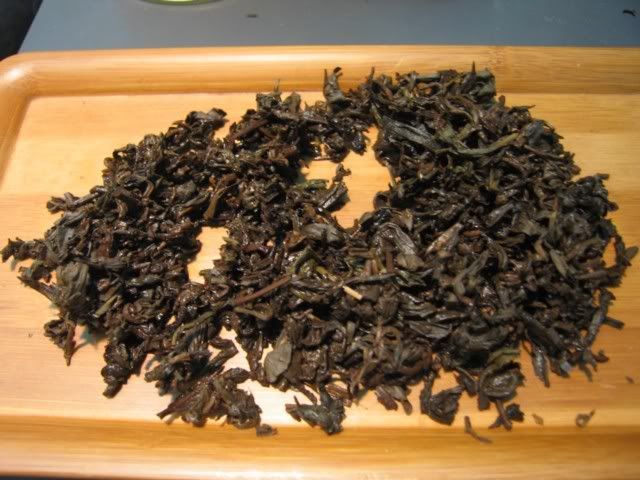
Broken leaves, but that’s partly the product of it having traveled around the world with me. Maybe I’ll call this tea Max.

→ 1 CommentCategories: Old Xanga posts
Tagged: ,

Aged maocha

February 13, 2008 · Leave a Comment

I was thinking of drinking my biyuzhu today while rummaging through my tea closet, and I thought I found what I wanted. Out came the bag…. and lo and behold, it’s the wrong tea (in a similar looking bag). Ooops, but it will do. I got the aged maocha I bought from Taiwan instead.

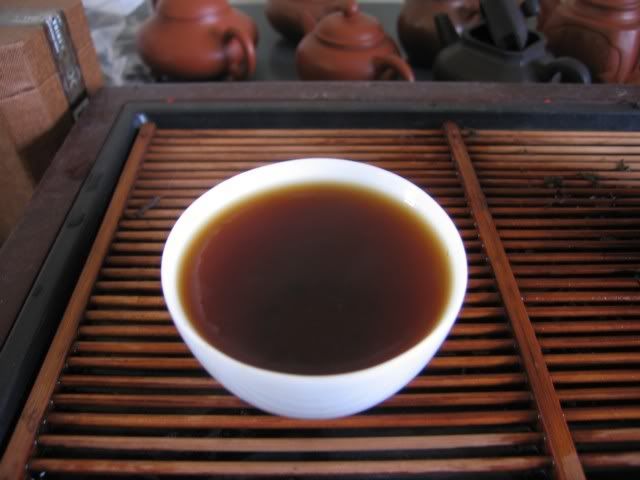
It was expensive, too expensive for what it is, but I think it’s a good example of regularly (but not bone dry) stored maocha. No wet storage. It’s allegedly around 12 years old. I can believe that.

The tea is, I think, currently in transition into the kind of flavour that you will think of more as aged puerh. Drier stored teas though will exhibit signs of youth after a few infusions. So you will first get a more aged taste, but it sort of reverts back to a greener profile. Overall, the stuff tends to be perfumy, just like a dry stored aged oolong – somehow the fragrance gets accentuated through age. I wonder why?

The leaves are sort of brown — but in a good way, and there are still some greener ones among them.

→ Leave a CommentCategories: Old Xanga posts
Tagged:

That inexplicable taste

February 12, 2008 · 1 Comment

I am drinking my familiar aged tieguanyin from my candy store again, something that I’ve fallen back to consistently over the past few weeks. I think quite a few times, I’ve mentioned how this tea has a bit of a “sharp” taste that I couldn’t quite describe. Today, it occurred to me what it tastes like.

Korean Kimchi…

Yes, that slightly stinky fermented cabbage. No, without the spice. Imagine if you washed some kimchi in water, so that the pepper is gone. What’s left is a cabbage that’s a little sharp. Today, drinking the 15th or whatever infusion it was of this tea, I tasted that sharpness. Of course, it’s not the same. There’s a certain fruity sweetness accompanying this tea that makes it pleasant. But somehow, the basic character of the sharp taste is similar to that I feel when I eat kimchi.

It sort of makes sense. Kimchi is fermented cabbage. This tea has gone through a little bit of wet storage, of sorts — there’s that moldy character that you don’t get in purely dry stored oolongs. Strange to talk about these things with oolongs, but I am now quite convinced that such things do happen. They don’t turn bad. They’re just different.

Kimchi…

→ 1 CommentCategories: Old Xanga posts
Tagged: ,

Aged baozhong, espresso edition

February 12, 2008 · 8 Comments

Who said tea’s not as strong as coffee?

Today I made this

As is usually the case, I overdosed myself because this is the remainder of the bag — the awkward amount that is a little much for one pot, but not enough for two. I threw it all in. Water goes in one end, tea comes out the other…

The tea came out very thick and strong. It was punchy. This tea is usually quite delicate, with lots of good plummy notes. Today it bulldozed over me with a strong, strong note of roasted baozhong, even though when brewed normally, there isn’t any roasted notes left. It didn’t help, of course, that bottom of the bag means lots of fannings that have been sinking to the bottom since I first got this tea. I was getting a headache drinking this thing.

The best infusion was probably the 10th, or was it the 12th? Nice plum notes, still quite strong. Whoever says coffee is stronger should try making teas like this. I remember once I was treated to the “VIP method” by Rosa of Best Tea House. “VIP method” means using a small Yixing pot, fill it up with Chaozhou gongfu heavily roasted oolong (when I say fill it up I mean fill it up…) and then brewing it with one drinking cup worth of water. The liquor that comes out is almost sticky. The tea is strong, and it knocks you right out. Quite a ride.

I could probably drink this again tomorrow, but I think I should go easy on myself with something simple and easy going. This was a little much…

→ 8 CommentsCategories: Old Xanga posts
Tagged:

Buying teapots online

February 11, 2008 · 8 Comments

Since most of my readers are not located in places where there are shops that sell anything other than the worst of the worst yixing teapots out there, online is pretty much the only place where one can buy such things.

So online is pretty much the only option. The other is to find friends who’ll do it for you, or fly yourself over to China/Taiwan and buy them yourself. Not very good options, especially since I think teapot is a very personal thing. What works for one person rarely works for another, and there are so many shapes and sizes out there that individual preferences are bound to differ. Buying teapots for other people, as I’ve learned, is a dangerous business.

That leaves online stores and auctions. What I witnessed tonight on Ebay was a frenzy of bidding for a series of yixing pots that some seller in Florida put up. It must’ve come from somebody’s collection of yixing pots. There were some that I am sure were Republican period pots, and I considered joining in the fray — until the fray got too hot for me really quickly. It ended up that a few of them went for something like $500 per pot. Others were maybe more in the $100-200 category. While some of these are genuinely old pots, none of them were in the fine yixing category. Rather, they were commercial stuff, made very roughly, and generally sold for commercial purposes rather than as objects of art or even personal pleasure. It was a utilitarian thing. An equivalent would be if some of these awful $10 Chinatown pots these days are going on auction 100 years from now… not exactly stuff you really want for making tea in.

What I did learn though is that there is a substantial amount of interest out there for yixing ware. One of the bidders on some of the pots have bought dozens of them from Ebay already. Most of them, in my opinion anyway, are far, far overpriced. Others seem to only dabble in pot buying, while interspersing their purchases with LV bags, clothes… and whatever else suits their fancy. Of course, everything is fair on Ebay. Unless the seller deliberately mis-states information regarding the item, which they tend not to do by using qualifiers such as “I think this is…” or “probably 19th century…” and that kind of thing, they are not liable.

Auctions in Asia are not necessarily any better. Those in Taiwan, for example, are numerous in listing, but most of them are rather sub-par in quality, obviously fake, or both. I’ve bought a few pots through that route. If it’s not too expensive, and the pot looks/feels ok, it actually is not a bad place to get a few decently made pots, as long as one spends a lot of time trolling the sites and sifting through the garbage. Then there are the highly priced, “antique” pots. Whether those are real or not is hard to say, and without having seen them in person, risking large sums ($500+) of money on one single teapot is almost crazy.

Aside from the sometimes rather trecherous path of auction, trecherous both because of the possibility of inauthentic goods, and also of the risk of being carried away by the passion of the moment (“I must have this pot!!!”), the other option is online stores…. which offer much more peaceful means of obtaining pots.

Yet those are not without risk either. Increasingly, I’ve noticed that the prices of these things are generally quite high… higher than what I remember, a few years ago. I am personally still apprehensive about spending much money on pots that I can’t see in person, but I speak as somebody who generally has access to other avenues. I suppose buying pots from an online vendor, the first thing you want to know is if they have a return policy. Pots don’t always work out in person. I’ve received one or two that looked not nearly as good as the pictures shown, or the clay texture feels funny once you actually get a hold of it. I am also weary of claims of old age. Taiwan probably has the highest concentration of fake antique pots in the world, mostly because of the big boom in the 80s that created huge demands and made faking pots really worthwhile. I’ve seen heated arguments in Taiwanese forums that are quite fraught with claims of authenticity or otherwise. Honestly, they all look pretty good, but supposedly, those who are really in the know can tell.

Sometimes though, I wonder if it’s not just for bragging rights — “I can tell better than you”, or “mine’s real, yours is not”. I used to view all this with amused cynicism, preferring to stay with the non famous maker, pedestrian pots that served the purpose of making tea. At the end of the day though, some pot, somewhere, will call out to you, and you too, will take the plunge…. that’s what I discovered the expensive way.

→ 8 CommentsCategories: Objects · Old Xanga posts
Tagged: , ,

How times change

February 10, 2008 · Leave a Comment

(As I was about to post this blog post last night…. strong winds knocked out the power lines!)

I remember I used to like this tea quite a bit

This is the supposed 30 years old puerh from Best Tea House. I remember I liked it, thinking it both rather reasonable in price and decent in taste. Yet, today, when I tried it again after not having touch it in probably more than a year, it doesn’t seem so good anymore. It might be Vietnamese tea, first of all, with that signature taste. It’s a bit lacking in sweetness and depth. It doesn’t really go to your throat very much. Etc

Mind you, it’s not horrible. It’s still, I think, a pretty ok tea, but it doesn’t do it for me anymore. Maybe my tastes have changed, and hopefully not too much for the better (that’ll make buying tea harder and harder). I suppose increased experience means that you notice more and more things that you didn’t before. Drinking this today, I definitely felt how I have changed as a tea drinker. Maybe it’s a blessing, maybe it’s just a curse….

→ Leave a CommentCategories: Old Xanga posts
Tagged:

2005 Green City Peak Arbor Puerh

February 9, 2008 · Leave a Comment

Ok, so with my last shipment from puerhshop, I also got a sample of this puerh. It has this clunky name because the brand, “Qingcheng Feng” is literally “blue-green city/town peak”. Rest assured, Green City Peak is not a peak in Yunnan…. as far as I can tell anyway.

So they say this is the best Mengku cake they’ve gotten this year. I got a 5g sample, which is, truth be told, a little less than what I normally use for one session, but it’ll have to do. One cannot complain about free samples.

The leaves look normal. Actually, they are brighter coloured than the picture on the site suggests. At first I was a little nervous about this being one of those “wild wild” puerh out there which can be fairly disgusting, because of the dark coloured picture. Thankfully, that’s not the case. The tea brews normally.

The tea…. is interesting. It is bitter, but not really. It is strong… but not really. It is flavourful and active… but not really. The only thing I’m sure about is that it hits the throat and leaves a mark there. The reason I said “not really” three times is because it is one of those teas that seem strong, but yet the strength seems a little elusive. I definitely feel that there’s a sort of coating around the mouth when I drink it, but then, it is almost ethereal, sort of there, but then you question yourself as to whether it is really there or not.

Instinct tells me this is a good tea, but I need to try it again to be more sure — preferably with a little more leaves so I am not feeling like I have to juggle amounts of water in order to make the water/leaf ratio be closer to my “normal” amount. As is usually the case these days, whether it is worth its price or not is really up to the individual, although I can say that it impresses me more than some more expensive teas I’ve tasted recently.

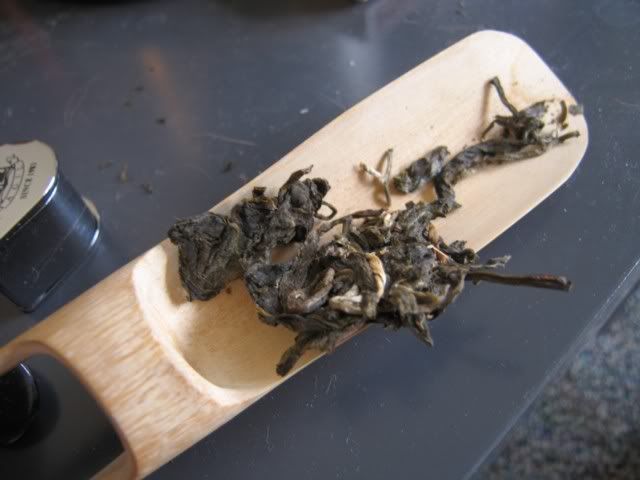
The leaves are big

Which might indicate that some, at least, are not spring leaves, but summer, or whatever, pickings. There are, however, no wooden sticks in there or extremely long and old stems, which is good. The leaves are well done.

Interesting tea, at the very least.

→ Leave a CommentCategories: Old Xanga posts
Tagged:

Happy year of the rat!

February 7, 2008 · 2 Comments

Happy Chinese New Year to all of you — and I hope the coming year will bring you many, many cups of great tea! 🙂

→ 2 CommentsCategories: Misc · Old Xanga posts
Tagged: