A Tea Addict's Journal

Entries categorized as ‘Information’

Looking for a base

August 7, 2011 · 10 Comments

I had tea two days ago with two new friends in Hong Kong here.  It was a pretty interesting session, with exchanges of ideas of the question of aging.  One of the teas we had was a Mengku Yuanyexiang which was provided to me through a friend.  This particular sample was stored traditionally, and exhibited a taste that the two friends said they had not encountered before in this tea.  Considering that both of them have had various versions of Yuanyexiang before a number of times, this is surprising.

One of the most important thing that we all agreed on, I think, is that taste in a puerh is fickle, and changes constantly.  Mr. L, for example, mentioned how he showed some friends from up north that there’s a significant difference between tea that has been properly aired out versus tea that has not.  In the case of tea that has been through traditional storage, the process of airing-out is quite important in making the tea taste good when drinking it.  Many who dislike traditional storage don’t know that breaking apart the cake and letting it sit for six months will greatly enhance the mouthfeel and the taste of the cake, and draw conclusions about traditional storage based on an erroneous understanding of the process and the result.

Likewise, even for teas that don’t go through traditional storage, the taste of the tea changes all the time.  The condition of storage in each individual home, or in different cities, will alter the tea in obvious ways rather quickly.  One hurdle for many newcomers to puerh is to get past that veneer of taste.  This is something that I’ve written about before, but it still bears repeating.  Chasing taste is futile.  Mr. L told me a story of him buying a cake of 7572 back in the day from this one vendor here, and loved the taste.  When he went back to the same store to buy a whole tong, what he got was something different – still 7572, but without that taste he liked.  The owner insisted that it was the same batch, and he had no reason to doubt that claim.  Turns out, after much searching for years for that same taste, that it might have been because that one cake was stored outside a tong that made a difference — the tea soaked up the storage smell of wherever that owner’s storage unit is, whereas the tong didn’t get as much “air time”.  So, chasing such things get be quite futile, and expensive.

This is also important for those of us who rather enjoy the taste of some young puerh – just because you like it now doesn’t mean it’ll turn into something you’ll like even more.  In fact, among those who love the floral and sweet and fragrant flavours of a young puerh, the aging process can be a real disappointment.  It is really quite important to try real, well aged teas of proven vintage and provenance and to know whether or not you even like that taste to begin with.  If you do, great, store tea.  If you don’t, why bother?

It has been proven again and again that many currently good tasting teas often don’t age all that well, whereas a lot of nasty, sour stuff can turn out to be quite decent over time.  I’m not saying only bad tasting tea becomes great when they age, but current taste and future taste are, in and of themselves, not particularly related.  What’s more important is what we call “base” here, which means, roughly, the underlying strength of a tea.  Without such a “base” a tea is doomed to mediocrity, and I think this applies not only to puerh, but all types of tea.  It’s quite difficult to describe without confusing people how to identify “base” in a tea, but I think it is safe to say that it involves physically activating multiple areas of the mouth, throat, and body.  It has nothing to do with whether or not a tea is sour, bitter, or sweet.
Categories: Information
Tagged: , , ,

Moderation

July 28, 2011 · 22 Comments

One of the biggest pet peeves I have when I see people advertising tea is some sort of mystical, magical health benefit that pretty much promises it will do anything other than raise the dead.  Accompanying this is the pretty frequent sighting of posts on various tea forums from newcomers who say things like “I want to get the health benefit of drinking tea — which tea is best for X?”  Stores like Teavana then capitalize on this sort of thinking, and invents, without any sort of rationale, a whole series of “health benefits” of various kinds of tea for different parts of the body, with the clear implication that if you want a full body benefit, well, you better buy all of their teas.

There’s only one problem – all this talk of health benefits, etc, ignores the fact that just like pretty much anything else, there comes a point when there’s too much of a good thing.  You can, indeed, overconsume tea.  An analogy can be drawn with wine — while a glass of red wine a day may be good for your health, two bottles a day is pretty much certainly going to cause you health problems.  While it is not clear where tea’s “health threshold” may be, it has to have one.

In my experience I have had two unpleasant encounters with drinking too much tea.  The first was an instance in which I drank too much tea while pulling a near all-nighter in college trying to finish a paper.  I remember my legs were shaking uncontrollably and I’m pretty sure it was due to caffeine overdose of some sort.  The second was actually much more scary — I was drinking lots of tea in the run up to my general examinations for me to proceed on my dissertation research, and one night as I was getting ready for bed, my heart started beating at a rate and strength that was very unnatural — I thought I was getting a heart attack or something.  It calmed down, eventually, but not before it really scared me.  Doctors, of course, found nothing wrong, and suggested I consume less caffeine and sleep more.  Recently, a tea friend here in Hong Kong told me that he had something very similar — heart rate that was abnormally fast (140-150 bpm).  Doctors couldn’t find anything either.  We both agreed that tea, specifically strong, young puerh, and lots of it, may be the culprit.

I have been mostly on a “one tea a day” regimen for the past 6 years, and I haven’t had another such episode since then.  I think lots of people get the impression that I drink lots of tea every day.  The fact is, I don’t unless I’m visiting a shop and hanging out with tea friends.  Yesterday I stopped by Best Tea House to see some old friends, and I know I drank a little too much as I started feeling uncomfortable.  Like a person who is getting tipsy but who doesn’t want to get drunk, I stopped.

I know I’m going to get people here who will poo-poo the idea that too much tea can be bad for you, or that drinking only greens or young puerhs exclusively will yield anything other than pure bliss.  I’m not saying that everyone will get the same reaction — some people may have much higher tolerance for such things, but at some point, you can, in fact, overconsume tea, and at that point it will no longer be a health benefit, but a health hazard.  Tea and health is mostly a marketing hype, as I’m pretty sure that drinking pesticide laced CTC brewed bottled iced black tea flavoured with artificial flavouring agents and lots of sugar is not going to give you any health benefit whatsoever.  Drink in moderation.

Categories: Information
Tagged: ,

Frenzied development

July 19, 2011 · 1 Comment

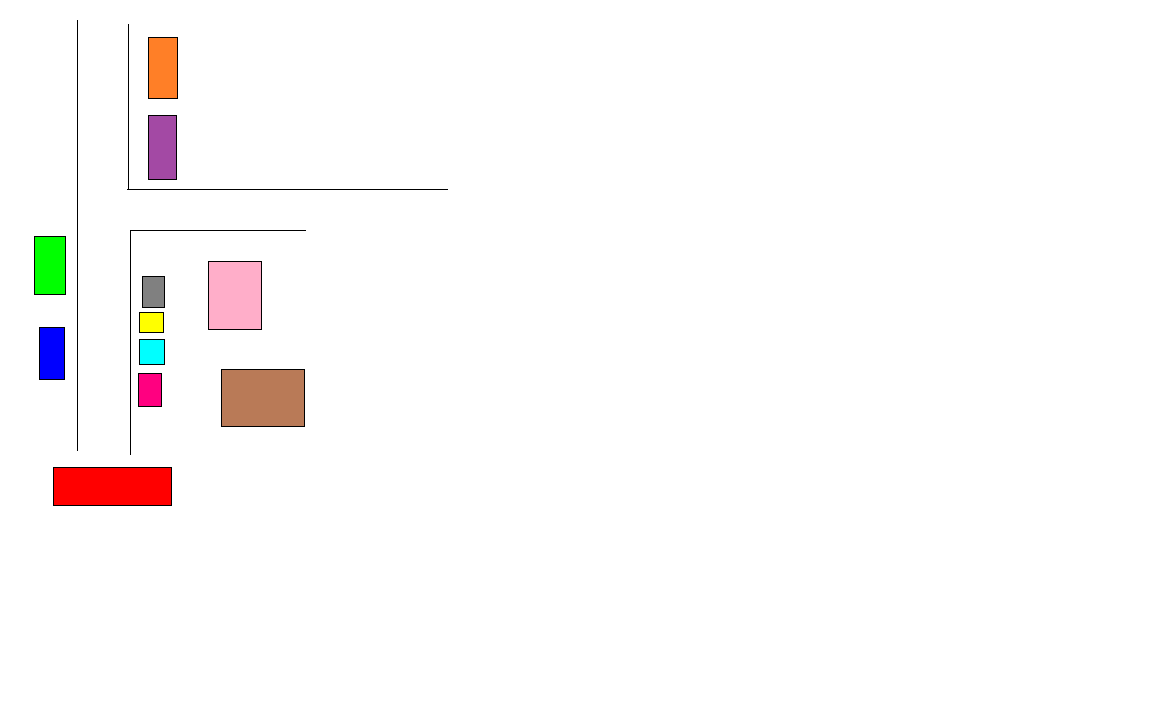
Pretty much every day now you can open the newspapers (or more likely, a news website) and some story about China’s economic development will pop up.  The rise of China as an economic power that people actually pay attention to is something quite remarkable, and every time I go back and visit I can see it on the ground.  Maliandao, which I discussed five years ago when I first got there and updated last year, is no longer the backwater shopping street it used to be.  Two new roads have opened onto Maliandao, and traffic is worse than ever.  There are many, many more buildings in the vicinity now.  If we go back to the updated map:

Now I can give you some pictures to match up with the colours.  This is the building in purple on top

Photobucket

The one on the left anyway.  That was a pile of dirt, basically, when I was there in 06/07, and was just beginning to get some building going on.  Now it’s a full blown tea mall with an apartment building on top.  The building on the right in the picture is what used to be the Pu’er Chadu, which is now defunct.  This picture was taken from the vantage point of the big Maliandao Tea City mall

Photobucket

Which is the same as always.  Don’t go if you’re a tourist — it has the worst prices.  Although, because a number of stores there are older, if you’re looking for Beijing stored tea, you might get lucky there.  Just don’t expect a good deal.

The big pink thing on the map on the right hand side is this:

Photobucket

Another big apartment building with teashops underneath.  There are two levels of this, all open to the street, and some have nice teas.  I bought my big bag of white tea there.  Next to this building is another building that has always been at Maliandao, but only recently started selling tea:

Photobucket

The building underneath the blue sign was, and still is, mostly a audiophile/camera mall, but the ground and second floor are now teashops.  Nothing too impressive there except a few things of interest, but that’s only after a quick walkaround.  Behind it is Tianfuyuan, the big brown box on the map on the right, and where Xiaomei’s shop is located.

Underneath all this ritzy development though is still the same old infrastructure that supplies the stores.  Witness, for example, this:

Photobucket

Among all the new cars and shiny objects are still the labourers who work hard to make the place function — here are two cart drivers who are carrying empty (left) and full (right) jugs of water for the shops in the area.  Note how the carts have an electric motor. Many of the shopkeepers still live in, or above, the stores, and many of them are still earning a paltry sum, although a paltry sum now is closer to 1600 RMB a month, rather than the 600 RMB a month of four or five years ago.  In fact, my friend L has been trying to hire someone but has found no takers for 1500 RMB.

Construction is still continuing, with a new tea mall slated to open probably later this year, and targeted at a more upmarket crowd.  The place has nicer decor and looks to be quite posh.  I’m sure you can find high prices there, along with prettier sales girls and more comfortable surroundings.  On the other hand, I also heard that a subway line will open in the next few years that will take you to Maliandao, which will make life a lot easier.  Either way, it’s fascinating to see all the changes in the past few years — and it looks like it’s going to keep going.

Categories: Information
Tagged: ,

The King of Pots

July 18, 2011 · 9 Comments

One of the great things about being in a place like Hong Kong, rather than being stuck in Maine, is that there are a lot more tea people out here.  Drinking tea alone is quite common in the US, but here you can always find a drinking mate if you need one.  Since I have returned I have yet to visit a teashop of any kind, and haven’t really taken advantage of my situation here.  Today, while I was out and about, I stopped by a shop when there was an hour between engagements, and ran into someone I’ve met before — someone who is nicknamed the King of Pots.

This guy taught me a few things before when I met him at the Best Tea House some years ago while I was hanging out there.  One of the most important things I learned was that when looking at someone else’s pot, put down the lid or the body and only look at the other.  Don’t hold the lid while you’re examining someone’s pot, or the pot while you’re actually just looking at the lid — that’s rude, and may damage the ware by accident.  I’ve met many people who do this sort of thing since then, and have passed on this rule, which I think is very sensible.  I’m sure the King of Pots himself was scolded for doing it, just like he scolded me when I did it to his pot.

Seeing him again this time is quite lucky, really, because otherwise I have no way to contact him, and I would love to learn more from him as he has hundreds, if not thousands, of pots, and has certainly seen more pots than I have had teas.  Not all of his pots are good — I saw one today that was only so so, but as he explained, you don’t need a vintage or famous pot.  If you use your pot often and it’s made of decent clay, that’s better than a Ming dynasty pot that’s been sitting next to a dead body for the last 300 years.  Of course, it’s much easier to say that when you’ve got as many pots as you do.

Now, not all of what he knows or believes in is going to be correct.  He told me today that he also started by drinking tea and learning from Vesper Chan of Best Tea House, but like many others, he has since grown out of it and rarely goes back there.  I count myself in the same category, although a few generations behind him.  What we have both learned in that regard is that people who you revere as teachers early on often turn out to be, at the very least, not all right, and sometimes downright wrong.  Yet, Mr. Chan continues to attract students and adherents who go and buy his stuff, while many older students fall out of the circle.  He’s doing a service to the tea community in that he’s attracting people to come, but very often, people don’t stay as they start wandering around for other sources of things and find out more for themselves.

People like the King of Pots are the tea people I like the most — they drink with an open mind and who are welcoming of newer ideas, who want to try new things, and who’s not afraid to challenge perceived “authority” figures, who, sadly, are often just big sellers with a strong vested interest in teaching you about certain things.  I respect the King of Pots, but I also know that he’s not likely to be correct on all things, and our exchanges often turn into just that – exchanges of information, when both of us can contribute to each other’s knowledge.  Too often, I see people who are attached to one teacher and who just believe in everything the person says about tea.  It’s more understandable if it happens in places like Maine or Minnesota, but seeing people like that in Hong Kong or Taiwan or China really makes me cringe.  Learning from others with more experiences makes your progress in tea go faster, but equally important is the use of a critical mind.  That’s what I teach my students in the classroom, and that’s what I try to practice, and sometimes, like this post, spills over into the blog.

Categories: Information
Tagged: ,

What to do in a Chinese tea shop

July 5, 2011 · 7 Comments

I’ve covered the topic of shopping for tea in China before, and what to do, generally speaking, when going into tea stores of various types.  At the time I divided the stores into two categories – puerh shops, and non-puerh shops.  Generally speaking, I think my comments there still hold true.  If I can distill these into shorter principles of tea purchasing, I think it comes down to this

1) Don’t let them show you what they want to show you, make yourself the director of the action.  Now, this is much harder if you don’t speak Chinese or are unsure what you want, but if you have a pretty good sense of what you’re looking for, and, say, if they offer you Jasmine while what you’re really looking for is shu puerh, then you can just flat out refuse and, if they keep insisting, walk.  If you’re shopping in a big tea mall, there are a billion stores just like the one you’re in right now, and they all know it.

2) Establishing a good rapport with the person selling you tea is often a good thing, because sometimes they won’t show you the good stuff until they start to like you – once they’re convinced that you’re serious, they’re much more likely to be willing to brew you a sample of that expensive tea because they think you might want to buy it.  This is especially true if you’re obviously foreign, in which case their assumption is you’ll want nuclear green tieguanyin or jasmine. That 10 years old puerh won’t show up (or won’t be available) until they think they have a chance you’ll actually buy.

3) Number 2 means that while you should be assertive, you shouldn’t be a jerk.  Being too picky about how they brew the tea is one thing that can make you seem like a complete ass, especially if they think you have no clue what you’re talking about.  Also, bargaining for what is an essentially meaningless amount of money is not a good idea, generally speaking, both from your perspective (you’re wasting shopping time) and theirs (they won’t like you much if you push hard, or unreasonably).  If you want to bargain, which you probably should especially if the item is not very cheap and you’re obviously foreign (i.e. you might get quoted higher prices) you should at least save it till the very end, when all is done and you’re about to head out.  Bargaining for each individual thing before you’ve settled on something is a bad idea.  Indicate you want to buy larger quantities (even if not necessarily true) may get you a better initial quote.  Prices have risen a lot in the past few years, and a lot of premium items in China are no longer cheap, even by Western standards.  Don’t assume that because you’re in China things must be dirt cheap – that’s simply not true anymore.  Also, if you were referred to the store by a friend and the storekeepers know that, you might already be getting a better than average price — driving too hard a bargain may get your friend in trouble and may burn bridges.

4) Walking around before entering the store is almost always a good idea — you get a survey of prices and items and know whether or not what they’re offering is unique or not.  Unique items, be it teaware or tea, will command higher prices, and vendors generally know it and won’t budge much.  If they pressed it themselves, expect higher prices.  Also, just because a store is the “official” distributor of a tea (say, Dayi) doesn’t mean they’ll be cheaper.  In fact, sometimes they might be more expensive because they have a wider range of products and they’re less likely to sell fakes.

5) If you’ve got a few weeks and got to know a few vendors, don’t bother trying to get their opinion on someone else’s tea.  They’re almost invariably going to tell you the tea’s bad.

Categories: Information
Tagged: ,

Random thoughts in Beijing

July 1, 2011 · 2 Comments

1) I find myself having difficulty brewing tea away from home these days to my satisfaction, mostly because my setup is very specific and quite different from what you find elsewhere.  I’m sure many of us have our quirks in our brewing setup, some more esoteric and specific than others, but generally speaking, the more you change the brewing settings, the harder it is to replicate good results.  When everything ranging from wares to water to the tea itself has changed, the likelihood of success is relatively low.  Note how in tea-brewing competitions, the competitors are often using their own teaware and I think often know what style of tea they’re brewing beforehand, so there’s really not a lot of variable they have to control for.

2) Partly because of the abovementioned difficulty, buying tea away from home is also a difficult thing.  First of all, you are tasting at someone else’s place, and you have no way of trying it out at home, because you’re away from it.  You can’t just take a sample, go home, and try it out.  What you get at the store is likely what you will have to deal with.  Also, you are limited by your luggage space.  I bought 500g of a white tea, and it’s enormous – the tea, because of the way it was processed, has very broad leaves and eat up tonnes of space.  Whereas 500g of compress pu is just one cake, 500g of this white tea is two large bags that fills up my entire backpack.  I wanted more of it, but simply cannot carry more.  I’m going to see if there’s a way for me to get the seller to ship it to me, but that’s a real pain even if I were in China.

3) The Beijing tea markets are getting bigger, and things are getting more expensive.  There have been a few tea malls that are now open that didn’t exist back in 2007, and another brand new one is under construction.  It looks posh, and I’m sure will be filled with finely decorated stores.  This is the other trend – things are getting more expensive here, and there’s no turning back as the country gets richer.  The average restaurant worker in Beijing is earning about 2-3x what they used to when I lived here, and my friend L was complaining to me how he couldn’t find someone willing to help out at his store with an offer of 1,500 RMB a month plus free living space.  Now it seems like the going rate is 1,800.  While that’s still pitifully low for Western standards, it speaks volumes about what people can afford and how much they’re willing to pay.  Prices I’ve heard quoted for old tree puerh raw materials are anywhere from 300-800 RMB/kg, depending on the area.   Prices for new tea, of course, are quite high.

4) One positive from the higher prices is that things are getting prettier, although of course, you have to pay for pretty.  A lot of stores look nicer now, are using nicer wares, and serve you tea in nicer cups.  Packaging for tea is getting better, and even the paper used to wrap puerh cakes are no longer of the toilet paper variety.  It does make for a slightly more pleasant shopping experience, and in the case of teaware, you can find some pretty decent looking wares out there for not a lot of money.  I’m quite tempted by a celadon fairness cup, but I might pass, just because I almost never use fairness cups in the first place.

5) Serious tea makers are getting better at it.  I remember visiting this shop in Maliandao that was run by two brothers in 06/07, and their teas, which they pressed themselves in Yunnan, were decent, but not great.  I went back there today, and the tea I tried were some of the best young puerh I’ve had in quite some time.  The ones who entered the game and stayed in the game are now a few years wiser, and some, like this brother pair, are getting quite good at it.  The tea is expensive, but I think well worth the money, so I shelled out for a few cakes.  I would’ve probably gotten more, if not for the abovementioned limitation of space.

6) Having said that, it’s still quite hard to find anything really decent unless you know already where to look.  Shopping in tea markets is not really for the casual traveler.  There’s a reason, for example, why few locals visit these places, never mind foreigners.  It’s hard looking for good tea when there are literally hundreds of shops all packed inside a two block radius, and it’s only getting harder with more and more tea malls being built.  Sometimes I find things because I get lucky, like this white tea, but sometimes you just have to know where to find it, like this brother shop.  You also need boatloads of time.  I was hoping to find some decent yancha today, but most of the shops I know from back when were either dead, or don’t look too promising.  There are no lack of yancha shops at all — I probably ran into a hundred in the past few days, but I didn’t enter a single one.  Sitting down and tasting tea takes a lot of time, not to mention having to endure all kinds of crap because they’re not to your liking for either price or taste purposes.  Finding good tea takes work.

7) It’s still buyer beware.  This applies to both the end consumer, like us, and also the producers.  Consumers need to be well informed – know what you’re tasting, be able to tell the difference, be able to make good judgment quickly based on one or at most two tastings, and know the prices of things out there.  Producers need to know what they’re doing, and not trust their sources too much.  I’ve heard and also seen enough in the past few days to know that the same stuff that used to happen in 06/07 still goes on today – people having their maocha swapped between purchase and pressing, people thinking they were buying tea from mountain X when it was really tea shipped in from mountain Y, people processing teas in woefully misinformed ways, etc.  Producers, if they’re not careful, can get just as easily screwed as the consumer, except they then pass the cost of the mistakes onto the consumer.  That’s why I generally don’t trust any producer who spends less than 3-4 months a year in Yunnan to be pressing cakes.  Without that kind of time and effort, and not to mention the necessary building of local connections that require constant maintenance, most vendors simply cannot get the tea they think they’re getting.

Categories: Information
Tagged: , ,

New page

June 8, 2011 · 1 Comment

I just added a new page on the issue of grandpa style, since people ask that question from time to time.  I will perhaps add to it in the future with pictures and more detailed info, but part of the spirit of that type of brewing is the nonchalance of the technique, if you can call it that, so perhaps that’s not necessary.

Categories: Information
Tagged:

Revisiting the dahongpao

June 8, 2011 · 1 Comment

I went back to the same graduation dahongpao yesterday to try it again, since the last session was really not all that inspiring.  I wondered what brewing it in a single person pot at home would be like, versus a much larger pot for multiple people.  So, I opened up the bag that The Mandarin carefully sealed for me (thanks!) and took some leaves out.

Photobucket

Normally speaking I think the optimal ratio for yancha is about 3/4 full of dry leaves.  In other words, for the empty vessel the leaves should fill about 3/4 of the space, after shaking and settling.  Less, and the result is often somewhat insipid and the true essence of yancha doesn’t show up.  For this purpose, a flatter pot is generally preferred for ease of pouring in the leaves, if nothing else.

Photobucket

I was tempted to say that the colour of the tea coming out is darker, but I don’t think that’s actually true.  For one, I fill my cup with a whole pot of tea, since the pot is small.  Because the cup is relatively tall, teas often appear darker here.  When I was in New York the cups we used were the tiny ones that held about two sips.  They are really not that comparable.  Colour, in fact, is one of the most useless indicators of quality of tea, because it is affected by so many different variables, from the type of water used to the shape of the cup.  There are exceptions to this rule, such as the hue of the tea, which could tell you certain things about stored, aged teas, but that doesn’t apply here.

Photobucket

Many infusions later

Photobucket

The tea seems thicker this time around, and not as thin.  My water probably has a lot to do with that.  It also seems to have more complexity, owing to the same issue of water source.  I am also a believer that smaller pots always beat larger pots in terms of the quality of the brew – it is both easier to control and also, if you believe in such things, retains the qi of the tea better.  One of the Qing period tracts I’ve read talks about how the optimal size is really a one person pot, and everyone should bring their own to a gathering.  There’s some truth to that, I believe.

The most startling thing about this tasting though is the colour of the wet leaves.

Photobucket

They somehow seem a shade darker than when I brewed them in New York.  This is pretty much impossible, I think, but nevertheless it seems that way.  Perhaps it’s because the leaves haven’t unfurled as much as they did in New York, owing to the smallness of the pot, and therefore lending more credence to the theory that there’s something that changes from large to small pot.  I’m not sure.  You can see though that the leaves are actually not very heavily roasted — many are still a dark olive green, rather than brown or even black.

Contrary to the colour of the liquor, the appearance of wet leaves tell you all sorts of information about the tea itself, and to this day I see very few vendors showing wet leaves consistently.  Reading tea leaves is actually possible, and can be highly valuable as a skill in buying teas online.

Categories: Information · Teas
Tagged: ,

Variety is the spice of life

June 3, 2011 · 5 Comments

Many of us drink different teas every day, or even within each day, to keep it interesting.  Drinking the same tea, day in, day out, can get tedious, no matter how great the tea is.  I also find that tastebuds can sometimes go dull if drinking the same tea too many times.  Instead of just varying the leaves being brewed, however, there are many other things that you can do to change the way a tea tastes and how it appears to you.  Obviously, brewing method is a big one – a little leaf in a big bowl is going to taste very different from a lot of leaves in a little pot, but one that I think people tend to ignore is water.

I’ve talked about water many times before, and I think one of the key points I have tried to make over the years is that different water suit different teas, adjusted for different styles of brewing.  There are, I think, some general rules of what water is better for what kind of tea than others, but when it comes down to it, you have to find the right water for what you want from the tea.

Having said that, it is always interesting to change water sometimes just to give yourself a sense of what different water will do to a tea that you’re really familiar with, or for me yesterday, what the different water did to a tea that I was drinking earlier in the day.

My usual water here in Maine is from municipal sources, and from what I understand, water around here is pumped from underground.  The mineral content is high – the highest I’ve seen from municipal sources that I personally have experience with.  It’s the first water that leaves obvious, visible mineral deposits on everything I use from kettle to pots.  It is also heavy in taste, and when unfiltered, has a nasty sharpness to it that precludes enjoyable drinking.  There’s also a slight amount of saltiness in the water.

My tap water actually works rather well with most of the teas I drink – heavier teas, such as puerh and roasted or aged oolongs.  It’s really quite terrible for greens and light oolongs, but I rarely drink those anyway, so it’s not a real problem.  Yesterday, though, when I was shopping at our local organic food store, I saw that they had Iceland Spring on sale.  This is a water that I love – crisp, clean, refreshing, very tasty, and not too expensive.  So I got two bottles and intend to drink some tea with it.  It has low total dissolved solids, and you can taste the difference (note: I am not saying low total dissolved solids is good, but it’s different and it does what it does).

The tea I was having yesterday was a taobao purchase of a Yiwu cake from about 05 or 06.  It was one of many taobao lottery I purchased a while back.  I tried this cake once before, but wasn’t too impressed.  As I drank it yesterday first with the tap water, it seemed to have improved.  I came home with the Iceland Spring, and boiled the second kettle of water to use as a continuation of the initial brewing.  The tea changed – not just because it was weaker after a full kettle worth of tea, but also because the water changed.  You can think of a tea’s progression through infusions as being on a curve of sorts, and in this case, changing the water led to a break in that curve.  The tone of the tea lightened up, both in terms of the physical colour, and also the body, which is pretty consistent with my findings from previous experiments.  What’s gained though is a depth in fragrance that was rather muted with my tap water.  That took more of a center stage when I brewed it with the Iceland Spring, which gave it a nice, crispness that enhanced or at least brought attention to the fragrance of the tea.

This brings me back to my original point, which is that the water you should use depends on the tea you want.  A water that works for you is the best water for the tea.  It doesn’t really matter if it’s tap, spring, well, river, or rain – if it works for you, it works.  Now, on balance, I think some water types work better with some tea types, and I think there are generally broad agreements as to what water is better than others (distilled bad, spring good).  I also think that the only way of finding out, given all the variables there are in tea brewing, is to try it out yourself.  Using different sources, buying different kinds of bottled water, and comparing the results is really the only way you can find out if what you normally use is good or not for what you drink.  After all, water is the cheapest way to improve your tea.

Another thing that is very underrated but I think very important is to just try the water itself, in comparison with each other.  This is very easy and cheap to do.  Go find four or five different water sources, pour them into identical glasses, and drink.  Don’t just gulp, but drink like you’re drinking tea – taste it, feel it, and pay attention to it.  Water is actually quite interesting to drink on its own, and can taste great.  You don’t need abominations like this to make drinking water fun.

Categories: Information · Teas
Tagged: , ,

What is sour?

April 23, 2011 · 33 Comments

Or, for that matter, sweet, bitter, astringent, citrus, or woody?

I had some teas with two tea friends today, and one of the first issues we dealt with was the question of sourness.  Apparently, even though I thought I was pretty clear, they were wondering what I mean when I say “sour” on my blog when using it to describe a tea – something I thought of as pretty obvious and self-explanatory is, apparently, anything but.  This, I think, speaks to the difficulty of writing about tastes.  Even something that I thought was universal, sourness, is not necessarily obvious or the same for everyone.  You can probably say the same thing about other tastes and sensations: bitterness, for one, is received very differently by different people, as anyone who’s had tea with friends would know.

So, as one of my friends suggested today, I’m going to ask you this — what is sourness to you, specifically in tea?  Do you know what I mean when I say a tea is “sour”?  If you do, can you describe it, and if you don’t, what do you think I might mean?

Categories: Information
Tagged: