A Tea Addict's Journal

A tale of two waters

February 1, 2007 · 7 Comments

I got an email early today from Toki, who’s been rather quiet lately (note: and as I just noticed right now on his blog, whose grandmother has just passed away…). He asked me if I have tried a water called 5100. I haven’t, so I prompted went out and got a bottle.
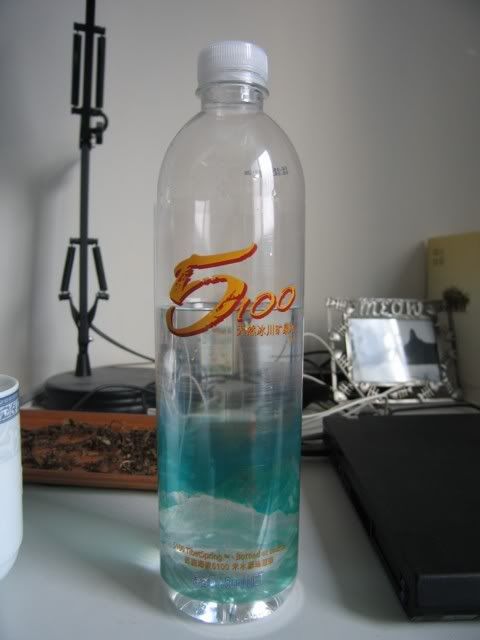
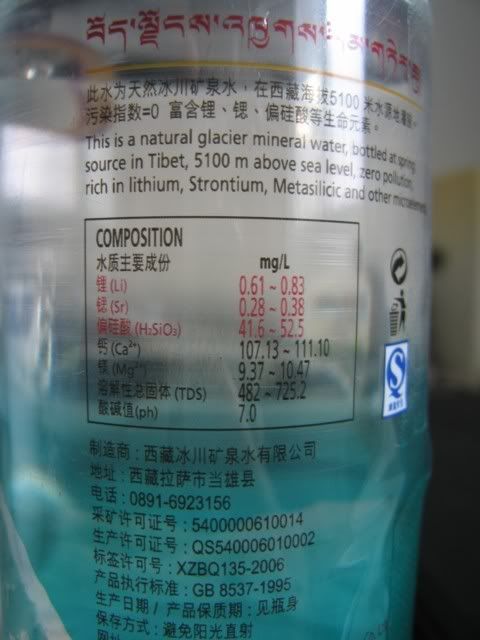
This is a pretty expensive water for Chinese standards, with this particular one costing about 1 USD for 750ml of Tibetan water. It’s piped from some spring at 5100m elevation, and supposedly glacial in origin. It boasts boatloads of minerals, among which are Lithium and Strontium, which I’m not sure is actually good for human consumption in large quantities. Anybody knows?
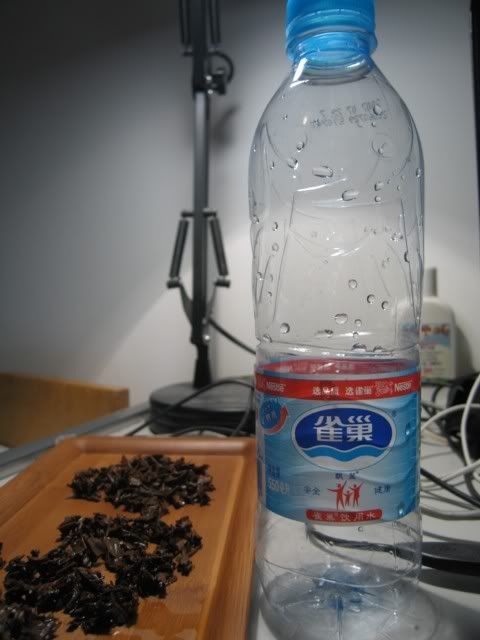
Since I’ve already said yesterday that I’m going to brew some Yunnan Red (aka Black) Tea, I did. This is a tea that my girlfriend brought me from New York, from a place that sells both tea and coffee. The tea is basically a typical Yunnan hongcha, nothing fancy, and not of the “Golden Yunnan” variety where all the leaves are golden buds. Instead, it’s mostly broken leaves with bits of golden buds mixed in.

I wanted to test the new water I got today, so I brewed this tea using the two small gaiwans I have, putting in a small amount of leaves in each, eyeballing them to about the same level (damn the broken scale). One is to be just the 5100 water, and the other is my regular supply — Nestle water from the Shanghai plant.
I didn’t bother washing the leaves. Since the amount of leaves I used was small, I brewed each infusion with about one minute steeping time each. Let me show you the first one
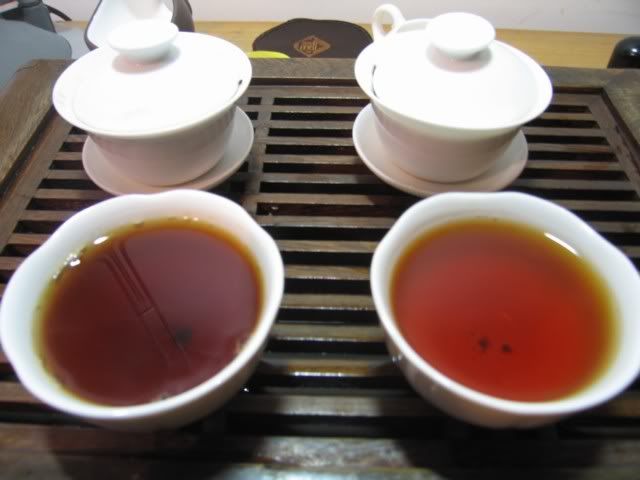
Hmmm….

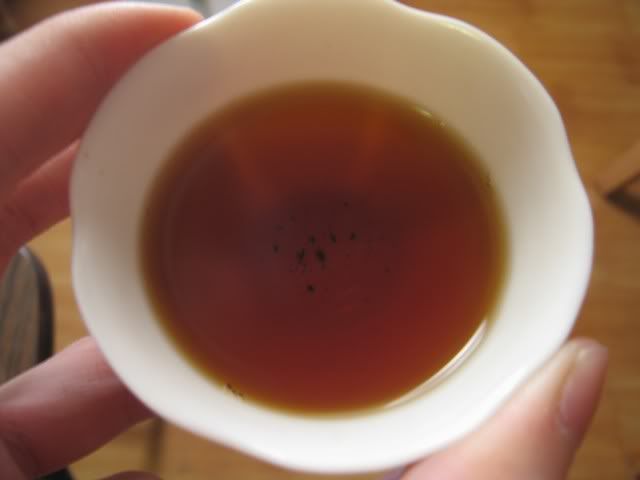
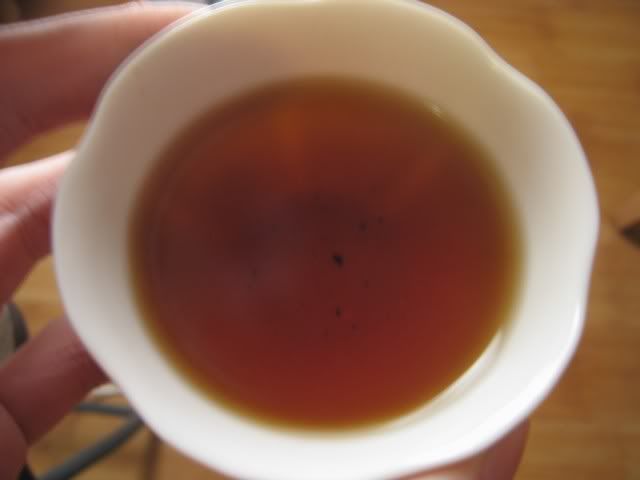
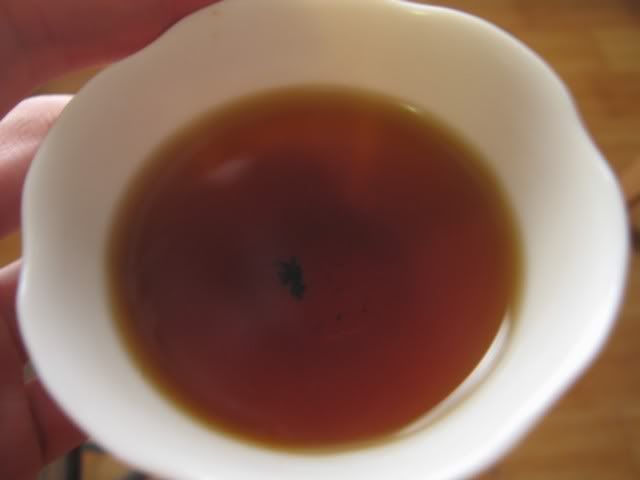
That’s a big difference in colour, and trust me, even though I think I added slightly more leaves to the gaiwan on the left, it was by no means a huge difference.

As you have probably guessed, the left gaiwan used 5100 water, and the right used my Nestle water. They definitely LOOK different. I mean… it’s night and day.

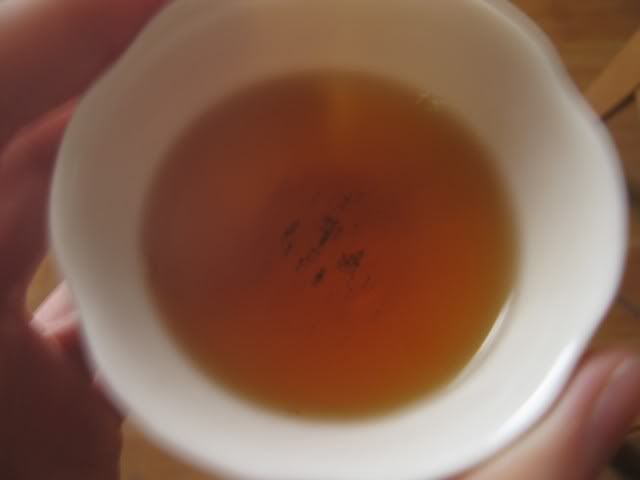
Thinking it might have to do with the slightly different levels of leaves, I reversed the water for the two gaiwans for the second infusion
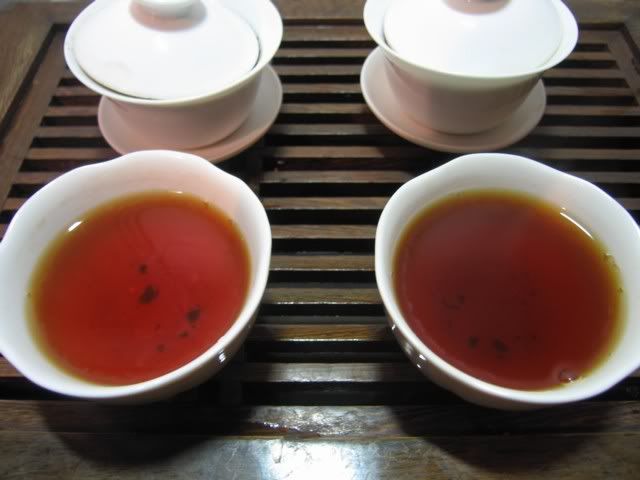
And got the reserve result. This is not an illusion.

So far I’ve only been talking about the look of the tea. How did it taste? Well, the tastes are definitely different, although the true test would be if I were able to taste them blindfolded, not knowing which one I were drinking. The tea brewed with 5100 water tastes a little heavier, whereas the one with Nestle water tastes crispy. I’m not sure what the best way to describe this is, but the 5100 water gives the tea a slightly more intense and deep flavour, as if it had condensed something from the leaves, while the Nestle water just skimmed the surface, but the aroma from the Nestle water was more apparent, “higher” in Chinese terms, and just lighter in general. There was a slight hint of sourness in the Nestle water sample on the second infusion that I didn’t detect in the 5100 sample. The mouthfeel of the 5100 samples were obvious a little softer as well, but not definitively so. Again, it would be more convincing if I couldn’t see which cup I was drinking from.

I switched the teas back to their original waters
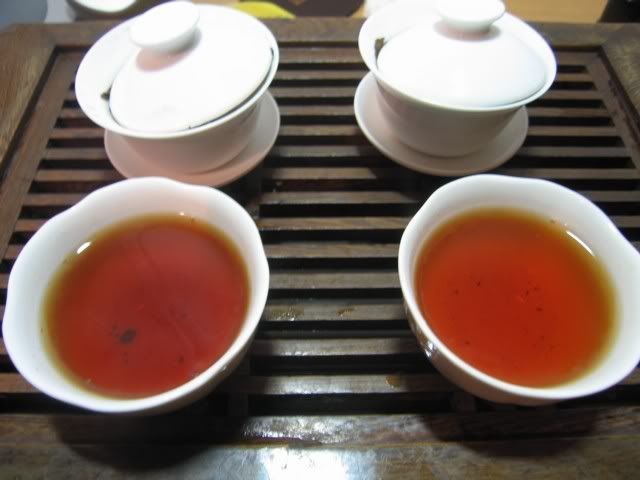
And a final, long steep, with the left now being a mix of 5100 and Nestle water, and the right only of Nestle water
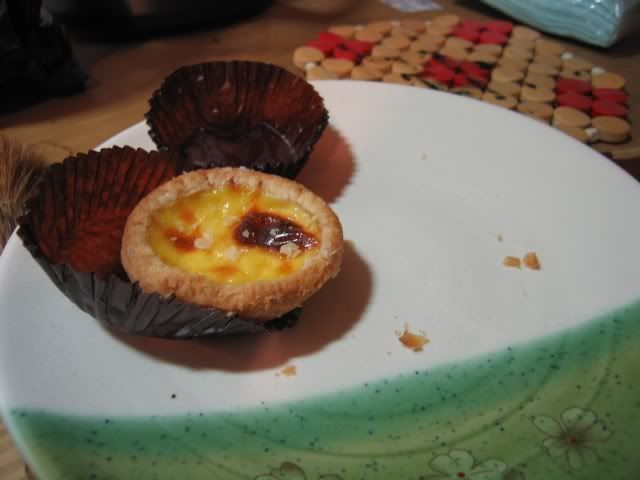
Meanwhile… I consumed some snacks, which I don’t mind doing when I’m drinking red (black) tea. In case you’ve never seen them… these are egg tarts, “Portugese style”, but really from Macau as far as I’m aware. The ones that look burnt have caramel added to the custard mix, whereas the ones that aren’t burnt do not have the custard and are therefore a little less sweet and a little less creamy.
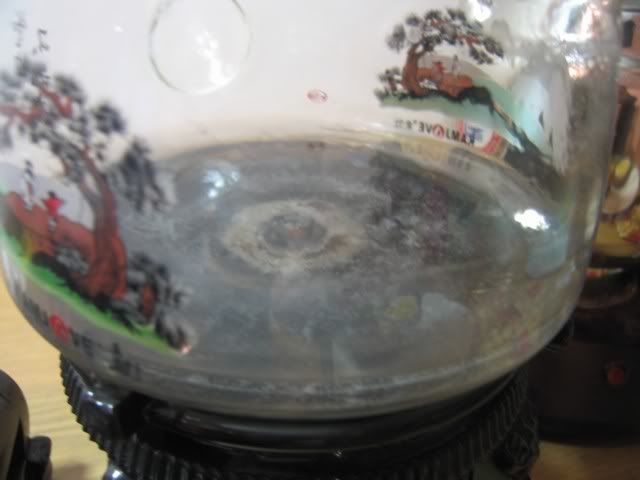
One interesting thing about the 5100 water, which I’ve noticed with Evian as well, is that they leave sediments behind when boiled. Notice the white deposits….
It will be interesting to see how this water changes the way certain other teas taste, stuff I’m perhaps more familiar with. I’m wondering what to try next with this. Perhaps the Best Tea House “30 years” loose puerh will be a good candidate for the same treatment, or maybe some Wuyi tea. I don’t think I’ll want to use only 5100 for brewing, for a few reasons. Cleanup is definitely one, since I think the amount of deposits in the kettle is quite high, and although I know I would be gulping down all of this if I were to drink the unboiled version of this water, it’s still a bit… jarring. Also, it’s not cheap…. and I don’t think the way it changes the tea is entirely positive. That is, I don’t think one can say with no reservations that this water makes today’s dianhong better in every way. It was different, that’s for sure, but I couldn’t say I liked it more, necessarily. I think it was interesting to see the difference though.

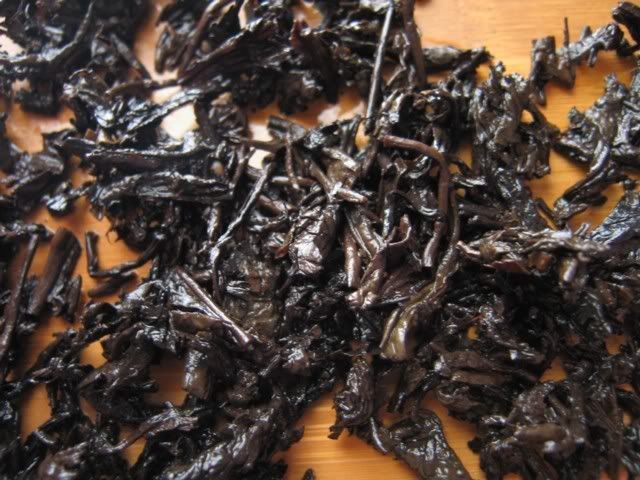
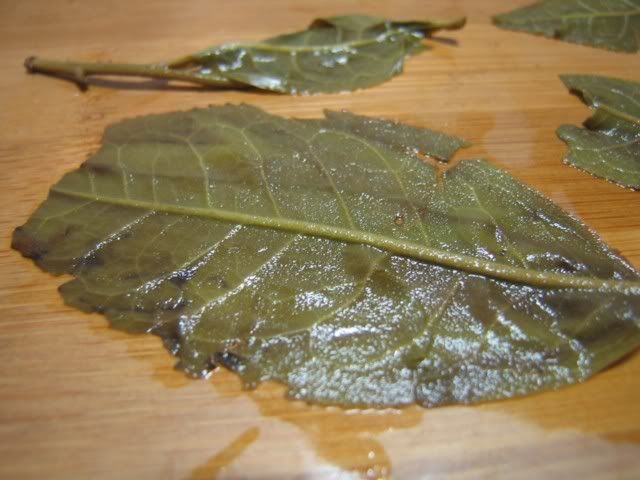
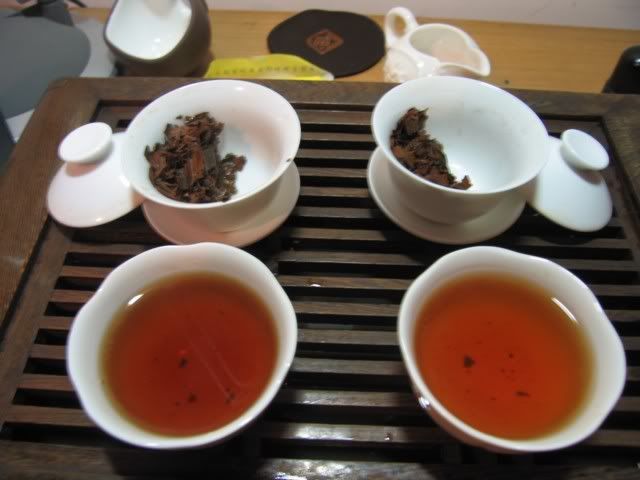
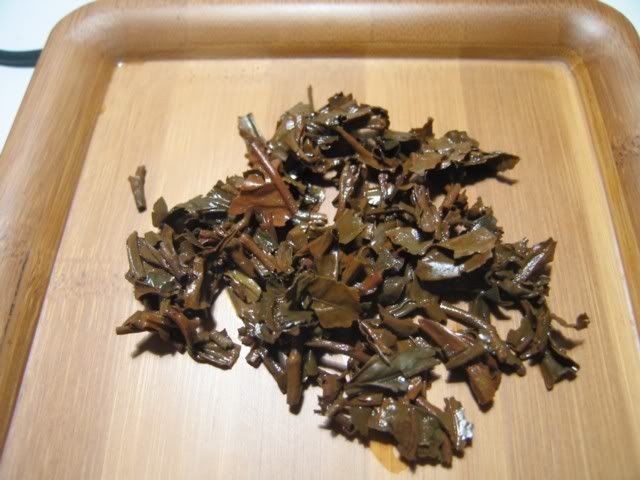
What’s a day’s drinking without a shot of the wet leaves?
→ 7 CommentsCategories: Information · Old Xanga posts
Tagged: , ,

Jabbok loose puerh

January 31, 2007 · 3 Comments

I drank some of the Jabbok loose puerh today. The claim, when I bought it, was that it is 30 years. It didn’t really look 30 years, nor did it really taste like what I normally thought of as a 30 years tea, but since it was cheap, and it was the last little bit they had left, I snapped it up anyway.

Last time I tried it, I thought the aroma was quite impressive, even though the tea itself was not particularly stunning. This time though, I noticed something else, namely bitterness. The tea has a bitter base to it in the taste that I couldn’t quite explain and I couldn’t really get rid of despite the many infusions I had of the tea. I probably drank a total of 15-20 infusions of this thing, and the bitterness persisted to the end. It wasn’t a nasty, overwhelming bitterness, but it was there and it was obvious. At some points, I wondered if I were tasting red tea (aka black in English usage). Something in the taste and the aftertaste reminded me of that. Mostly, it tasted like puerh, but there are notes in the tea that makes me think twice.

The sheer number of infusions that the tea lasted would say that this is not a typical red tea, because otherwise it wouldn’t last so long. Then again, I did use a good amount of tea….

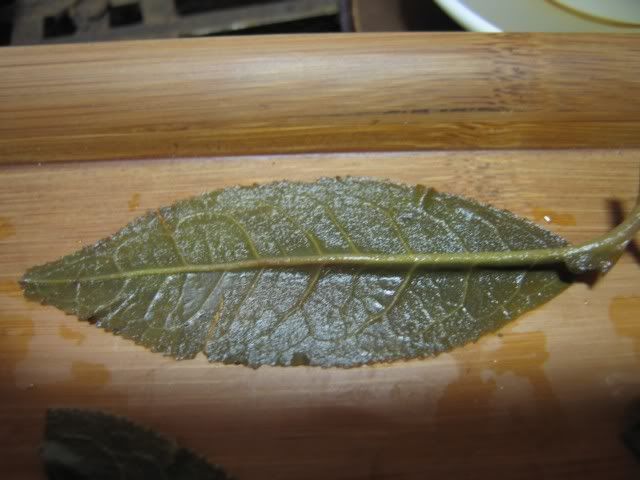
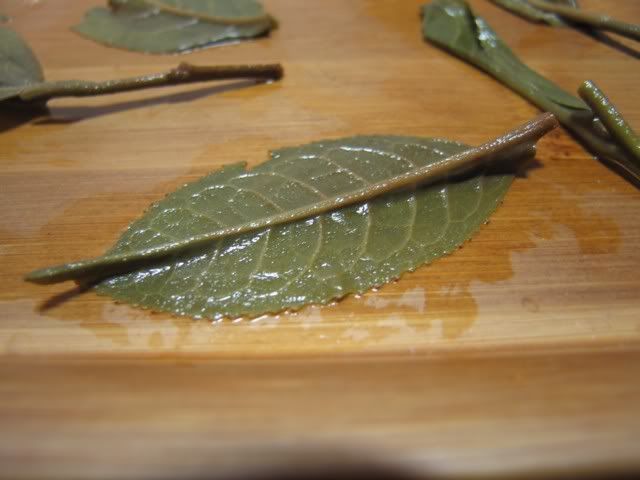
If you look at the wet leaves, the colour looks fine

And some of the leaves still exhibited a green tint

One possibility is that red tea was purposefully mixed in. The other is that maybe somehow the tea’s kill-green process wasn’t complete or thorough enough, and oxidation kept taking place (is this even possible?). If it were only stored poorly (say, next to a big bag of red tea) I don’t think the tea would’ve gotten the bitterness from that stuff, but it is rather bitter. Or, perhaps, the age is simply not nearly as high as claimed. I never did really believe the age anyway, especially given the light colour of the brew and the way the leaves look.

I’m not sure what to make of this tea. I still have a few samples worth of it, so I can give it a try again. Maybe next time I should brew it in a gaiwan and see what shows up. Better yet, I should probably drink a dianhong tomorrow to compare it against, and see what I can find in the taste….

→ 3 CommentsCategories: Old Xanga posts · Teas
Tagged:

No tea today

January 30, 2007 · 3 Comments

Yes, you heard that right.

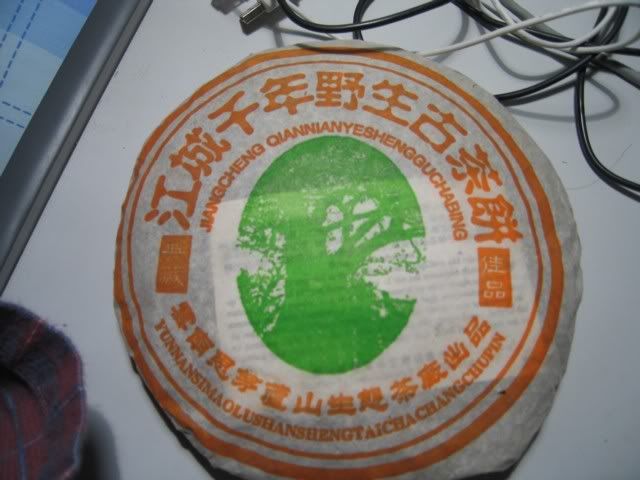
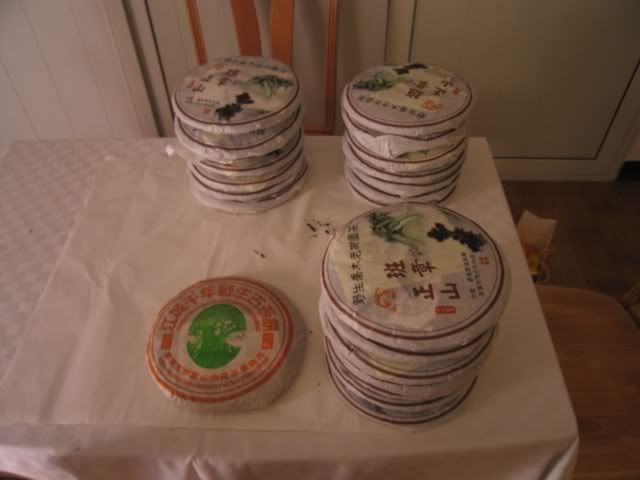
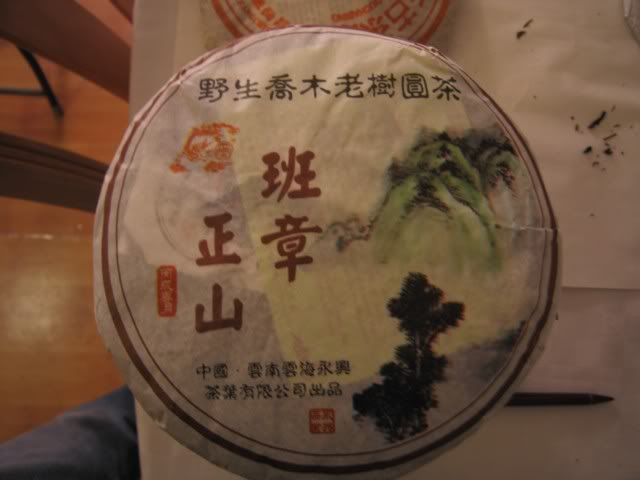
So to feed my caffeine addiction, I decided to take some pictures of a cake that I got with the 3 tongs of “Banzhang Zhengshan” (which, by the way, I think only has a small % of actuall Banzhang leaves in there, but the price makes that irrelevant). Not that it will cure any headache that might be incoming, but it provides for blogging material, if nothing else.

This is a cake that I basically got as a freebie along with the 3 tongs.

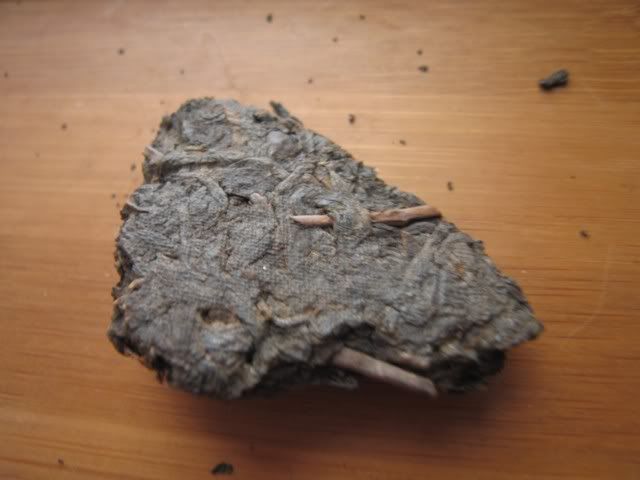
“Jiangcheng Thousand Year Wild Growth Old Tree Cake”. Right….. Jiangcheng tea, as some of you know, is often used to make fake Yiwu cakes. Supposedly, the leaves look similar, although I’m not sure about the taste profile. When I opened up the wrapper it smelled fruity. I couldn’t pinpoint which fruit, but fruity is not a bad description of what I was smelling. Trying it for taste and seeing what a real Jiangcheng tea tastes like is the primary objective of getting this cake. It will give me some basis for comparing against other teas. After all, there’s very little reason to fake a Jiangcheng.

Looks good enough, and if someone else told me this is a Yiwu cake selling for $20 USD, I might believe you. Except that it’s not… it’s only $4.

→ 3 CommentsCategories: Old Xanga posts · Teas
Tagged: ,

Immune to bitterness

January 30, 2007 · 6 Comments

Among the many side effects of tea drinking, especially young puerh drinking, is that I don’t really taste bitterness as acutely as before. It was obvious when I tried the Banzhang Zhengshan that I bought recently, when I thought it was only mildly bitter while my girlfriend was screaming bloody murder. More obvious though is my recent taking of some cough syrup… I didn’t even need a chaser. It went down smoothly enough, with just a hint of bitterness and a rather mild nastiness from the fake cherry and whatever else flavour there is in there. I didn’t exactly squint. In fact, I don’t think it’s much bitter at all. I’m sure two or three years ago I would’ve thought differently, but I think now my tongue is more numb to the bitter taste…

Is that a good thing or a bad thing? It would seem to me that this is a bad thing, since it means I’m missing out on some flavours in a particular tea. What can one do to restore one’s sense of taste?

→ 6 CommentsCategories: Old Xanga posts · Teas
Tagged:

Dahongpao

January 29, 2007 · Leave a Comment

I drank some dahongpao today. It’s the supposed tea that is used for the national assembly when they entertain foreign guests. It’s really not bad, although tasting it again, I feel like it changed a little and is not as great as before. I wonder what happened. Storing it in a plastic bag may have done it in.

Since I am not going to be drinking much young puerh these days, it’ll be a good opportunity to test out various kinds of Wuyi teas. However, I just chipped the lid of my pot today :(. It’s not a big damage, but now my otherwise round lid for the pot has a little dent 🙁 🙁

At least I bought it for cheap….

→ Leave a CommentCategories: Old Xanga posts · Teas
Tagged: ,

Switching teas

January 28, 2007 · 1 Comment

My body seems to be protesting my drinking of young raw puerh. Today for dinner there was some (crappy) longjing that I drank, and I felt really unwell. I think until my body gets better and the weather gets warmer, it’ll be mostly Wuyi teas and high fired oolongs, plus a bit of cooked puerh for me for now.

In the spirit of that, I had some cooked puerh today, along with a Hong Kong style milk tea, which is basically super-boiled black tea plus some heavy evaporated milk. Good stuff.

→ 1 CommentCategories: Misc · Old Xanga posts · Teas
Tagged: ,

60s Guangyun Gong

January 27, 2007 · 5 Comments

On the menu today:

This is a piece of an alleged 60s Guangyun Gong from a tea friend in Hong Kong. He bought it as broken pieces, and the guy who sold it to him wasn’t sure what it was either. After some repeated tastings and research and trying to put the pieces together, he thought that this is probably a 60s GYG. As you can see, the cake is rather tightly compressed, and the edge of the cake is a bit tapered. The shape looks plausible…

The first three infusions:

It took a little while before the leaves fully opened up. The storage condition of this piece is somewhat wet, with some white stuff inside the piece as well as on the surface. The leaves are mostly buds, with some stalks and bigger leaves. The taste…. is sweet and mellow. It’s obvious and immediate, with a gentle sweetness coating my whole mouth. There’s not a hint of bitterness, but also no hint of poor storage either in a way that a poorly wet stored cake from, say, the 80s will. The tea is extremely smooth.

I added some splash of high mineral water for the 4th infusion, and the tea became rougher. I turned back the water to a lighter mineral content with a few splahes of very light mineral water (super expensive… from Japan….) and the mouthfeel immediately improved. It’s really quite interesting how water mineral content can really change the way a tea feels in the mouth.

The 15th infusion:

The tea was still going strong. It looks weak, but it doesn’t taste weak. We got more than 20 infusions out of it before I called it quits. It could keep going.

The wet leaves look a bit carbonated

Black, with some brown bits, and you can use cooked puerh to fake this tea, but not the taste…. I don’t know for sure if it’s a 60s GYG, but I’m quite sure this is a tea with at least 30-40 years of age. Younger teas just don’t taste like this.

→ 5 CommentsCategories: Old Xanga posts · Teas
Tagged:

Lots of tea

January 26, 2007 · 5 Comments

I went tea shopping today with my girlfriend, mostly to buy stuff for somebody in Hong Kong, and to also show her around where I hang out so much. Let me not bore you with the details…. but let me show you what I bought

Yes, a lot of tea. There was also 500g of Shuixian.

Most of the puerh and all of the Shuixian is for that HK friend. I just bought myself one tong of the puerh. The tea is supposedly “Banzhang Zhengshan”.

The friend’s request was simple. She wanted a bitter and strong tea, for a cheap price. That’s not too hard to do, although it was harder than I thought. Mostly because to meet the price criteria it was not that easy, and to find a tea at the right price bracket that was bitter and strong enough was also tough. I found a cake today for 20 RMB (2.5 USD) but it was just weak. This one, however, is good enough, and still under 4 USD. So I bought a tong for myself, and 2 for the friend as requested.

There was also a bunch of teaware that we got, among which was a puerh plate — those bamboo things that you open cakes on.

During dinner, I brewed tea this way:

Using the Yiwu maocha that I got. It was nice and sweet, no bitterness despite long brewing times. You should all try it 🙂

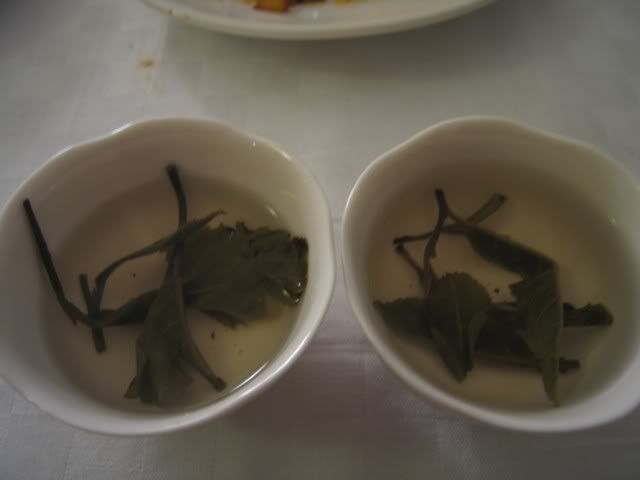
Some tea leaves

→ 5 CommentsCategories: Old Xanga posts · Teas
Tagged: ,

Back to Beijing

January 24, 2007 · 4 Comments

And what do I drink when I come back to my tea stash? Funny enough, it’s my cooked puerh, that 1kg monster brick.

I haven’t had it since the first time I tried it right after I purchased this brick. Tasting it now, after having had a few other cooked puerhs with L, I think I paid a pretty reasonable price for what it is. It’s not great, and it isn’t anywhere near a nice raw puerh, but it gets the job done… and I think is ultimately better for me in these cold winter days. After drinking young raw puerh sometimes I feel cold, but after this I don’t feel that way at all. It’s also easier on the stomach…

There are a whole bunch of stuff that I bought when I first got to Beijing that are now half a year older, such as the Mengku cakes that I haven’t tasted for at least a few months. Since I got some Mengku sample from Shanghai, I might test it against what I’ve got and see how they compare. That will be my next project.

But the next few days, my girlfriend will be visiting. 🙂

→ 4 CommentsCategories: Old Xanga posts · Teas
Tagged:

Difficult question

January 22, 2007 · 6 Comments

Inevitably, when your friends know you as the “tea guy”, they start asking you that very difficult question — “what should I get?  What’s good?  What should I buy as a souvenir for xxx?”

A friend’s friend who is visiting Shanghai asked me that today, and I really was at a loss for an answer.  I thought about longjing, but really, longjing is not very well appreciated, necessarily, by the people who don’t particularly like tea (in this case, the object of the gift-giving are some Americans).  Longjing is also expensive.  The girl then said “would chrysanthemum be good?”, and I thought that might be a good gift — not expensive, tastes reasonable, etc, but then, I am loathe to suggest an herbal tea…

It’s always made more difficult when I ask “so what kind of taste do you like?” the answer will be “I’m not sure — anything good will do”.  Ugh.

So…. if someone asks you this question, especially when buying stuff for someone who knows little to nothing about tea, and if you have an unlimited supply of tea at your disposal, what would you usually suggest?

→ 6 CommentsCategories: Information · Old Xanga posts
Tagged: