A Tea Addict's Journal

Alchemy doesn’t work

March 10, 2013 · 21 Comments

Chinese alchemists of the past were trying to create elixirs that will prolong your life, or even grant you eternal life. Western alchemists, generally, were trying to turn other metals into gold. Either way, what they wanted to do was to turn something crappy or mundane into something extraordinary (of value, or use). It doesn’t work.

Likewise, unfortunately, bad teas almost never turn into good ones. I had a tea recently, a supposed “Nannuo Wild Tea” from the factory Six Famous Tea Mountains (liudachashan or 6FTM). Old timers like me will remember in 04-06 in the English online circle of tea drinkers, 6FTM was, for a while, pretty popular – Yunnan Sourcing stocked them, and generally, they were pretty cheap and seem to be a bit different from Menghai factory stuff. Generally, however, they were not exactly high quality stuff – mostly mass produced, large factory fare, and I think in many cases, what’s on the wrapper often had little bearing with what’s actually in the cake. This is still quite common, but already pretty evident back in those days. Nowadays 6FTM is mostly known for commemoration cakes of various sorts – basically, same tea, different wrappers, sold for various odd reasons like “3rd Annual XXX Conference” or “6FTM factory 8th anniversary” or whatever they can think of.

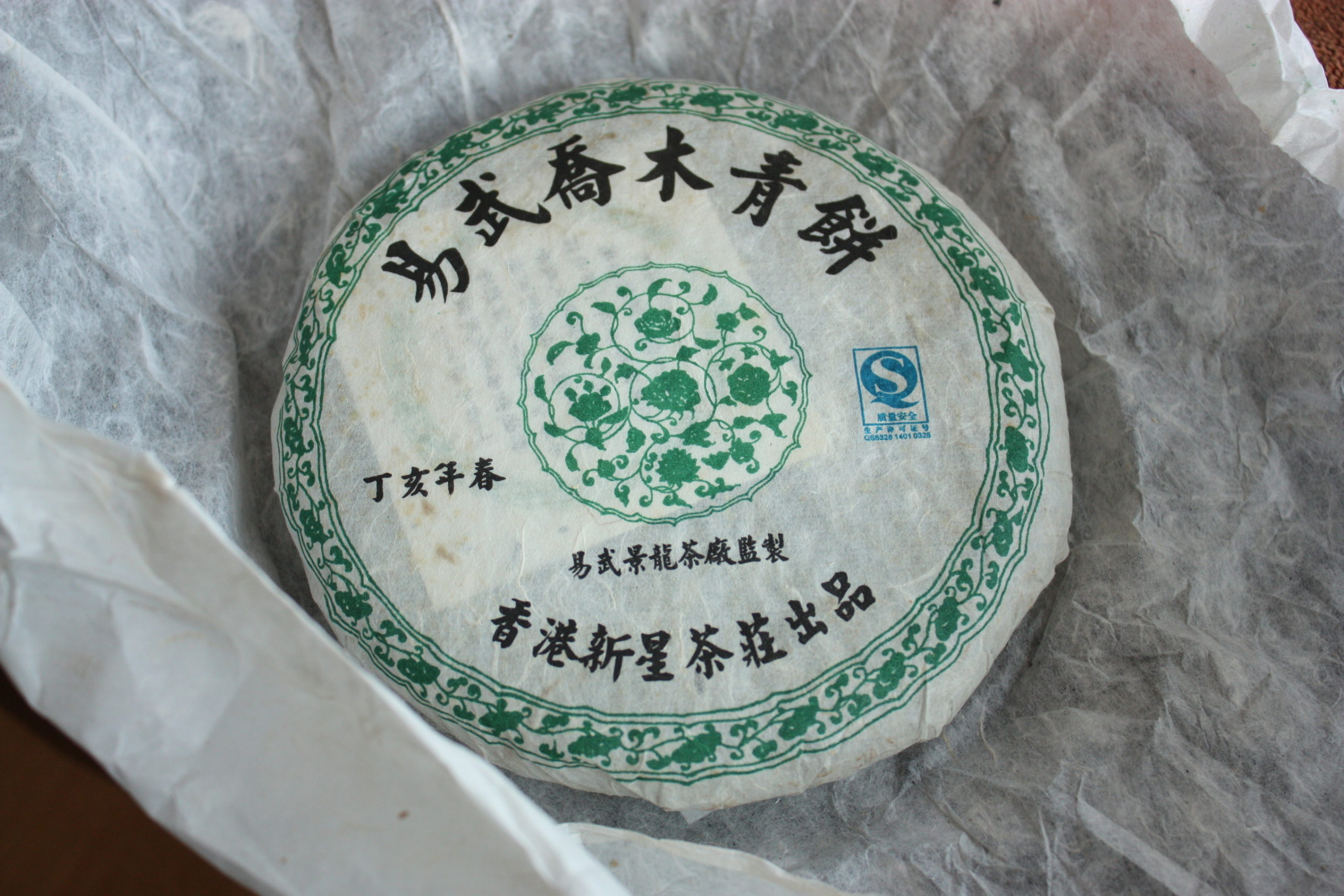
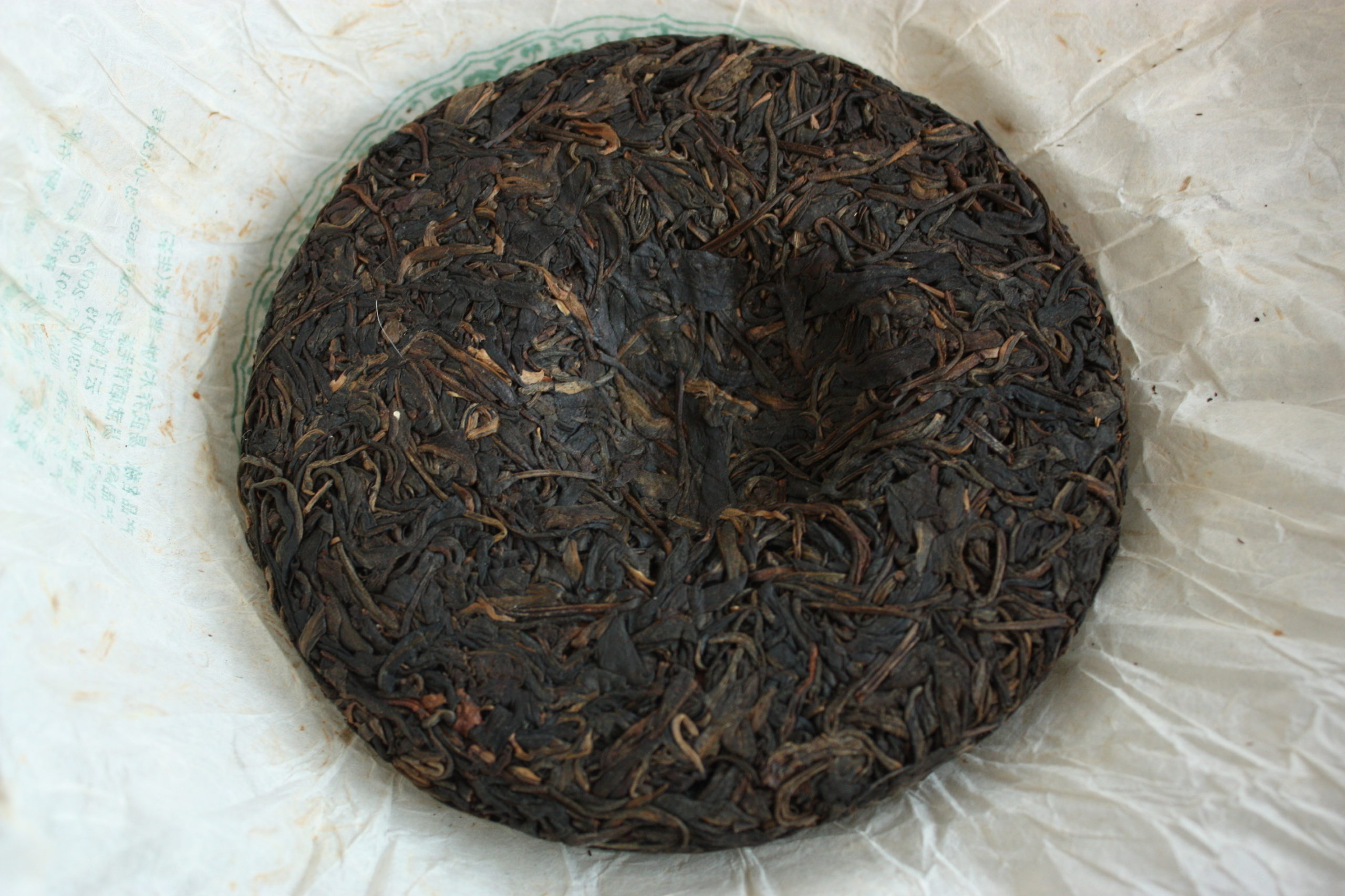
Anyway, this cake in question was gifted to a friend of mine recently and I was lucky enough to try it with her. The tea has been stored in Hong Kong for most of its life. You can see the wrapper here

Stuff like this sold for about 40-50 RMB a cake, retail. Although I can’t find this exact thing on Taobao, similar stuff go for somewhere in the ballpark of 200-250RMB a cake now. It’s gotten more expensive, but mostly just because it’s gotten a few years older. It was probably pretty crappy back then. Is it any good now?

Unfortunately – no. It’s boring, thin, weak… nothing to recommend itself. If you stored this for 7 years and this is what it gives you now, you’ll probably regret having wasted money and time on the tea. The fact is, crappy, weak teas don’t turn out to be great teas down the road just because it’s stored and aged. The idea of “I’ll put this aside and maybe it’ll get better” only applies to teas that are difficult to consume, but not because they’re weak and bad. Rather, “it’ll get better” should really mean “it’ll get easier to drink” because the bitterness, roughness, etc are all changing into something sweet and nice. A tea that starts out with not much substance is not going to develop substance over time. That, unfortunately, is like alchemy. It just doesn’t work.

I’m sure I have some things in my own collection that fall into this category. Most of them I think I purchased out of pure curiosity – one cake here, one cake there of stuff that I thought maybe I can try aging. I hope that things I have bought in more volume won’t fall into this trap. If I have – it really means they should be drunk, or something. Nothing is more disappointing to try something that you think has aged well, only to find out that it has nothing to offer at all.

→ 21 CommentsCategories: Teas
Tagged: ,

Dumping bad samples

February 27, 2013 · 17 Comments

Despite the title of this blog, I actually only drink one tea a day, unless I happen to be visiting a tea store. Generally, when I’m by myself, I brew up one and only one tea, and will drink it until I feel there’s not much left, or when I get bored of it. For years I documented this meticulously on a daily basis, although starting a few years ago, I felt that it was oftentimes more obligatory than anything, without anything to add – nobody really wants to read about my daily tea drinking habits, after all. So, I stopped, and this blog became more about tea drinking culture and my thoughts on tea. The one-tea-a-day habit, however, remains.

Recently though, I have started dumping teas. I have lots of samples – either through purchase or through gifts from others. Samples of tea, as I’m sure most of you know, can be great, ok, or bad. Unless it’s really obvious, like some David Lee Hoffman huangpian that someone sent me, usually you can’t quite tell if something is going to be bad or even horrible. You can only really tell once you brew it – at which point, going by my old rule, it would be too late. I used to endure such teas, and write the day off as just a bad tea day. Now though, I decided I’m not going to waste my caffeine quota drinking stuff like this, and so instead, I dump them.

Today was one such day. It started out with me trying, finally, Hster’s oddly named Economic Corridors cake. I don’t like it. It has that weird taste that suggests to me it’s got something funny going on, although I can’t quite pinpoint what’s wrong with it. What I do know is I’ve tasted this before, and it’s not a sign of a tea that will age well. It has some attractive qualities, but underlying is a bitterness and staleness that turns me off. Looking at the leaves though, you can’t really tell

Nor does the brewed tea in the first infusion tell you something is definitely off

So, instead of waiting around, after a few infusions I just decided to move on – I don’t want this to be my last tea of today.

The wise thing would actually to jump into something I know that will deliver, but instead, I took another gamble and tried another sample that was sent to me, this time from a new outfit called Origin Tea. The tea is supposedly Yibang from a Taiwanese shop called Guangyang Hao. They have a nonexistent web presence, so I really have no idea who they are (sorry, no pictures, as it was getting dark)

The tea is better – not the greatest, but certainly better, and more puerh like than the Economic Corridors cake. It’s gotten past that initial hump, and tastes full enough and rich enough so that I think it will at least not deteriorate, which should at least be the minimum standard.

Then I’m reminded of why I usually only drink one tea a day – I think the two teas was a little too much for me, for one person to consume comfortably. There just isn’t a good balance between drinking decent teas and trying new things. Smaller pots, as some might suggest, is not really an option either – I dislike using smaller pots. So perhaps, next time I should just be more decisive and throw out bad tea after two or three infusions, instead of five or six. After all, there’s always, always, more tea to drink.

→ 17 CommentsCategories: Teas
Tagged:

Microclimates

February 15, 2013 · 1 Comment

First of all, I wish you all a happy lunar new year, and that the year of the snake may be a fruitful one.

Continuing the theme from the last post, I thought it is also worth mentioning that storage climates are not just dependent on big things – local climate of the city where you’re at, or even the area you live in, but also heavily dependent on how your room, your closet, or even that cardboard box on the ground where you put your tea – how those things may affect your storage conditions.

One of the things that I see people asking sometimes on tea forums and the like is whether or not it is safe to drink from leaves that were left around overnight. Usually, the answer offered by myself or others is “it’s probably ok”. In my personal experience, that has most certainly been the case.

There are, however, differences that may even affect that answer, and consequently, probably affects how one stores teas as well. For example, in my old office I normally drank tea grandpa style, and I would usually leave the spent leaves until the next day to clean up in the morning when I get there again. No problems there. At my current office I do the same thing, except now, at my new office, after a weekend the tea leaves would get moldy, quite seriously so in fact. It does make me wonder how safe it is to drink leaves that have been sitting here for a whole day.

More importantly, I’d imagine something like this is indicative of significant differences in how tea stored in these different environments will behave, especially if stored over long periods of time. Right now, I have one small cake I am storing here for immediate consumption. That won’t show much change, I think, at least not before I finish it. However, if I say store some teas here long term, I’d imagine this is a much more humid environment, and the tea will probably age a bit faster – but at the risk of getting moldy more easily. Maybe I ought to try it out and see what happens.

→ 1 CommentCategories: Teas
Tagged: ,

Storing is for the long haul

January 29, 2013 · 13 Comments

A few months ago a reader of the blog emailed me with a problem. She is newish to puerh, and has been buying some cakes since 2011. She bought some clay jars to store the teas in, and in the hopes of speeding up the aging process, decided to try to add a bit of humidity to the jars to make things go faster/age better. This much sounds familiar – lots of people do similar things, especially if they live in drier climates, because, well, they worry about the tea not aging properly. These are the jars.

Then the inevitable happened – first, signs of yellow mold, which can be dusted off easily and stopped the addition of humidity to the tea (by some method of adding water to the clay and let the clay soak it up, I believe). Then, a more invasive problem appeared – bugs, little bugs, that were all over the cakes, especially one, but it was showing up on others too. She threw out the most heavily infested one, but now almost all the cakes have bugs in them, and they move fast and run away from light, what to do?

In desperation, she emailed me to ask – what’s a good way to handle them? She threw one of the cakes with bugs away, but there were more. Another she put in a freezer, hoping that it will kill the bugs. Was microwave a possible way of killing them? Something else?

I think a little perspective is useful sometimes, because I’ve met others who have had similar reactions before. Puerh, when you buy them new, are, well, an investment of sorts. If your plan is to store them and drink them in the future, chances are your time horizon is years, if not decades. If that’s the case, even momentary infestations of all kinds of nasties will go away. Some, like mold, may leave a permanent mark on how your tea tastes. Others, like little bugs, will barely make a dent in your tea, if you manage to get rid of them. So, when you run into problems like this, the first thing to do is not to panic, unless you spent your life savings on the tea and your life depended on it. If it’s just a hobby – there are ways to fix the problem. What not to do is to overreact and put the tea in, say, the microwave and permanently destroy it. That will really end the tea’s aging potential and cause irreparable harm.

Since in this case it was obviously the wet jars and the attendant humidity that was causing the problem, I suggested the reader to take all the cakes out of the jars, and then separate the cakes into two piles – ones with bugs and ones without. The ones without, just store them on a shelf or something. The ones with the bugs I suggested perhaps putting them somewhere, spread out, and just let them air out. Usually, bugs like these that live on puerh cakes tend to love the humidity, and are mostly after the paper. Once it gets too dry they will go away, especially if it’s not a dark humid space. I had bugs like this on some bricks I bought some years ago, and after a few months all the bugs were gone, and I didn’t even do anything special to get rid of them.

So, happily, the reader wrote back to me a few weeks ago saying that the bugs were, indeed, all gone. No more problems, and the tea is probably a bit dry, but certainly better off than in some uncontrolled humid environment with a high risk of mold and bugs. They’re going back into the jar, but without any added humidity this time. I think the aging will be slow, but there’s only so much you can do with natural climate.

This is not the first time I’ve encountered folks with storage problems that were man-made. Usually the root of the problem is the desire to somehow replicate a more humid, hotter environment so the tea will age faster, but that is not so easy, and the risks of failure also increases dramatically when you pursue such projects. I am an advocate of simple solutions, such as, say, adding a bowl of water to a storage cabinet, but anything more and I’d be weary. If you do pursue such projects, monitor the changes very closely. Mold can grow on all kinds of places, but on tea cakes, they generally start at the end of the stems, so watch those carefully. They can also be in some corner of your storage unit in that long forgotten tuo sitting in the back – and that can fester and kill your whole stash.

You can never really replicate the storage conditions of a giant warehouse with hundreds of jians of tea. Just today I was walking by Lam Kie Yuen and saw them loading up a truck for delivery. There were probably 200 jian of puerh in that truck, meaning there were close to 17000 cakes in there. Storage that amount of tea and storing 20 at home are not the same thing, and they have decades of storage management experience to back them up. So, proceed carefully, and if anything goes wrong, don’t panic. Airing out the tea for six months will solve most of the problems.

→ 13 CommentsCategories: Teas
Tagged: , ,

2007 Sunsing Yiwu

January 21, 2013 · 20 Comments

This is a cake of Yiwu tea, supposedly, that’s quite cheap and decent. It’s from 2007, right around the time of the craziest prices during the bubble, although in retrospect, the prices weren’t that crazy – it’s crazier now, believe it or not.

There’s not much that they told me about this tea, other than it’s from Yiwu, and that it’s some sort of arbor tree tea – not old tree, mind you. It’s only 250g, but it’s the price of a run of the mill cake. The thing is, this tea is pretty decent – better than a lot of stuff out there that’s 5 years old and selling for far more. So, why buy those?

Of course, this tea doesn’t have a fancy background. Nobody, as far as I know, has reviewed it and deemed it good, so no one’s chasing after it, making its likelihood of appreciation low. It is not exactly the most exciting thing out there in terms of taste, but that’s really not much of an indictment. A lot of teas that I’ve tasted recently that are from the past few years are positively awful – just not very good, especially when factoring in the price of such things. Unlike say five years ago, nowadays just finding something decent is difficult without needing to pay through the roof. Increasingly, I find it a better deal to look for something a bit aged, and among those, pick and choose the ones that are not as famous. Chances are, there are decent teas out there that can be had for not a lot of money. This cake is one of them.

I think this tea was perhaps stored in a slightly humid environment, but not quite a traditional storage – there isn’t a noticeable storage taste to the tea. It’s got decent throatiness, reasonable body and fragrance.

Yet chances are, cakes like this will languish in the stores that made them, and I can go back a few years later and it will still be priced at more or less the same price as it is now, maybe adding a bit of inflation, etc. I see cakes here that are being sold at the same price as they were four or five years ago, and for these non-famous cakes, I don’t see that changing anytime soon. So remember that for every cake out there that has gone through stratospheric increases in prices, there are probably a few dozens that have been sitting at the same level for ages. For those of us not in the business of speculating on puerh, these are the things we can buy to enjoy.

→ 20 CommentsCategories: Teas
Tagged:

What’s in Yixing clay?

January 7, 2013 · 22 Comments

So, what’s in Yixing clay anyway?

Last year I got in touch with Professor NH Cheung of the Department of Physics of Hong Kong Baptist University, because they have this technique that they have been using to do spectroscopy on various things – forensic analysis on ink toners, for example, among others. They can use it to figure out what elements are present in any given substance without causing damage to the material itself. Well, what better than this to test if Yixing clay has lead or not? After all, that’s what everyone’s worried about, it seems, and this method seems infinitely better than the rather dodgy lead test kits that you can buy. So we got in touch, and Professor Cheung’s PhD student (soon to be Dr) Bruno Cai conducted the tests. You can read the full report here: 2012.12.31 Report of PLEAF analysis on yixing tea pots-1

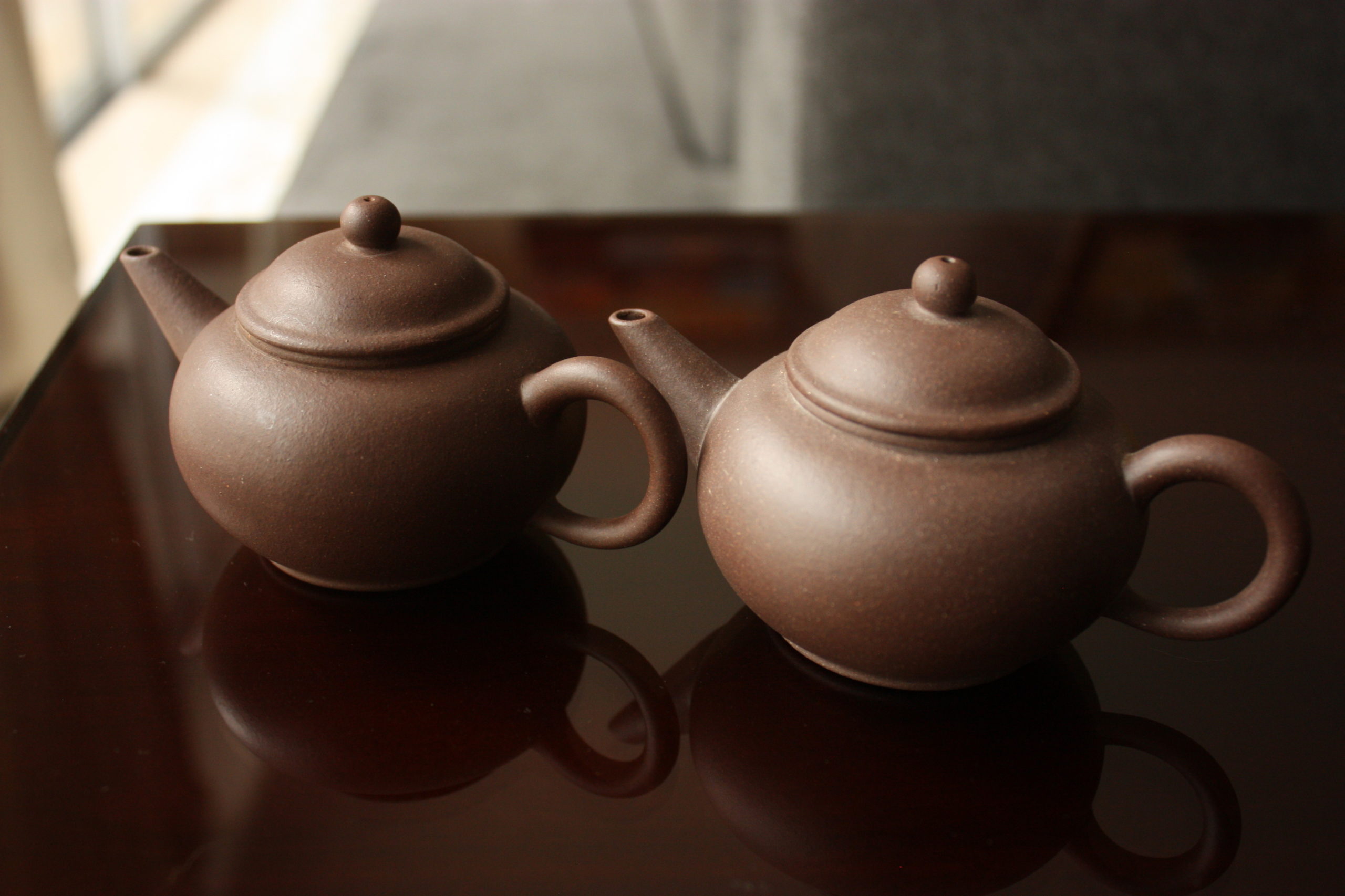
I asked them to take samples from both the lid and the base of the pot, so as to get a more general sense of whether there are differences. I also gave them two pots – identical ones from, presumably, the same batch, which are here listed as “sample 1 and sample 2”. I thought it might be interesting to test to see if they share similar characteristics. In case you’re wondering, they’re the same as these ones:

The quick summary is – no lead (Pb). Among the elements present are: Aluminium, Calcium, Iron, Magnesium, Silicon, and Titanium. We don’t know in what quantity they are there, but that’s a start.

We might try to do more tests on different pots. They have also done tests on yixing ware previously – some reddish yixing cups, to be precise. The signatures are a bit different. This could get interesting.

→ 22 CommentsCategories: Objects
Tagged: ,

Happy new year

January 2, 2013 · 11 Comments

Happy new year to everyone, and I hope you all have a new start on a good year – drinking many good teas and meeting many new tea friends. I, for my part, am starting a new job, with a new office, and I think I can finally setup a work tea setup again, with maybe a Kamjove and a small tray. Perhaps, finally, I can drink some more tea at work again. That’s a good start to the year!

→ 11 CommentsCategories: Information
Tagged:

Notes from Kyoto

December 27, 2012 · 2 Comments

I’ve been to Japan quite a few times by now, but there are always things that you notice on trips that you didn’t before.

1) Restaurants, at least here in Kyoto, almost all seem to serve hojicha or genmaicha as the tea of choice. Of the ones that I’ve gone to so far, that has always been the case. Some of these places are not exactly crap restaurants either, and the hojicha, as far as I can tell, are pretty decent. In one case, it was the most interesting hojicha I’ve ever had. I think sencha perhaps doesn’t go as well in many ways with a lot of cuisine, and I can sort of see why. Hojicha is a bit more neutral, and probably does a better job of making food go down easier than sencha could.

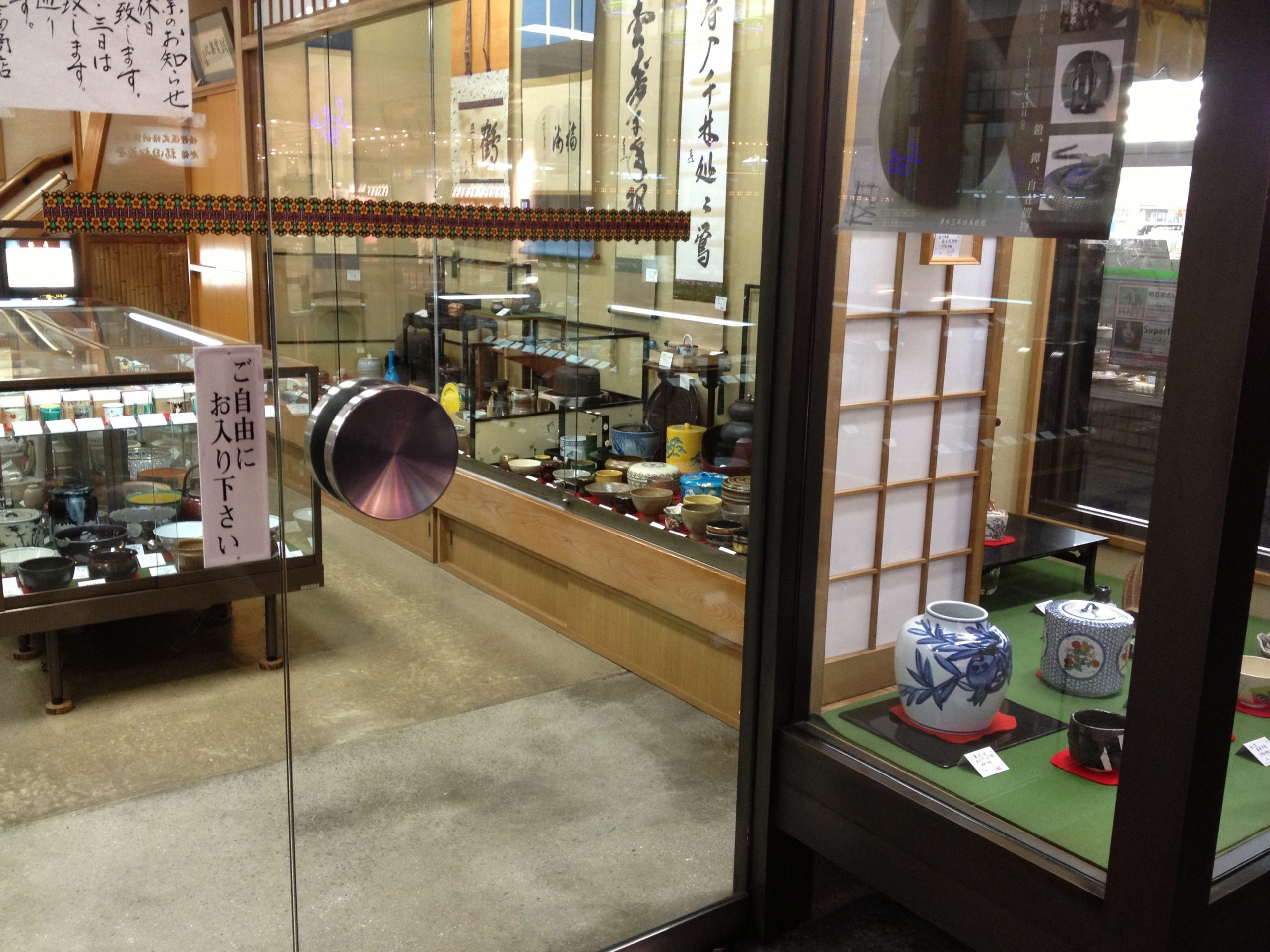
2) There really are a lot of teaware stores here. Last time I was here I ran into a teaware store near Daitoku-ji that sold me a few coasters that I think are really quite nice. This time, walking around the main shopping districts here in Kyoto, there are many more teaware shops that sell quality stuff. The prices range from reasonable to very expensive, and it all depends on what you’re going for. If you want a run of the mill kyusu, a few thousand yen will do. If you want a nice chawan from someone who’s probably a bit more than unknown, you’re going to have to shell out a few hundred thousand yen. Chawan styles that are most commonly sold here seem to be kyo-yaki that are very colourful and full of makie decorations with vibrant colours. There are your rakuyaki, of course, and there’s even a whole store devoted to just selling rakuyaki in Gion, and other styles are also sold here, but kyo-yaki is definitely the most common one. To just give you an idea:

This is just another teaware store. For those who like browsing, if not buying for stuff, there’s no better place than Kyoto. You don’t find the same concentration of such stores elsewhere in Japan – you have to have a better idea of where to look.

3) I don’t drink much of Japanese tea at all, especially the green stuff, so I don’t usually shop for them. Prices, however, are expensive, and I think most of the high end stuff you’ll never see in the US. Prices on the high end seem to be somewhere in the 3000yen/100g range. Granted, this is retail in a touristy city in Kyoto, but like teas in Taiwan, China, and elsewhere, I think the outcome is the same – the best stuff stays at home.

→ 2 CommentsCategories: Information
Tagged: ,

Kitano Tenmangu and Shōkōken

December 25, 2012 · 3 Comments

We are spending a quick few days in Kyoto, and one of the nice things about Kyoto is that there’s tea pretty much literally everywhere you go. Today we spent a little time at Kitano Tenmangu, an important Shinto shrine for the god Tenjin, the deification of the person Shigawara no Michizane, but more importantly, the shrine was also the site of Toyotomi Hideyoshi’s famous Grand Tea Ceremony, held in 1587 and was supposed to run for 10 days, even though it ended up only being about two days. It was, for the most part, a grand show of power and patronage by Hideyoshi, but there was some tea involved as well.

Among the collections of Kitano Tenmangu are a number of artifacts related to the tea ceremony, as well as some good looking raku ware chawans. More interestingly, there’s a painting of the scene of the Grand Tea Ceremony, which also lists the famous teaware of the time that was used during this ceremony and who was present at which particular seating. Alas, no pictures allowed in the museum.

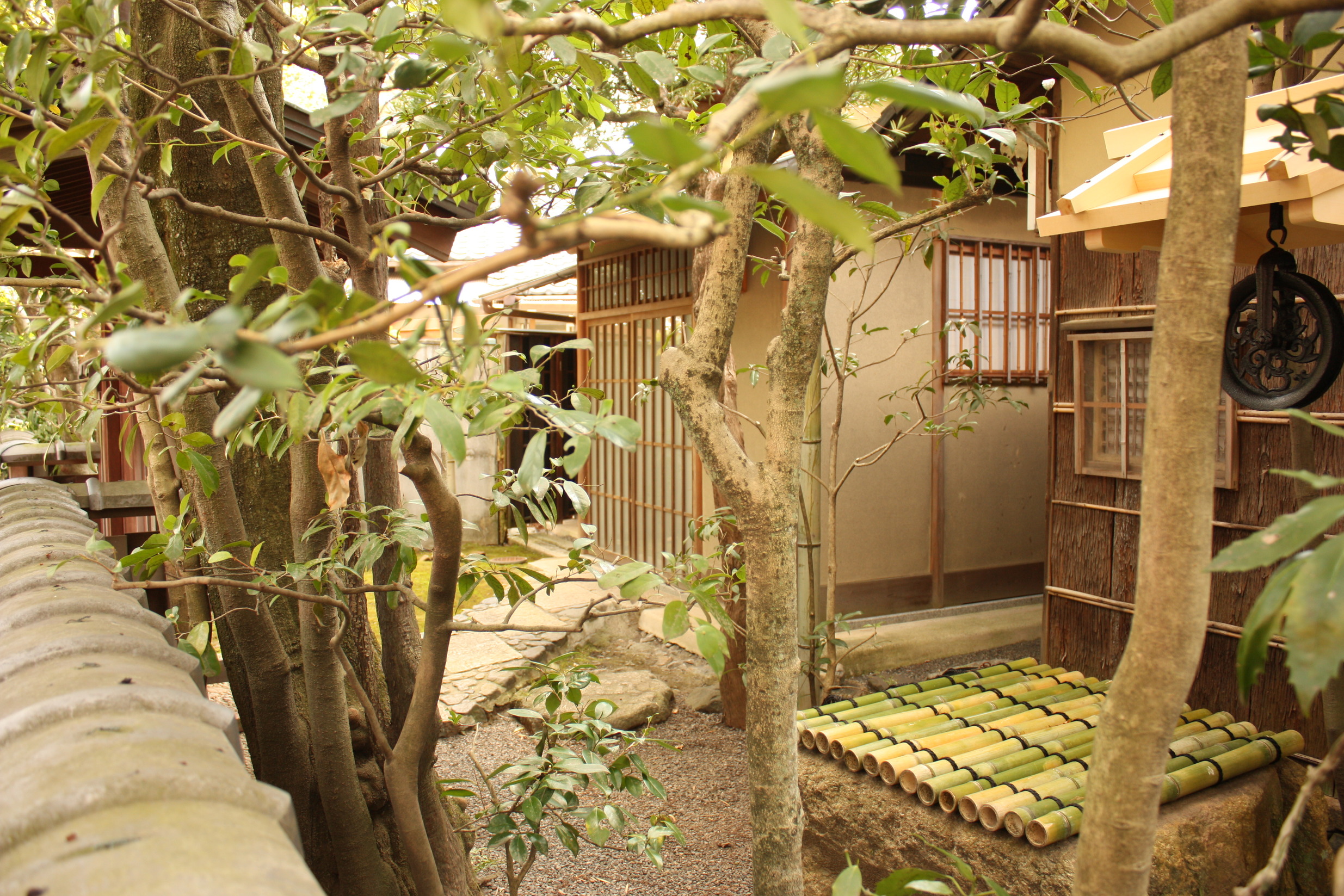
There’s also a nice teahouse that wasn’t very obvious given the hubbub surrounding the shrine, as it was the flea market/fair day. The teahouse is called Shōkōken.

The sign suggests that this is the original building used by Hosokawa Tadaoki, a daimyo and a student of Sen no Rikyu, during the Great Tea Ceremony. But looking around, at least on the web, it seems as though the original building was moved to Kotoin in Daitoku-ji, and the one here might then be a re-creation. Either way though, the well is the original one they used.

The house is quite big for a teahouse – and has a nice garden.

As with a lot of other interesting sites, however, this teahouse is not open for viewing, so all you can do is to climb over the wall – at least climb high enough to see inside. It’s bitterly cold right now, so I don’t imagine it being a very pleasant experience to drink tea in such an environment, but in warmer days, I’m sure a tea session here would be exceedingly enjoyable.

→ 3 CommentsCategories: Information
Tagged: , ,

Ways to cheat in tea

December 20, 2012 · 13 Comments

It’s been a busy few weeks, what with grading, trying to finish a few papers, so on so forth. One of the papers I was trying to write and still in pretty shambolic state is one on the Taiwanese industry. Among the more interesting documents I’ve come across are a set of articles of association for the Taipei Tea Merchants Association. They were always concerned with inferior, fake, or just bad tea, among other things. Taiwan teas, even back in the early 20th century, had a premium over mainland Chinese tea, and they were very keen to keep it that way. So, in an effort to prevent problems, they listed what was not allowed in terms of teas that they sell. These are:

1) Powdered tea – this is not matcha wannabes, but rather teas with significant amounts of powdered tea leaves mixed in to make the tea heavier, so you can sell for more. When the buyer gets it, he’ll notice that it’s mostly powder – and therefore overpaid. This is like you getting that last bag/bit of tea from the bottom of the barrel, and feeling cheated, but on a massive scale.

2) Tea stalks – this one is pretty self explanatory, I think. Can’t sell tea stalks as tea leaves.

3) Sun-exposed tea – probably also obvious – tea that has been exposed to the sun for long periods of time, at least that’s what the name implies

4) Fake tea – it’s not clear how this fakeness is achieved – is it not tea leaves at all? Something else?

5) Soaked tea – this is the best – dried used tea leaves being sold again. It actually does sort of work. Try drying out the leaves you’ve drunk, for some leaves it can look remarkable like new tea leaves and presumably someone can try to sell it in dried form. You will still even get some taste out of it, it’ll just be really watery.

6) Fire-burnt tea – tea that is too roasted/charred

7) Tea that has been adulterated with other materials, including spoiled, rotten teas, dirt, dust, etc

There’s also another category of tea – Tangshan cha, which is the term they used for mainland Chinese teas. In this case, it’s mainland tea being sold as Taiwan teas.

So it’s good to know that the tricks that vendors can be up to haven’t really changed all that much over the last hundred years. Buyers of puerh are quite familiar with this stuff, and buyers of other teas have also run into this sort of problem before. The way they solved it? Made it mandatory to sell/buy through a central exchange, to have regular inspectors (full time) who go and check the farmers/vendors, to make everyone a member of the tea production association, so they are more accountable, and to also educate the farmers. It worked.

→ 13 CommentsCategories: Information
Tagged: ,