A Tea Addict's Journal

Entries tagged as ‘young puerh’

Maliandao shopping

November 26, 2006 · Leave a Comment

Cloudstea just reminded me of something I looked at yesterday while at Maliandao. Since new comments don’t really show up anywhere other than with the original post, probably all of you will miss it (with the silly 5 post per page limit that Xanga imposes on me).

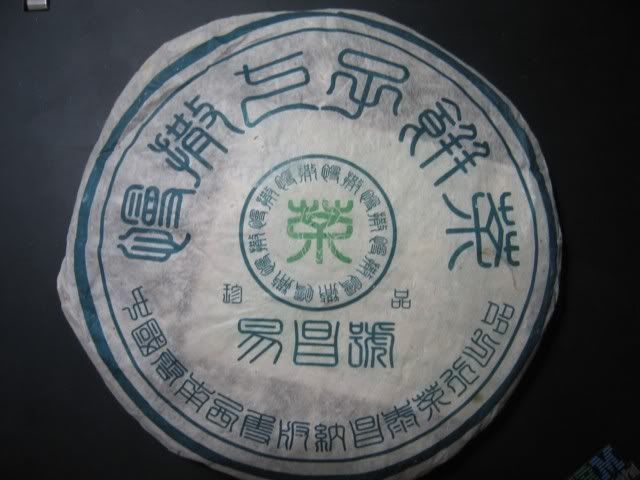
I flipped through the Puerh Yearbook 1998-2003, written by Chen Zhitong, for verification of the Yichang Hao I tasted in Paris. I was less than 100% sure of its provenance, and it turns out to be from 2001, not 1999, as I erronously thought. I thought about buying the book, but I know I could get it for less in Hong Kong. Here at Beijing they’re charging like 20% over what they would in Hong Kong. I don’t feel like paying a premium :(.

You can find the original post here.

Categories: Old Xanga posts · Teas
Tagged: ,

A random tea trip

November 26, 2006 · Leave a Comment

(Warning: long)

I received an invitation over Sanzui last night from a tea friend (let’s call him W) whom I shopped at Maliandao with a few weeks ago to drink tea at his friend’s teashop and then go back to his place. I figured what the heck, might as well, so I went. I know he has a big stash of tea, so I wanted to see it. He is also serving a bit as the puerh advisor to his friend’s teahouse, where he goes and shops for stuff that he finds appealing, and then goes with his friends to do the buying.

We first went to his friend’s teashop, which is in a building that houses mostly stores for art and paintings and calligraphy (and paraphrenalia), as well as a few teashops. They’ve called themselves, at least at that corner, the “West Side Tea City”. It’s a bit further from my house than Maliandao, but there’s a nice little operation going on, with 5-6 teashops on the second floor of this mall-like-thing. We went into an enclosed space within his friend’s shop where he stocks his higher priced yixings, and started tasting stuff.

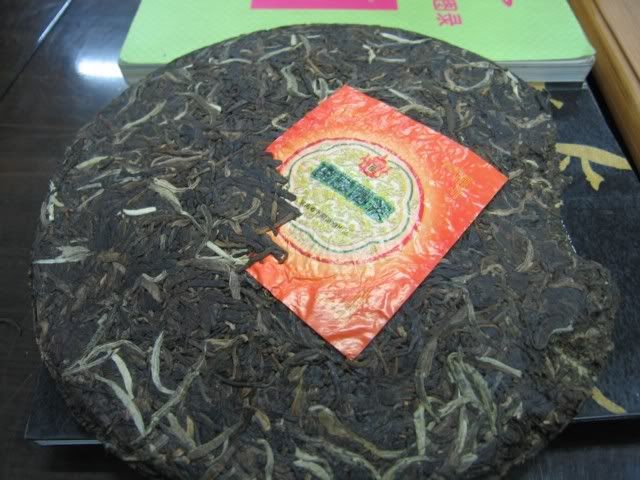
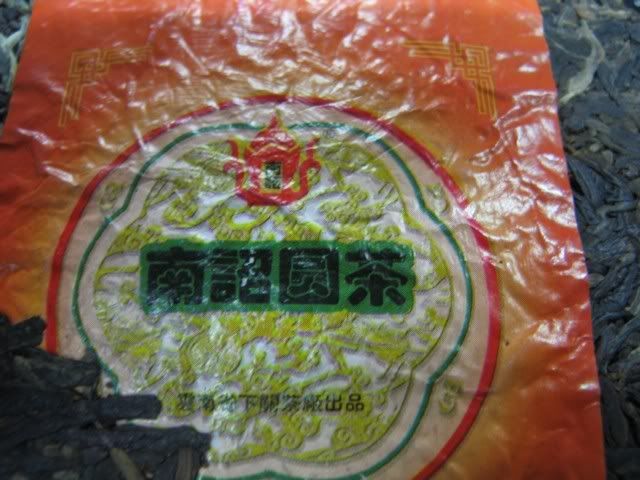
The first up is a Nanzhao cake, I think 2004.
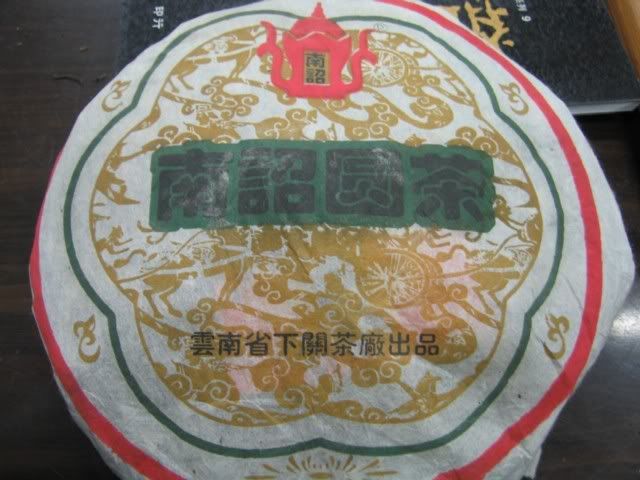


This is made by the order from Feitai, a tea company from Taiwan. W likes their teas, apparently, and bought lots of them over the last few years. Feitai just opened a store recently in Maliandao, but their wholesale prices (W buys by the jian) is even HIGHER than some other stores on Maliandao selling the same stuff. Go figure.

The Nanzhao cake is….. well, like a regular Xiaguan puerh type taste. Bitter, astringent, a bit rough. Bitter is the most obvious taste. Much of the flavours/aromas/feelings stay on the first 2/3 of the tongue, and the back of your mouth gets nothing… I can’t feel much of anything at all, sweet, bitter, or minty, in the back. This is plantation tea par excellence. There’s supposed to be Banzhang leaves mixed in it, but my friend said after going through the wet leaves very thorougly before, he found maybe a 1:20 ratio of Banzhang:other stuff.
Nothing really interesting. Overpriced to boot. Why do people drink this stuff? It’s so overpressed I can’t imagine it aging quickly or well at all without some years devoted to it. In fact, in a dry climate like Beijing…. I honestly don’t know what will happen to something like this.

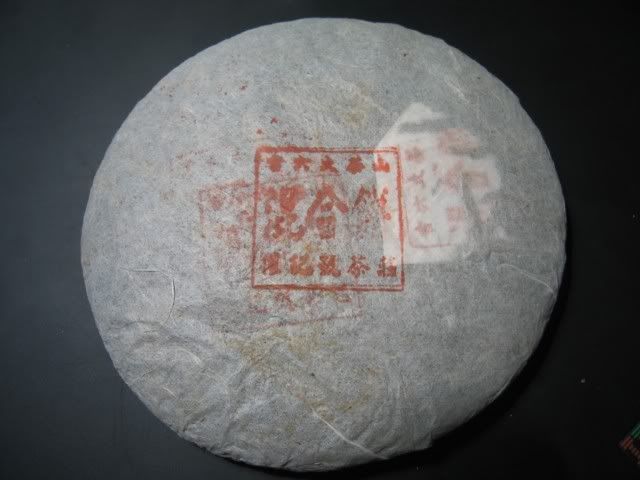
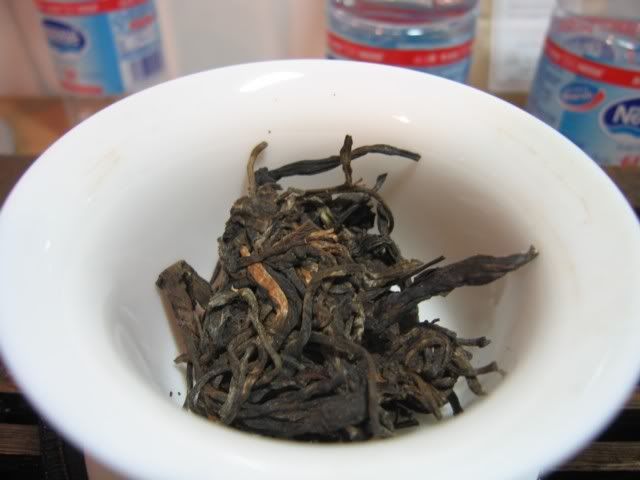
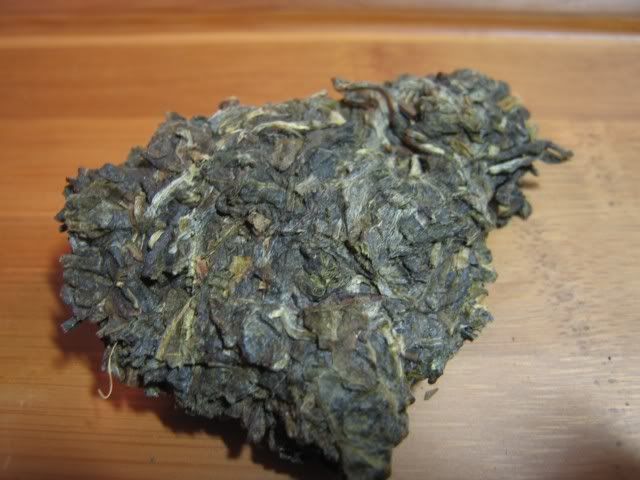
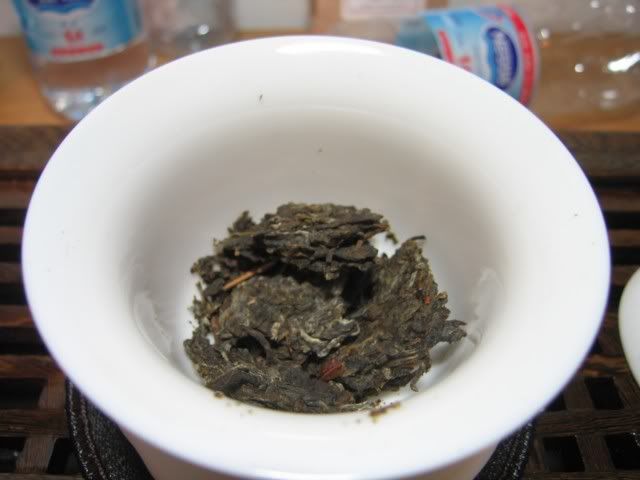
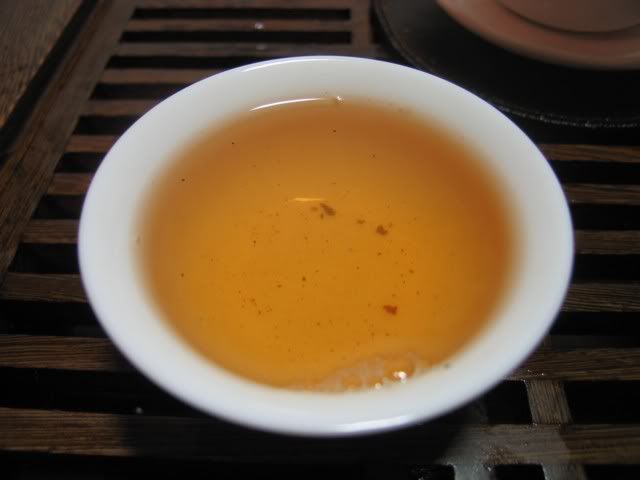
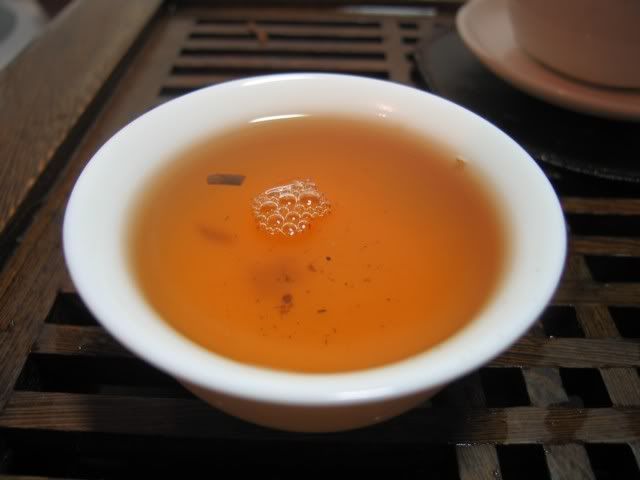
Then we started on a cooked puerh. This is a 2003 (?) mini cake of Golden Needle White Lotus from Menghai. There’s no wrapper — just the tea. The wrapper is a white cotton paper.
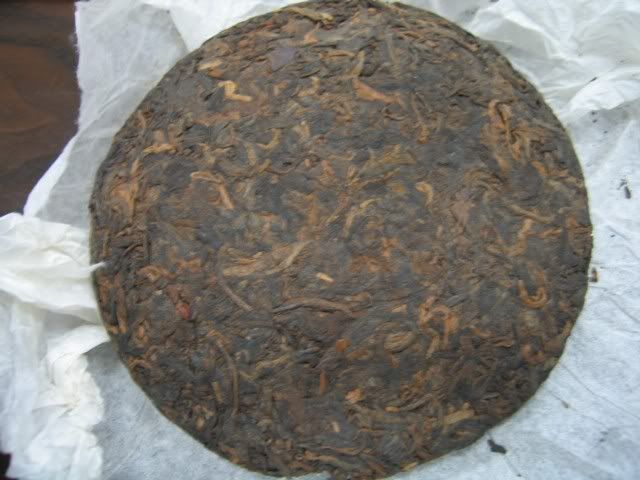
Price is almost the same as the Nanzhao. Daylight robbery.

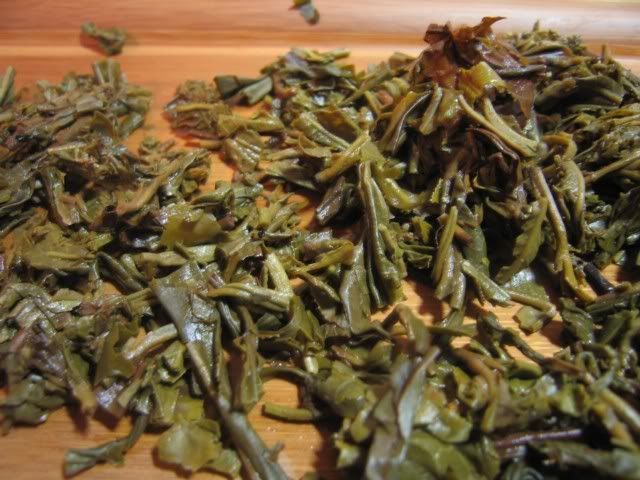
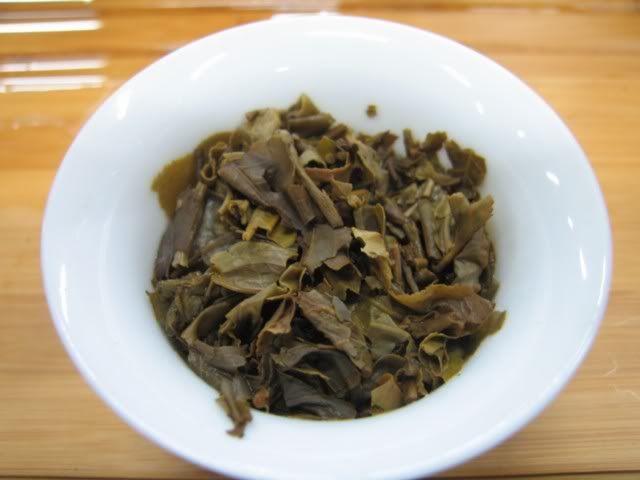
This is the wet leaves
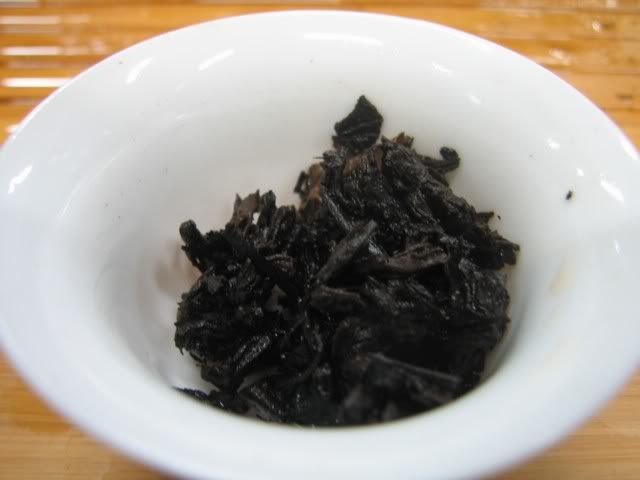
Cooked puerh is cooked puerh. I don’t usually put much stock in it, and this one is the same. Why drink cooked puerh when you can drink a nice roasted oolong?

Then we tried ANOTHER cooked puerh. I didn’t really feel like it, but since I am the guest, I didn’t want to say too much. I didn’t take pictures, but actually, this one’s not bad. It’s a “Purple Sky” cooked puerh, made by the request of Nantian Company in Hong Kong in the 90s. It’s called “Purple Sky” because on the wrapper is a purple seal with the Chinese character “sky” on it. Not cheap.

However, it’s quite nice. Drinking it right after the Golden Needle White Lotus, you can really tell the difference, and the Purple Sky wins hands down. Now, even if you factor in the price, I think the Purple Sky still wins, but then, if I have money to blow on it, I’ll buy a fresh cake of some big tree tea any day over this stuff…

At that point, we left the store of his friend’s. It was a busy day, with lots of shoppers. They are mostly uneducated about all kinds of tea, as Beijingers generally only drank green and floral teas until recently. Business is well, and the pots also bring in good money. Good for them. I should add that there was no pressure for me to buy anything at all, it was just as a friend going to taste stuff.

We went to W’s apartment, which is very big, and I checked out his tea collection. It’s quite impressive, actually, mostly consisting of Xiaguan tuocha, bings, some bricks, some Menghai bings, a few other random stuff. Mostly big factory tea though, very different from the sort of thing I’m buying these days. I think we have pretty different tastes.

We then drank a, literally, dizzying succession of teas. He goes through the teas very fast, brewing everything with a generous amount of leaves, and leaving each infusion in for about 20-30 seconds before pouring. It’s uniformly strong, although I don’t think that’s necessarily bad. What I found a little uncomfortable was that he sometimes leaves some water in the gaiwan — mostly because he finishes pouring very abruptly and quickly, meaning that there’s always a few ml of water left in the gaiwan…. brewing while we’re drinking the infusion, making the tea even more bitter. Yum

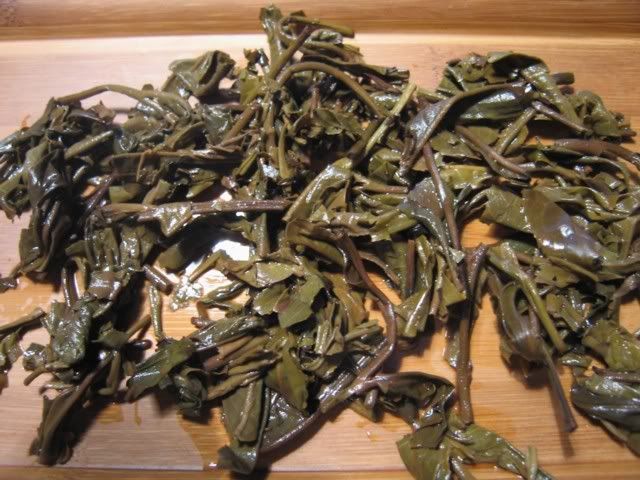
The first thing we tried was a fake Menghai cake he bought in 2003. We brewed it up. First infusion is very sweet, nice aromatic…. then it’s downhill from there. By the fourth infusion it was INCREDIBLY bitter. Bitterness to the end. We drank one more infusion, and stopped. You can judge the wet leaves for yourself
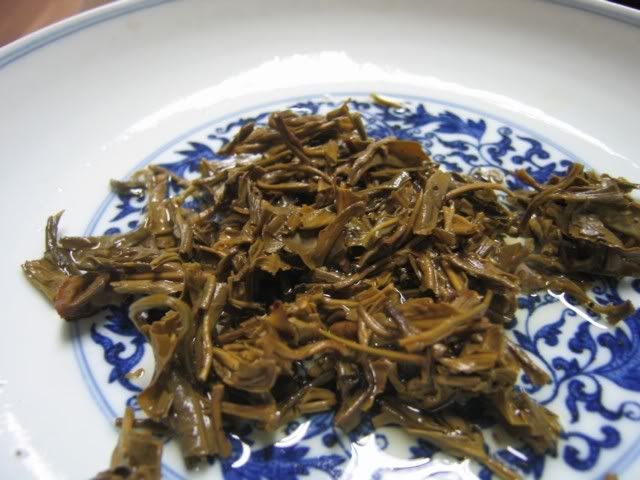

(It’s an accident that it’s in a star shape)

Does it look like green tea to you? It does to me, and it smelled like it too. Ovendried, and I think overdried, tea, that will not age thanks to it being not really puerh, but just high-temperature dried green tea. Tastes nice initially, but nasty after a few infusions. Buyer beware.

Then we tried two unremarkable iron cakes that are somewhat similar to the Nanzhao. I honestly don’t have much to say about them, other than they all taste quite similar to me. I don’t find them very exciting.

Then there was another tea… a Baoyan Mushroom, specially made also, I think, for Feitai, and probably two years old if I am not mistaken.
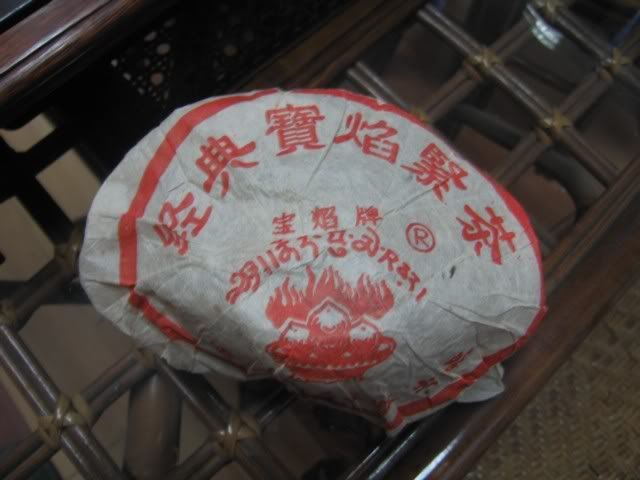
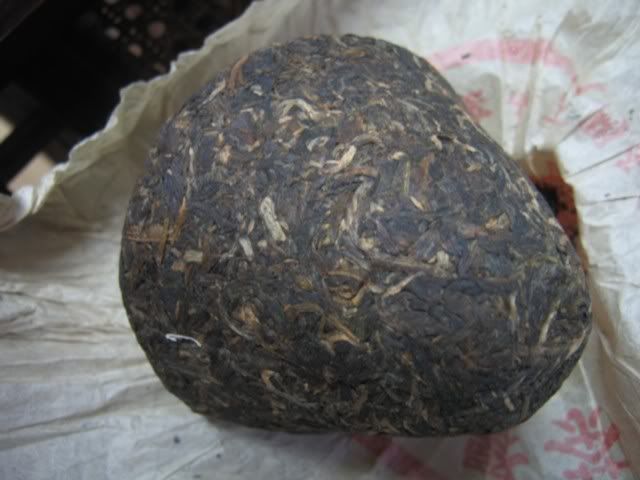
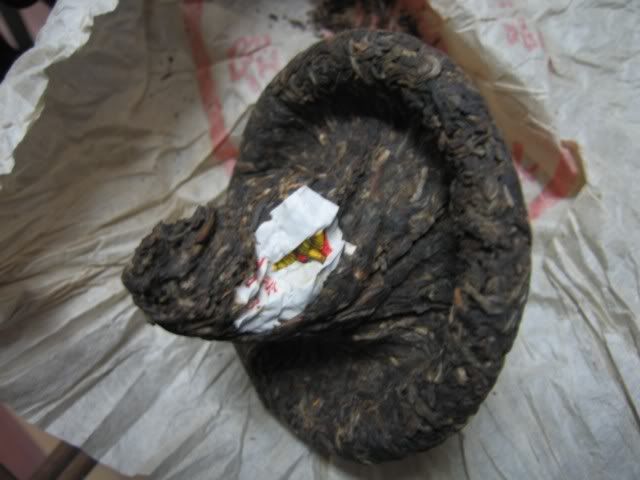
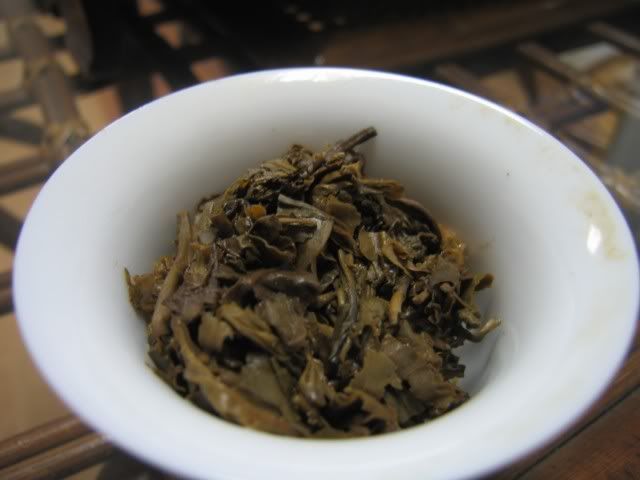
It comes in a nice special gift box, all wrapped up nicely. The reason we tried it was because after I showed him the 2002 Mengku cake (which he and his friend bought two tongs of) he realized that this is Mengku tasting… and it is. It tastes like the 2002 cake. Quite similar, and definitely Mengku. You can’t mistake it for anything else.

At this point, I was really drained by all the tea. It was…. a lot. I brought the 2004 Yangqing Hao to share with him, and we ended the day’s tasting with that, and I have to say I prefer that (or any good, big tree tea) over what I’ve tasted. It’s a different style, and it depends on what kind of taste you like. He likes the more heavy hitting, powerful, and “wow” teas that make an immediate impact. I guess I am more into drinking a little more slowly, stuff that is more mellow, that don’t necessarily wow you right away, but after a while you do realize that you’re drinking good tea afterall. As W observed when we started tasting the Yangqing Hao — this is a tea that is for sipping, and is quite subdued. He was, I think, interested in it, and thought it will age well as well with a comple
x taste in the future — and how the tea fills your mouth with various kinds of flavours, each brew being somewhat different. It was a nice finish to an interesting tea drinking day.

He gave me a tuo before we went off to dinner. This is also a Feitai tuo, I think, that is also, he thinks, made of Mengku materials. The packaging is the same as pretty much any other Teji Tuo
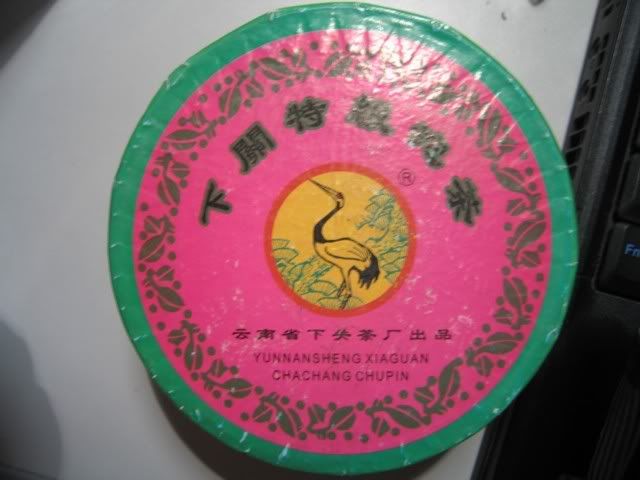
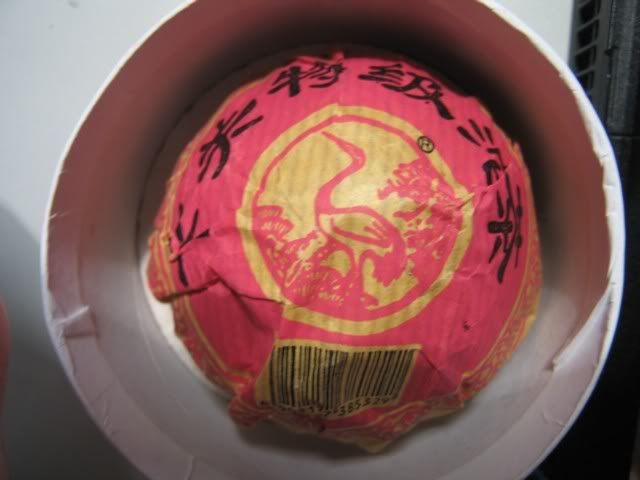
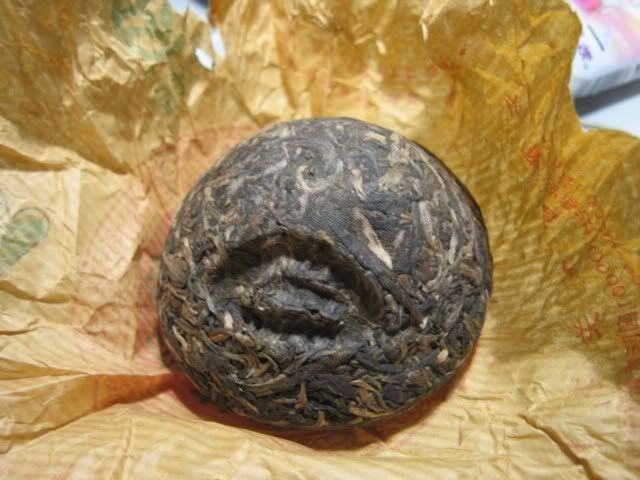
The tea doens’t look much different than your usual XG tuo, but the smell…. smells like Mengku tea. I’ll try it at some point. However, not all Teji use Mengku leaves. In fact, the September production (this is 04 May) that he owns does not taste like this one at all. Go figure. You can never tell unless you know what each region tastes like.

Tea really brings various kinds of people together…. And then there’s the Zhongcha visit tomorrow….

Categories: Old Xanga posts · Teas
Tagged: , ,

Quanji mixed tong

November 25, 2006 · 2 Comments

Well, it’s Saturday. No libraries are open. What else can I do but go to Maliandao (yeah, that’s sort of a lie, but let me rationalize my tea shopping trips, ok?).

It was a bit of a confused start. I made an arrangement to meet with a vendor today, and I also had someone else I was supposed to see who found me by a complicated way through this blog (let’s call him L). Eventually, I went up to the L’s store first. It’s actually in a place I’ve never been to on Maliandao — it’s the new building of the Beijing Tea Corporation, just completed and moved in. You can still smell the paint and what not in there. It’s an airy place, and there are a few stores with stuff that I might want to try later on. I will go back there next time. I think very few people know about this yet, so it’s mostly a place for tea dealers/merchants to buy stuff, I think.

Then I went to the Chayuan place where I was supposed to meet the tea merchant. I found them through taobao. I was looking for a particular tea — I think I might have mentioned it. The tea is made by a factory called Quan Ji, a small operation running out of Yunnan. I tried one of the cakes, a six mountain mix, at a store in Chayuan, but the initial price they quoted me was astoundingly high, so I balked and walked. I found these guys on taobao selling it for much less, so I contacted the owner and went to her store…

…which turns out to be the same store I visited. I found that rather funny, although not surprising. On my last visit to Chayuan I deliberately walked through the whole place to see if I can find another store that sells Quan Ji, but didn’t see any, so I had my suspicions that it’s the same store. Turns out to be true. Oops! 🙂

I sat down, and tried two of their Quan Ji cakes and had a pleasant chat with the owner of the place, a woman in her 30s or 40s. She’s very nice and seems like someone who genuinely likes tea. The manager, who was the person in charge last time I was there, eventually remembered me (I think the tea girl remembered me as soon as I walked in, but she didn’t want to say anything, I suppose). She was as annoying as last time. I really wanted to tell the owner that her manager is ruining her business, but who am I to say such things.

The two cakes I tried were from Gedeng and Manzhuan. Both are very good, big tree, properly made, and tastes like puerh should. Upon further inquiry, it turns out that they have tongs of tea that consist of one each of each mountain, and one cake of the six mountain mix cake which I tried last time (and which really impressed me). I wasn’t going to buy much today….. but I couldn’t resist.

So I ended up with this at home:


I debated whether to open it or not…. but I wanted to make sure I got what I was supposed to get.

The first cake is

While I left the rest in the tong — opening it any further would require dismantling the tong itself, something I didn’t want to do. Other than the six mountain mix, the rest of the six mountains are, properly speaking, Gedeng, Manzhuan, Mengsa, Wangzhi, Yibang, Youle. No, Yiwu is not one of them. Yiwu is technically a part of Mengsa, actually. This is from a text written during the Qing dynasty (1644-1911) that I recently looked up.

I opened up this nice wrapping job

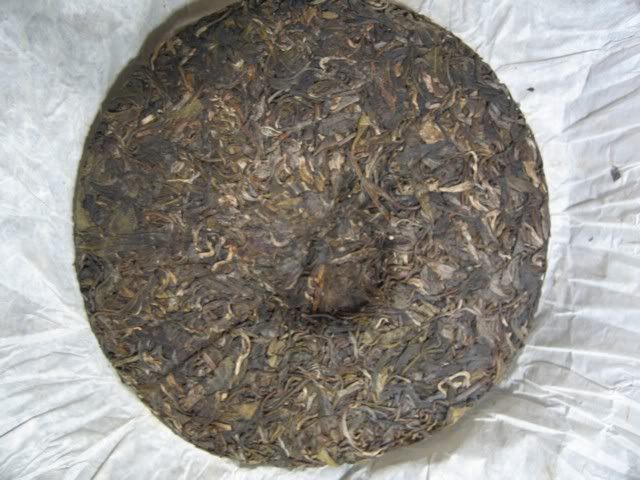
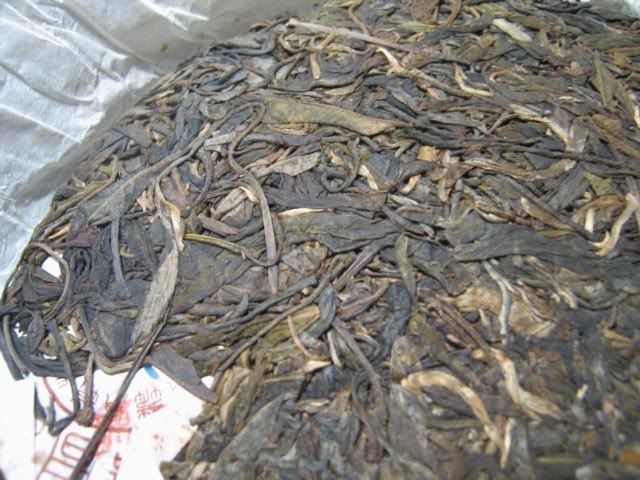
To reveal the tea


This is the six mountain cake…. which was really quite impressive. I have very high hopes. The tea doesn’t look very good — none of the Quan Ji stuff do, but somehow, the tea tastes just the way I think it should. Of course, I could be wrong and it could end up being absolute crap, but I feel pretty sure with this one.

After this, I met up with L again for dinner. He’s opening a store in Shanghai that sells tea, and is going to do some shopping for that. I am going to go accompany him on Monday afternoon to Zhongcha’s storage facility here in Beijing to taste some tea. That will be interesting…

Categories: Old Xanga posts · Teas
Tagged: ,

Puwen factory Yiwu

November 24, 2006 · Leave a Comment

When I was going through my desk yesterday I realized that I have a sample pack of tea sitting in a corner. This is a sample I got from a tea vendor in the Puer Chadu, and which I never bought nor tried. I tried it at their store, and I remember not liking it enough. They wanted a pretty high price for the cake, I gave a counteroffer that was 40% of their asking price, and they balked. In the end, they hoped that I’ll change my mind with this free sample.

So I brewed it up…

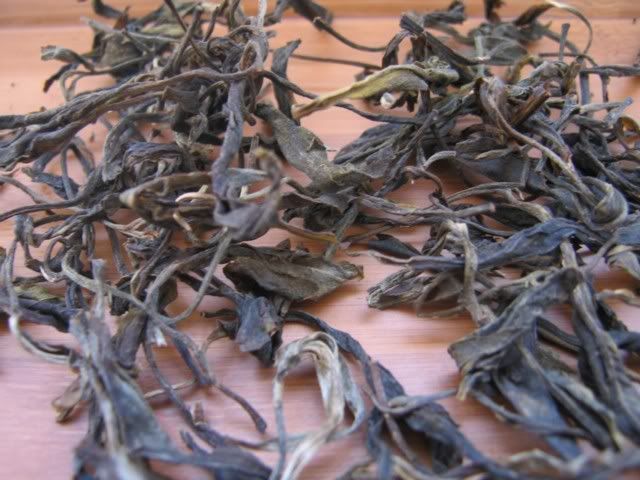
The factory name is Puwen, and this is a Yiwu cake. As they are always Yiwu Zhengshan these days, it doesn’t mean much. Supposedly old arbor tree, the works… The dry leaves smells like Yiwu.

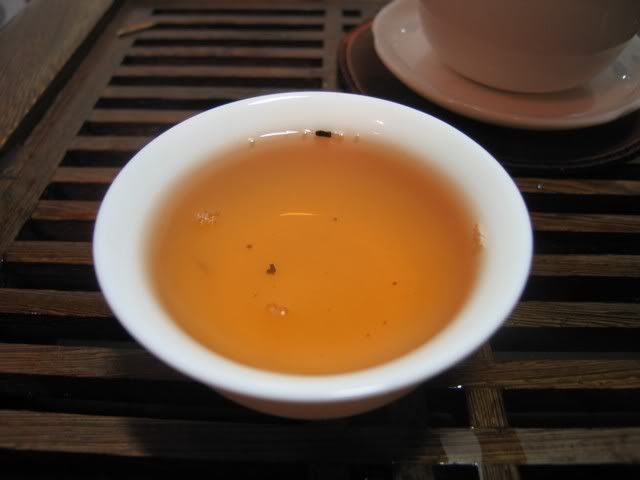
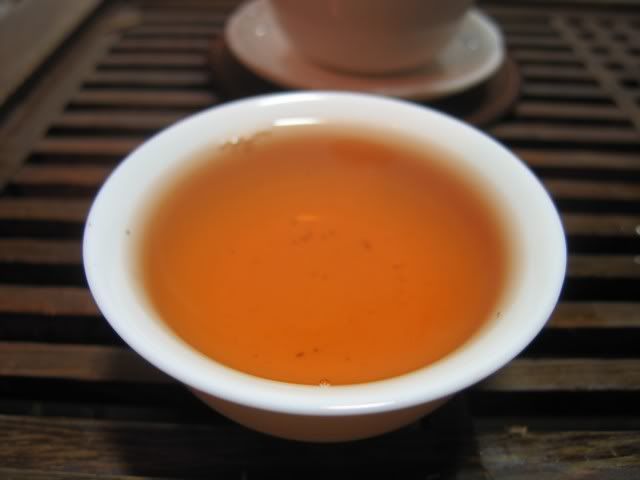
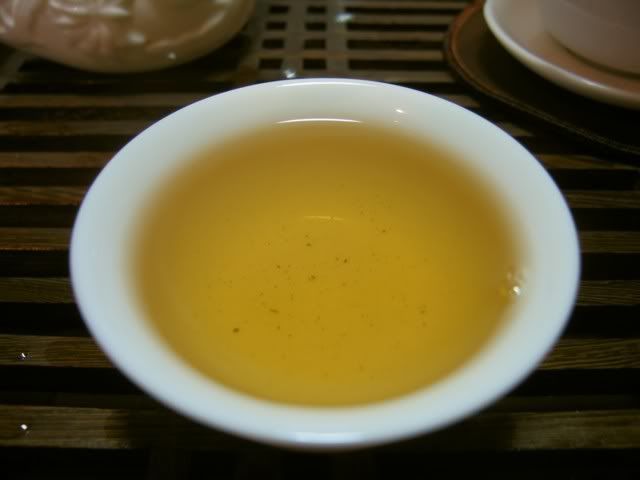
This is infusion 1. The tea is…. a little thin, not terribly so, but a little thin. There’s a bit of “water taste”. For some reason, the tea didn’t taste very tea like, and considering this is a 30 seconds infusion…. that’s a lot.

While there’s some Yiwu taste in this, I don’t think this cake is made up of 100% Yiwu tea, or, it’s low elevation tea, or plantation tea (likely some mixed in). It just doesn’t taste right, and doesn’t taste like the Yiwu arbor tea that I’ve come to know after trying a whole bunch of them. I don’t know exactly what might’ve been mixed in it, but this ain’t the real deal. The tea is otherwise fine. It’s not great, but not terrible.

Of course, I found out that on Taobao you can get a cake of this for about 35% of their initial asking price. Good thing I didn’t buy it. Even my counteroffer of 40% was too high.

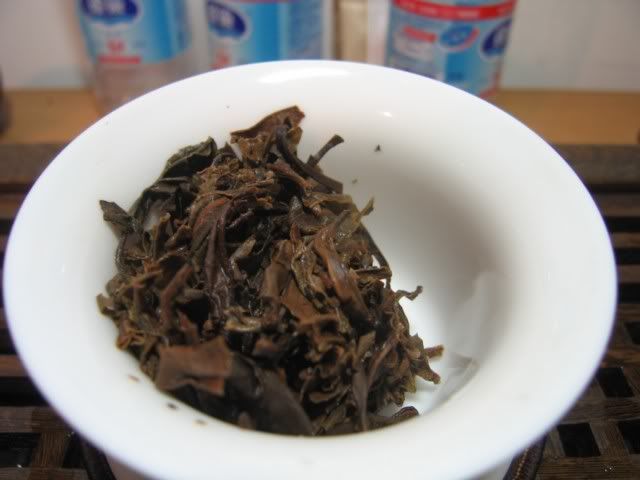
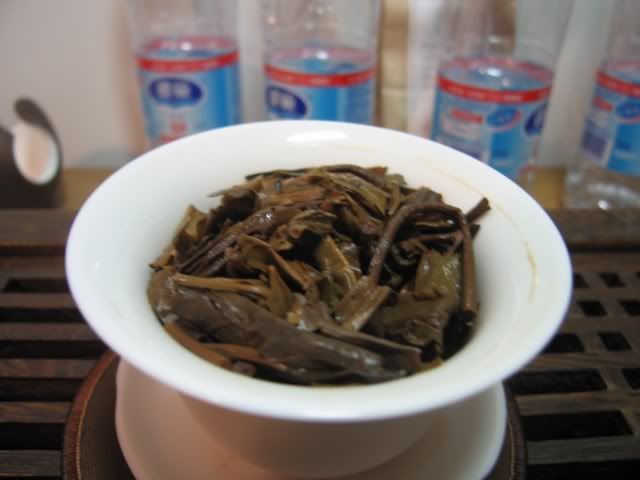
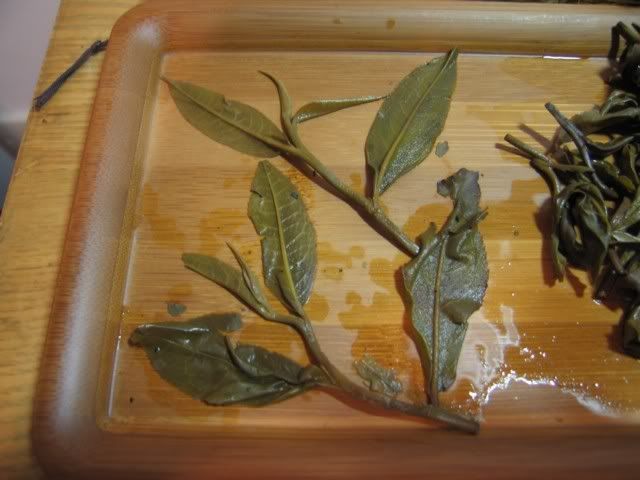
The leaves look more or less like Yiwu, but it doesn’t taste right. I can’t describe what’s wrong… it’s just the aroma/taste profile is a little different than usual. Perhaps it’s a “borderline Yiwu”? Not sure….

Categories: Old Xanga posts · Teas
Tagged:

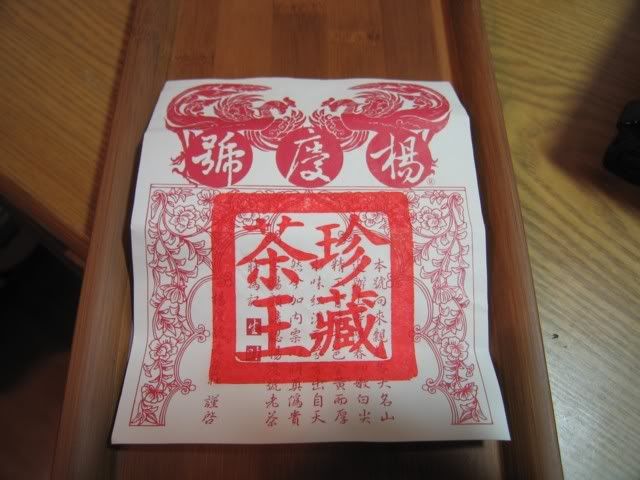
2004 Yangqing Hao Yiwu Zhencang Chawang

November 21, 2006 · 4 Comments

This is what’s on the menu today — the 2004 Yangqing Hao from Hou De.

My girlfriend brought it over after I ordered it and had it shipped to her in the US. We did the transfer in Paris, and now it’s with me, along with another sample.

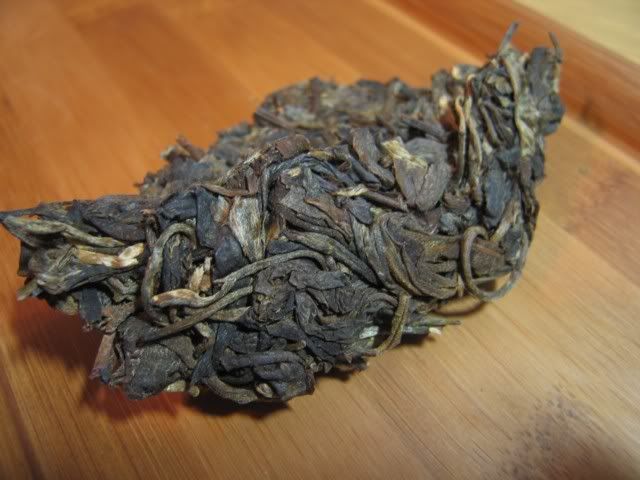
The dry leaves don’t look very remarkable, other than looking Yiwu-ish. One interesting thing though — when I sniffed the dry leaves (more like inhaling very deeply, actually) there is very little aroma. I couldn’t detect anything overtly strong. On the other hand, I remember the 2005 Yangqing Hao has a very obvious aroma. Food for thought.

So I brewed it according, again, to the 30/60/perpetual 30 rule…

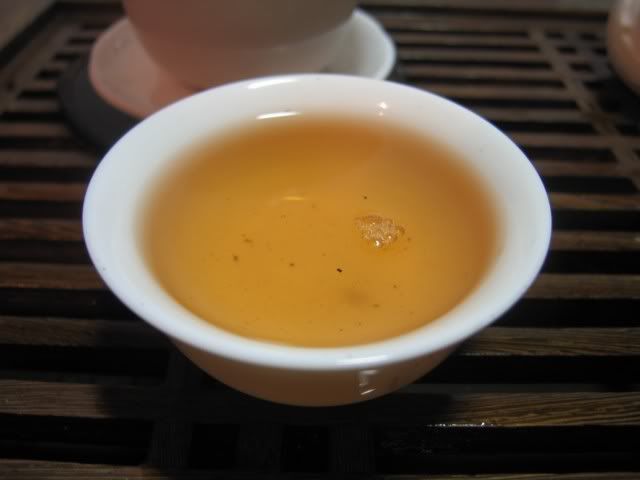
Infusion 1

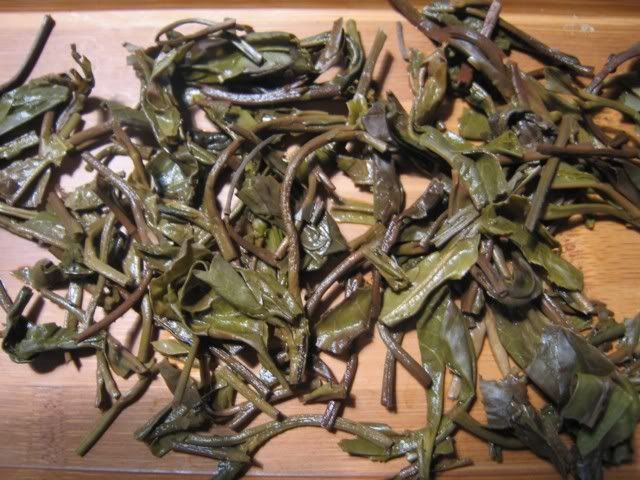
Amount of leaves after infusion 1

Infusion 3

How’s the tea?

It’s great.

It has the first hint of aged-taste. It’s not very prominent yet, but it’s there, and quite quickly, when you think about it… it’s only 2 years old. The tea is nice, thick, balanced, a little bitter, good huigan, “proper” aromas, no off tastes, smooth, endured lots of infusions… I couldn’t really find any faults with it, except that there’s no extension down the throat that I thought I would get. It didn’t go down the throat… all that aroma/taste/”mouthfeel” stopped at the back of the mouth/beginning of the throat. Of course, the price is also a little steep, but as a tea without regards to price, I could find nothing wrong with it. I liked it.

How it looked after I’m done.

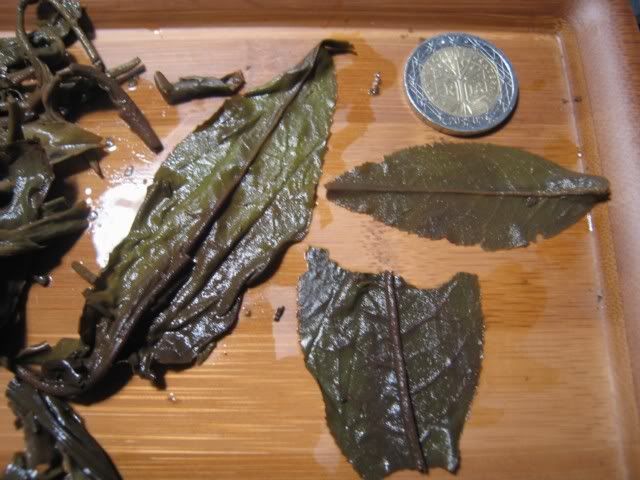
Wet shots — that’s a 2 EUR coin, about the size of a quarter. It also gives you a scale to see how thick those bands are on my bamboo tray. This will provide an instant scale from now on, I hope 🙂

If my Yiwu cakes can turn out like this in two years…. I’ll be very happy.

Categories: Old Xanga posts · Teas
Tagged:

2006 12 Gentlemen Arbor tree cake

November 20, 2006 · 1 Comment

I tried another of “12 gentlemen”‘s cake today — an arbor big tree cake from Spring 06.

The piece looks small, but is actually quite large. It’s the center of the cake.

I realize that shooting into the gaiwan doesn’t really tell you how much tea I put in…. and you lose all perspective. It was about 1/4 full, but I think I put too much in today — I knew it from the start, but went ahead anyway. The compression was very tight, so I ended up having too strong a brew…

I did the 30/60/30 — and then repeated 30s.

This is first infusion

And third

The tea…. well, it has a nice body. Round, full, smooth. It goes down well. The first infusion the tea was still brewing up, so not terribly bitter, a bit sweet — hints of the Yiwu stuff in this. Some Yiwu is probably mixed in here, among other things. Then the infusions got more bitter, huigan is evident, although bitterness is strong. It tastes… like any old puerh that is properly made. I think on the whole it’s probably made in the proper way, waiting for age to do its thing. It will probably age into something nice. How nice, I’m not sure.

However, I’m not sure if it’s all arbor big tree. It’s a bit more mellow than some of the obvious plantation stuff, but it’s not that far from some cakes I’ve tasted from Menghai or other places that are obviously not arbor big tree. Since we all know that the definition of arbor big tree is pretty flexible…. maybe these are transition type stuff that recently made it out of the “small tree” category. Or, these are planted, managed, well farmed big tree, since they didn’t say anything about wild or let-loose.

Will I buy it? Depending on the price. I might eventually get one or two, as a sort of insurance policy. A lot of the stuff I have are single mountain stuff. I fear that they might turn a bit uni-dimensional when aged.

The brewed leaves are quite broken, but unlike somebody, I don’t blame the manufacturer since I think it is broken mostly because of the way the cake was broken up. If I peeled layers off instead of getting a piece that is already broken like that, the leaves would’ve been more whole.

On another front — the wet storage project is proceeding. Today I used the humidifier to spray water all over the cake (it’s still going on). The front of the cake feels damp. The wrapper, which I put under the cake, is wet. Interesting note — the neifei got two tea stains on it. So if you have a cake less than 10 years old with tea stain on the neifei….. it’s probably from water (I’ve been told older teas will have OIL stains from the tea, but I’m not sure if that’s actually true). It might be too wet for another round tomorrow…. we’ll see how it dries overnight.

Categories: Old Xanga posts · Teas
Tagged:

Chayuan walkthrough

November 18, 2006 · 5 Comments

Maliandao it was today. When I was walking to Chayuan, I saw this

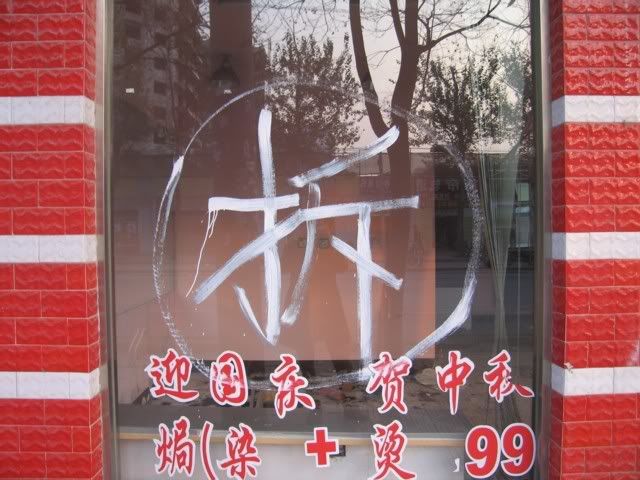
Which means “demolition”. Apparently, the Jingdinglong Tea Market is scheduled for demolition, no doubt to make way for a newer, shinier, better tea market. It is sort of odd to see all the stores being open one week, and when I came back you see storefronts like this

Nice eh?

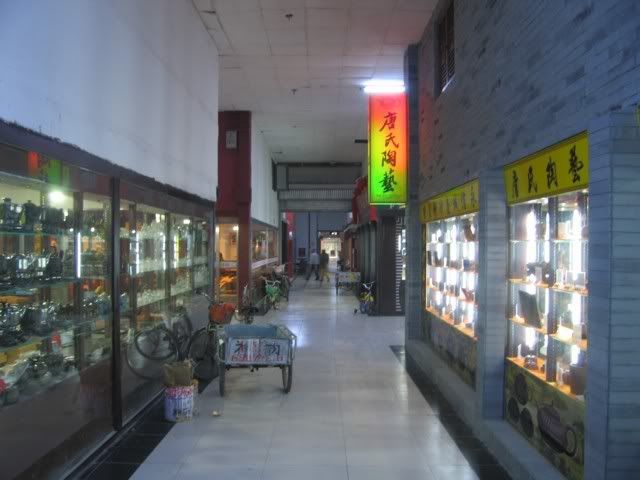
I thought it will be good to do a thorough walkthrough of Chayuan, instead of just hitting random stores like I used to, so I walked around methodically. Basically, Chayuan is a grid, and most of the hallways look like this

Which makes it rather difficult to find any particular store in there, unless you already know where it is.

I stopped at one store today, selling a cake called “Gold Yiwu”. It was an interesting store — very large premises with very few cakes on offer. This was the only thing that remotely looked interested. I sat down, tasted it… and thought it tastes like something like the 0622 with a bit of age, as it is aged 3 years. Nothing interesting, although the taste was proper puerh….. except it sells for $100 USD. I balked, and just left. They must’ve been joking.

I then walked around….. until I hit the Pu Chazhaung. This is a store that sells mostly Changtai stuff. I’ve been here a few times, but never sat down to taste anything, mostly because they were always busy with something…. shipping stuff, or organizing stuff, or whatever. This time, nobody was in the store, so in I went.
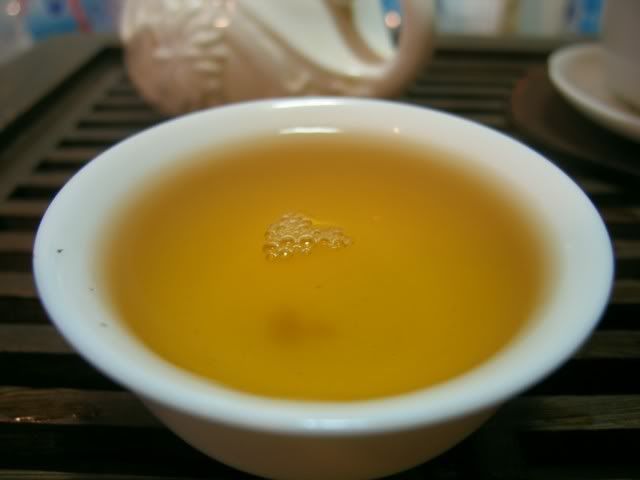
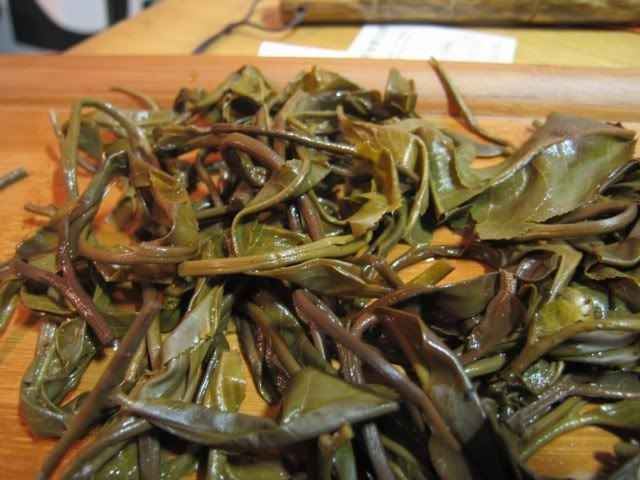
I sat down, and ended up tasting four cakes and buying two. These two were the best in terms of quality vs price. While there was one that was better (and more aged), it was also more expensive and I wasn’t quite willing to dole out that much. I might go back to get something like that that’s a bit more aged, but I also can probably find something in that quality bracket minus a few years age and for a lot less money.

Interestingly, everybody today thought I’m a tea merchant of some sort, and kept telling me which ones they have a whole jian of and how many jians they have left. I don’t know why I seem to be giving that impression today… but the quoted prices at Pu Chazhuang were very reasonable to start off with, so I didn’t need to bargain down very hard (nor was there a whole lot of room to do so, I think…)

What I got were:

An 2005 Yichang Hao Mangzhi, and…

Two 2005 Yichang Hao Mengsa.

Neither are the greatest things ever, but they weren’t very pricey. The Mengsa is obviously a little more punchy than the Mangzhi, which is a little more fruity and mellow. They were decent tasting puerh that seemed to have been made with proper craftsmanship, and should have aging potential, I think.

I think the girl was disappointed I only got three cakes, and seemed a little disinterested at the end. I wonder if she was just hungry for food, or if I was annoying her for my small purchase. Whatever. I might go back again and see if there are other things worth considering. Then again, I really should slow down my purchases. I have too many cakes.

Categories: Old Xanga posts · Teas
Tagged: ,

Luoshuidong Yiwu maocha

November 5, 2006 · 3 Comments

I should really be quite happy that I am in China. Despite the nasty air, bad water, horrible traffic, terrible food, awful service attitude, there’s lots of tea. If I were in Shanghai, life might be a bit more interesting, but the variety of tea I can get there is lower, mainly because puerh hasn’t really caught on there yet, since it is still the heartland of green tea, the last bastion of longjing drinking. Although, from what I can gather, that’s changing too.

Anyway, on the plate today is a maocha from Yiwu, given to me by the guy who sold me those two Yiwu cakes. I asked him for it when I was looking around his store. There are some curious pieces there, and among them is a jar of this stuff. This is from 05, and according to him, from Falling Water Grotto 落水洞 of Yiwu. Different areas of Yiwu produce different tastes (albeit only slight differences), so I figured I’d ask where these are from.

They are keeping it because they didn’t get a lot of it, not enough to press cakes with anyway, and figured that they will experiment with putting them in jars and aging them as maocha. These are the same people who pressed a few hundred cakes and stuck them in a storage space in the NE of China, hoping to see how they age over there in the cold weather. Wish them luck.

Anyway, the tea brewed up a tasty Yiwu brew. It is the same as usual, not bitter, a bit sweet, quite mellow and nice, and a bit fragrant. The fragrance is not as obvious as the autumn maocha I’ve been drinking, and neither is the sweetness as prominent. The liquor feels a little thinner, and while there’s a minty feeling, it’s not as strong. I think this might’ve been a mix between old tree and newer trees materials, so not top grade.

Infusion 1:

Infusion…. 5?

The tea is also slightly, only very slightly, astringent, compared with the other maocha I’ve had, which sounds a little like what Falling Water Grotto should produce according to one Sanzui guy who told me about the different characterstics of the different villages. Ugh. This is hard.

I drank about 12-13 infusions before stopping and deciding to take pictures.

The leaves are less red than the autumn picked ones that I’ve had, which would normally mean slightly better processing, although that’s debatable. The tea consists of more younger shoots and such, as you’d imagine from a spring tea. However, the leaves are a bit less thick, and the veins not always as prominent. I don’t know quite what to make of that. All in all, not a bad tea though, and I still have a bit of it left, enough for a side by side comparison with the other Yiwu without knocking myself out. I might do that tomorrow. I also need to buy another white gaiwan so that the tests can be done with as little variation as possible…. and maybe an electronic scale too, just to be precise.

I’ll end this entry with a picture of two fairly complete pickings… one has four buds, the other has five!

Categories: Old Xanga posts · Teas
Tagged:

Dayi and others

November 4, 2006 · 2 Comments

I’m a bit worried. Both Blogspot and Livejournal seem to be blocked off. I hope Xanga won’t get the same treatment.

If it does…. I might ask my girlfriend to post updates for me.

Anyway, I went back to Maliandao today. This wasn’t scheduled. Basically, I made a few tea friends on Sanzui, and I was going to go to Maliandao with one of the guys on Sunday morning. However, he wanted to push it up to this afternoon…. so off we went.

This guy is an artist of sorts, but he also doubles as a buying agent for his friend’s teashop in Beijing. So I met up with him, and we started roaming Chayuan. The first place we went to is one of the Dayi 1st class distributors in Beijing.

What does that mean?

Well, Dayi these days operate in a somewhat complicated manner. Since their stuff is so popular (mostly speculative buying) what happens is that there are a number of 1st class distributors in various regions/cities, and what happens is that you basically are given whatever the Menghai factory decides to assign to you. You, as their first line of distribution, oddly enough do NOT get to choose what goods you get. You also have to pay for all of them, and try to sell them on your own. All risk is yours, while the factory has already made all the money they need by selling to you.

So this places enormous burden/risk on the distributors.

Amazingly enough, the prices of Dayi stuff and the circulation of goods are still quite impressive, and in general Dayi does lack buyers. In fact, prices are sky high, IMO, especially given what I’ve tasted today.

We first tried the 0622 mini-bing. This is the same formula as the bigger 0622 that I tried with BBB. This time, the tea didn’t turn sour, but also because the sales person brewing it did not add nearly as much leaves, and did not brew them nearly as long. The stuff is…. ok. Good for drink it now, but I can’t imagine it tasting good in a few years’ time. One such mini-bing approaches 100RMB. Expensivo.

We then went to another 1st class Dayi distributor and spent most of our afternoon there. We tried a bing that has been rather famous recently, and which is basically all sold out. Nobody in Beijing got the goods (even for the 1st class distributors) — this shipment was taken via Guangzhou. The taste…. ok, so so, but my oh my, it died on us in the 8th infusion. That’s a pretty big no no for puerh, I think, as young cakes should almost never die on you so early if it’s raw. You can taste the water by then, and that’s just….bad. I also think there are some craftsmanship problems.

We tried another cake, this one suggested by my tea friend. It’s not a Dayi cake, and is quite all right. It’s an 03 Bulang cake. The taste reminds me of the Mengku 2002 cake that I bought, maybe this one is slightly better/stronger. However, the price is also 5x “better”, which makes the cake….. not worth the money.

Then I asked to taste a Yichang Hao cake from Qianjia Zhai. It’s quite good tasting…. until the 5th infusion, when the tea started showing signs of dying. By the 7th infusion…. it was gone. Almost no taste. This is from I think 02, and a raw tea, again, shouldn’t die so fast. Something’s wrong. And they want 400 RMB for it. No way!

We left the store shortly thereafter. Had dinner at a local hot pot store, and then, upon my suggestion, went to the Mengku store to compare the 2002 cake with the Bulang. My friend thought they did taste a bit similar. The 2002 is slightly inferior, but the price differential was so substantial that it’s hard to justify getting the Bulang one. He’s basically scouting teas out for his friend, so he said he’ll tell his friend to go taste the cake himself and see if it makes business sense.

We then wandered around Chayuan a little more, and then came to this one store that sells this puerh from a no-name factory. We walked in, and I started picking up cakes to look at.

And then something I hate happens…. the owner, a middle aged woman, was of the “you must know nothing” variety. By that, I mean, she just assumes that we know nothing about puerh. When I asked “what cakes are these”, meaning what mountain, make, etc, she told me “this is a Qizi bing”. DUH! As if I can’t tell. These storekeepers who assume you know nothing piss me off to no end. I mean, while I do not claim to know a lot, I do think I deserve the minimum amount of courtesy and any storekeeper — any good storekeeper anyway — should assume their customer know something about what they’re looking at. Qizi Bing tells me nothing.

Anyway, I looked around, this factory makes cakes that are 400g each. The shape of the cakes are not terribly appealing. They look a bit fat and stunted, but the leaves looked good. I wanted to try one — the Mengsa cake.

Then the owner gave me the “here at Chayuan we only let people sample tea by the gram”, which is technically true, except that NOBODY ever follows that rule, or even so much as mention that rule. Annoying. I ended up trying the six mountain cake (i.e. tea from all six) instead of the Mengsa one. The tea is actually quite good, real big tree tea, nice overall. Asking price is not so nice, and annoyingly, all the cakes from this same factory are selling at the same price, which is ridiculous (because the cost of the materials should be different). When I came back to check on taobao, I can find some of them online, for about half.

I like those cakes. I think they can age well, but I don’t like how much they want. I’ll see if I can go back and get a better price, or find them somewhere else for cheaper on Maliandao. It’s possible…. although somehow I don’t think too likely.

Categories: Old Xanga posts · Teas
Tagged: ,

Burma tea

November 3, 2006 · 4 Comments

Maliandao today.

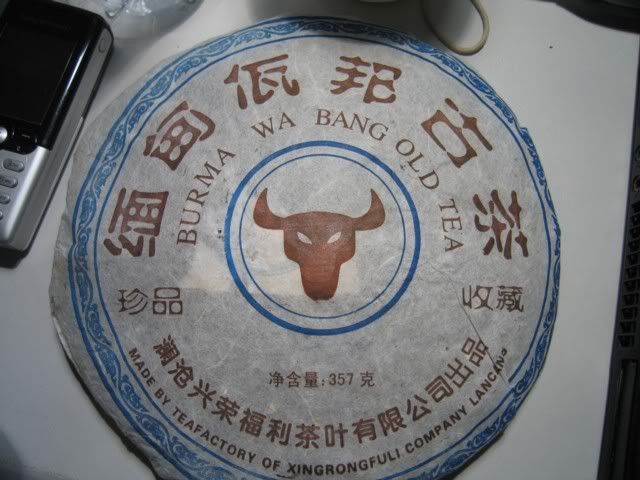
The usual wandering — I went into a store that had some stuff that I’ve never seen before. And I ended up with one cake:

Yup…. Burma. Now, the owner claims that this is actually not a Burma cake, but the whole thing sounded like what Chinese call “there’s no 300 taels of gold here”, i.e. too much detail about how this is NOT something that it sounds fake. I was, in fact, rather interested in it precisely because it is said to be Burma cake. The taste is also a little odd. I think it’s one of those wild tree teas…. the typical dark green colour with some yellow. The taste was strong. The cha qi, especially, is very strong.

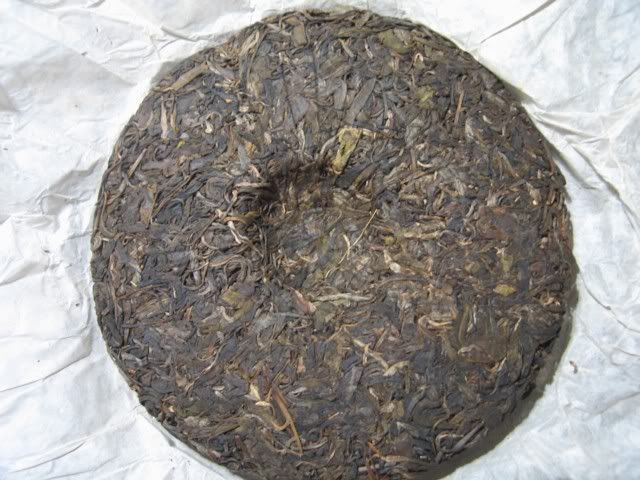
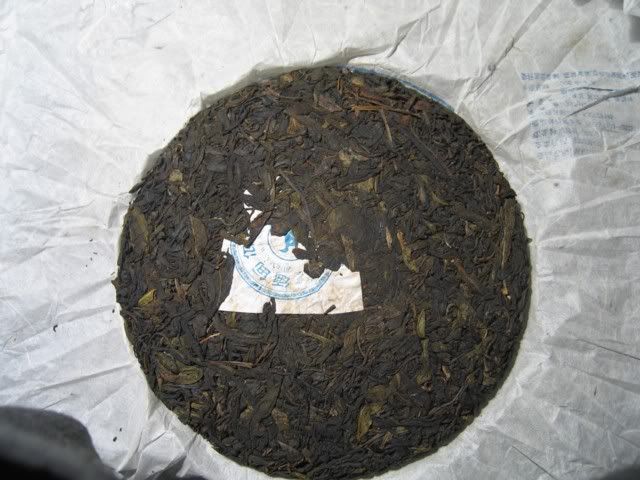
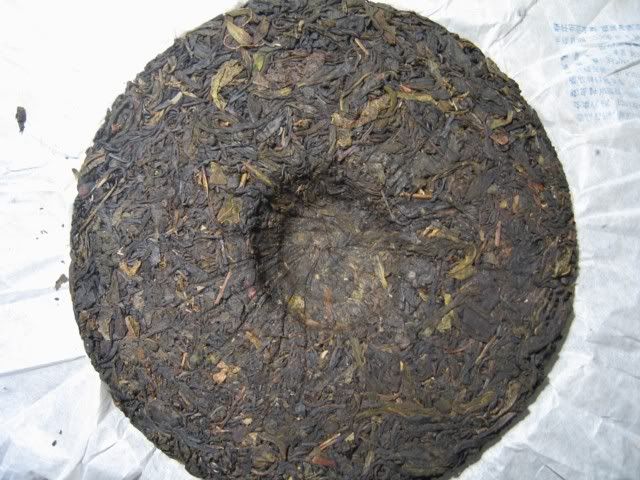
This is how it looks naked

So I bought one for the heck of it — mostly to see how this will taste in some time. After all, tea is not bounded by national borders, and just because it’s not in Yunnan doesn’t mean it can’t be good.

Then I went into a store that sells Cheshun Hao tea. This is an old tea manufacturer whose brand is being revived by a descendent of the family. They got a plaque at one point from the Daoguang Emperor, and it’s now serving more or less as their main advertising thing. The plaque is in Kunming right now, from what I know. The teas are EXPENSIVE. I tasted one toda — 700 RMB a cake. Not cheap by any stretch of imagination, especially for Maliandao. And this is a NEW tea.

So how did the 700 RMB cake taste? It’s very odd. The tea is almost tasteless. There’s a “tea” taste, but there’s very little aroma. There’s a hint of aged taste in it, just a hint, as it’s from spring last year. However… that’s about it. The tea is round, smooth. There’s not much of an aftertaste…. until about 5 minutes after I walked out of the store. Then I could feel it. All in all, a very mellow and boring, almost tasteless tea. I don’t quite know what to make of it.

I then walked around some more and ended up in the store where I bought some dancong with BBB, and tried one of their Yiwu cakes. A bit sweeter, also fairly good, nice, etc, but not top notch, and the price was a little on the high side. The store is a little annoying. There are all sorts of good stuff in there, but all are not for sale. Their owner is apparently somebody who has another business, and whose interest is tea. So, they make all these things that are, actually, for fun, and mostly only for friends and such. I guess I will have to try to make friends with the owner, except he’s not usually around. Oh well…

My last stop was at a store that BBB and I looked at, but didn’t really walk in. I tasted two cakes… both Yiwu. One was better than the other, and I bought two of them.

A bit bitter/astringent, a bit of aroma, some huigan, reasonable mouthfeel/aftertaste. Not expensive. I think the craftsmanship is very good. The quality of the leaves less so. I have hopes that this will age into something decent. I also hope that they will use better materials to make cakes….. this is a store I will come back again and check out, as the owner was very friendly and we had a good conversation. They are two brothers, one of whom is in Yunnan right now making cakes for the fall. Maybe I can tag along in the Spring? I don’t know. It’ll be nice though if I can go with somebody I can sort of trust.

Categories: Old Xanga posts · Teas
Tagged: ,