A Tea Addict's Journal

Tasting waters

January 27, 2008 · 5 Comments

Still kinda busy….

I conducted a taste test just now with my cleaned tetsubin and my regular stainless steel electric kettle… the electric kettle water is, relatively speaking, a little sharper, whereas the tetsubin water is a little softer.

I find tasting waters to be almost as much fun as tasting different teas. Lining up four or five cups of water, unmarked if possible, and drink them one by one — swirling around the mouth a bit, feel the body, the taste, etc, and one really gets an appreciation of the way different water tastes. Then, use the same waters to brew the same tea — preferably a tea that you know very well already. The differences are going to be quite obvious and remarkable.

Now I need to try my tetsubin on the teas I’ve been making the teas I’ve been making…. let’s see if I can tell any difference. Either way though, I am happy, finally, that I can wean myself off the electric kettle…. it’s convenient, but having a fire under my kettle making tea is just somehow more convenient. It makes me happy.
→ 5 CommentsCategories: Objects · Old Xanga posts
Tagged: , ,

Baking the problems out

January 26, 2008 · Leave a Comment

After I mentioned my problems with the tetsubin, Dogma suggested to me that I should bake it to get rid of the funny smell. I did…. and it worked. I could smell the chamomile or whatever it was that was lodged in the pot, and now, when I boil it, no more nasty smell. I tried the water today…. tasted fine!

There’s some rust in there, and the shape of the tetsubin is such that scraping them all out is not easy. I’m still wondering if there’s something I can use to get rid of it without harming the metal too much — maybe some sort of acid (vinegar, say?). Then again, it will probably rust again. The piece, though, looks much nicer now than when I first got it, when it was covered in some sort of gunk. The downside to the baking is that much of the paint that was on the bottom was probably baked off — a lot flaked off, exposing the bare metal. I have a feeling it’s going to be a little more susceptible to rust from now on, so I jus thave to keep it dry as much as possible and hopefully slow the process of rusting.

Next step is to see if it works well as a tea making device. I still need to heat water first using something else, or put this tetsubin on the stove to heat up the water. The alcohol burner works well keeping the water hot, but really isn’t enough to boil – takes far, far too long.

→ Leave a CommentCategories: Objects · Old Xanga posts
Tagged: ,

Nothing too interesting going on

January 24, 2008 · 3 Comments

Sorry folks, been rather busy the past few days and haven’t had a chance to drink real tea. Instead, it’s been teabags of some sort or another… such as Bigelow Darjeeling (which tastes nothing like Darjeeling) and that kind of thing. Things should go back to normal tomorrow as I return home.

In the meantime, though, I found this site about Yixing pots. It’s a very comprehensive site — probably more info and pictures than any other place online regarding antique (or at least allegedly antique) pots. It’s in Japanese, so probably not too many of you can read it, but click on any of the links in the bottom — you should find pictures that are worth your time just staring at.

→ 3 CommentsCategories: Information · Objects · Old Xanga posts
Tagged: , , , ,

Coffee maker tea

January 22, 2008 · 1 Comment

I am on the road again. I brought my survival kit pot, but…. no hot water.

Hot water in this hotel, unfortunately, only comes through the coffee machine. They won’t bring up hot water for me, and even if they do, I know that they will bring it up in a carafe that doubles as a coffee carafe. What that means is that I will be drinking watered down coffee — not ideal for making tea, I think.

So…. I will have to use the coffee machine. One run of cold water through the coffee machine, though, is not enough. The water’s not very hot coming out, and not good for teas like the oldish dahongpao that I want to drink (in my mug). So…. you have to run the cold water from the tap through the coffee maker TWICE (the frontdesk person suggested using hot tap water — I think that’s lunacy). I find that the water comes out hot enough that way.

There are two problems using a drip coffee maker for just water — one is that you have to open the drip part so that water doesn’t actually go through it. If it does, you will, again, be drinking watered down coffee. The second is that the water, when going through the coffee maker the second time, will spray all over — there’s a warning about not using hot water in the coffee maker after all. It will make everything wet and burn your hand, should your hand be nearby. User beware.

It’s a lot of trouble, and the tea that comes out is far from ideal… but I’ll manage. It beats going downstairs to get Tazo teabags from the lobby Starbucks.

→ 1 CommentCategories: Old Xanga posts
Tagged: ,

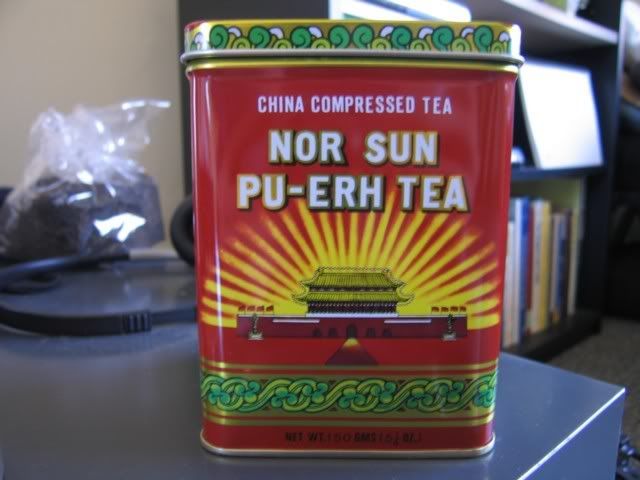
Nor Sun Puerh

January 21, 2008 · 7 Comments

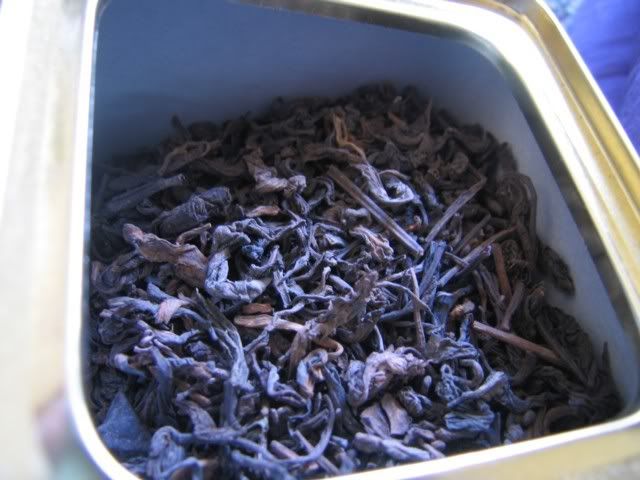
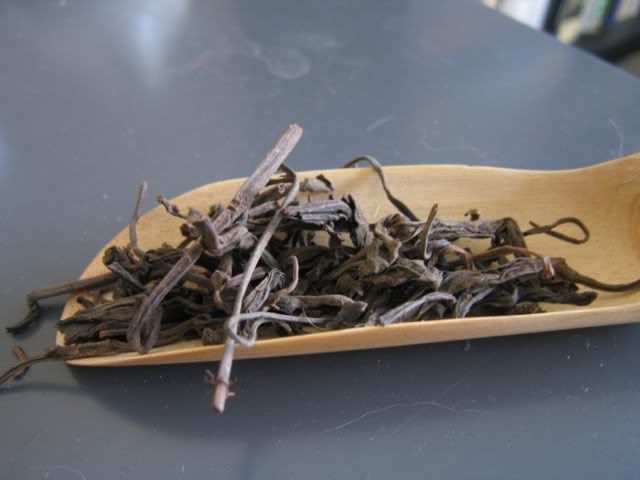
I saw this in a Chinese market yesterday. I actually opened the can to look, and thought it smelled traditionally stored. Couldn’t resist

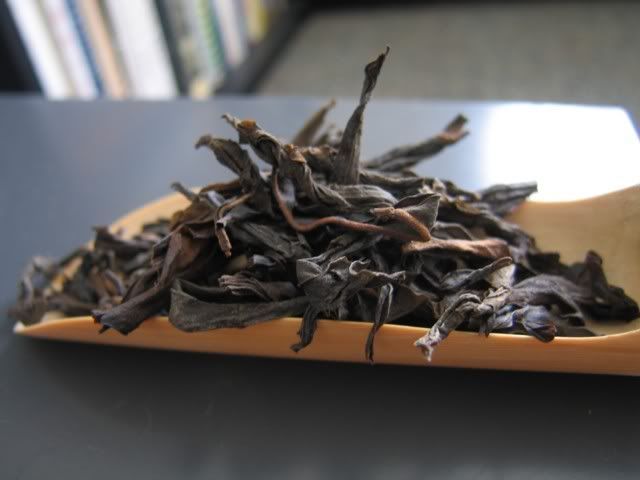
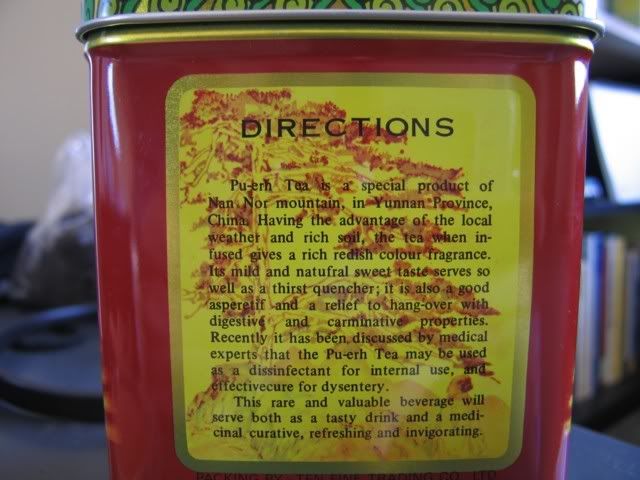
The leaves look nondescript — traditionally stored, for sure (from the smell). Nannuo (that’s what Nan Nor is)? Who knows. But who can say no to something that can be used as a disinfectant for internal use?

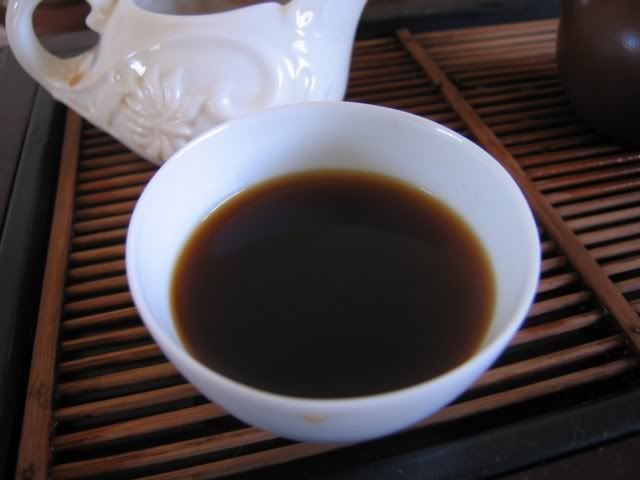
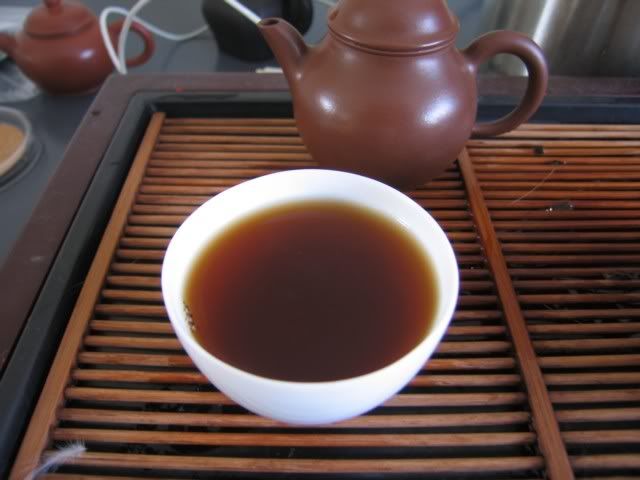
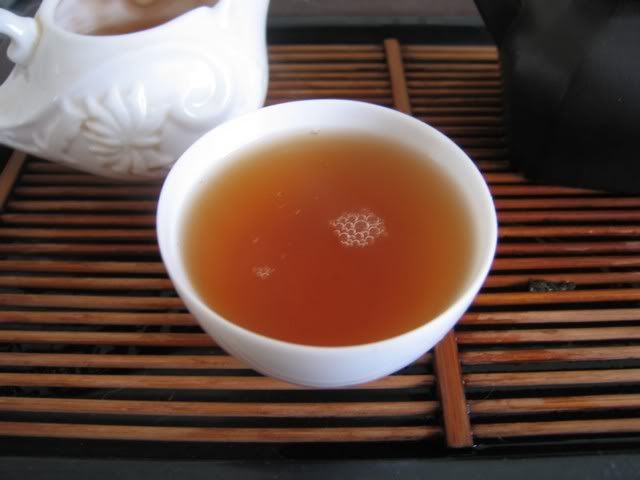
When I brewed it, it’s obvious that there’s some cooked leaves in this mix

The taste is… interesting. It’s actually, for what it’s worth, not that bad at all. It’s cooked, sure, but it’s traditionally stored cooked, and traditionally stored cooked, IMHO, is better than non traditionally-stored cooked. The taste is richer, and it removes almost all traces of the nasty pondy smell/taste that you normally get in a cooked puerh. The tea is actually decent, which surprised me. I wonder how people who don’t know much about tea think about this?

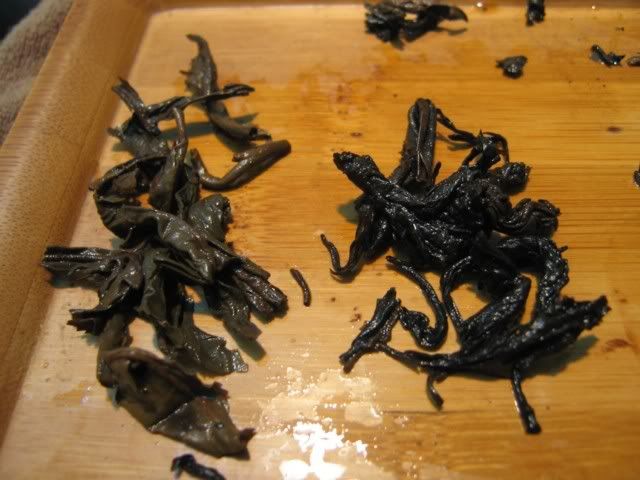
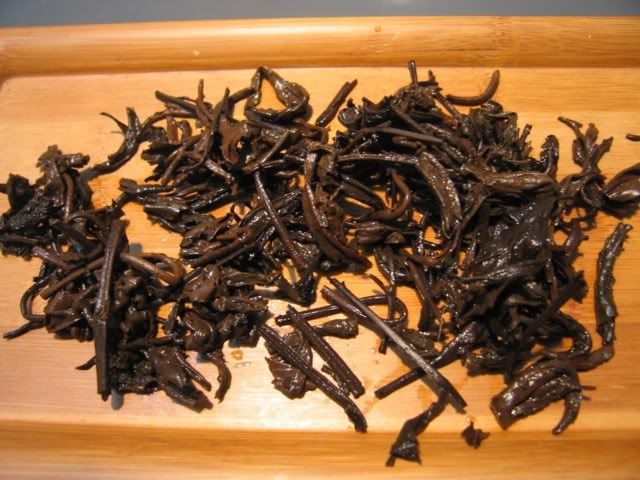
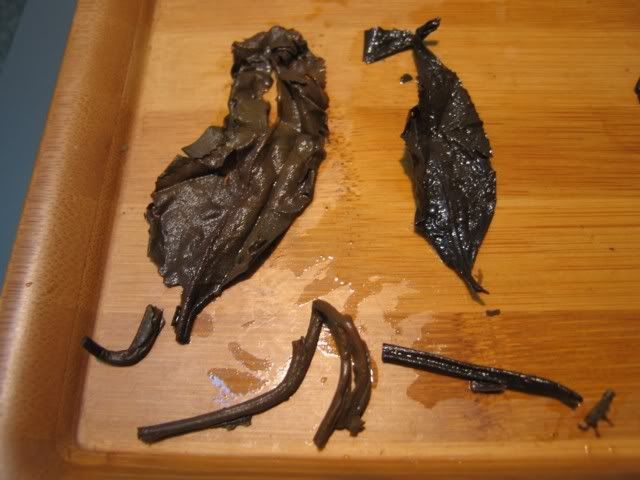
As I examined the wet leaves, I realized that this is actually a blend of raw and cooked leaves.

The greenish leaves are such that they can’t possibly be cooked… I just don’t see it happening. My guess is these could be broken cakes, or at least some are broken cakes, that were thoroughly mixed in and blended together for export. The tea comes from a Hong Kong company with a Hong Kong address in the section where a lot of these old wholesalers are, so I am guessing this is just one of those traditional upstairs tea merchants who are packaging this. Pretty interesting, I must say, and quite a surprise to find ok puerh in Columbus OH in a tin can.

→ 7 CommentsCategories: Old Xanga posts
Tagged: , ,

Bitten by the teaware bug

January 20, 2008 · 1 Comment

After Taiwan and coming back to the States, I realized I got infected by the teaware bug. The symptoms were already manifesting themselves while I was in Taiwan, but has grown more acute over time. They include an endless desire to look at, play with, and purchase teaware, a constant obsession with trying to learn more about the various aspects to understanding and dating teaware, a desire to use older, “antique” items, rather than new commercially produced goods. Severe symptoms include an obvious loss of money in the walle for no particular reason, staying up late to browse through forums or sites online to read about the newest piece of info, using a loupe to pore over every inch of yixing wares one owns, and the accumulation of teaware that cannot possibly be all used while the act of accumulating continues unabated.

The upside to all this, of course, is that there’s a real satisfaction with the ownership of every piece, and the increased enjoyment of tea, whether real or imaginary. Right now I’m in the process of trying to change the way I make tea here, but certain items need to arrive from the right places. I even start wondering how I’ve managed to make tea all this time before. I’ve already got pots that I probably can’t use and should, realistically, give away or sell so that I don’t end up having to move around with many duplicate items that no longer serve a purpose. Yet, I’m acquiring more at the same time. This is getting really serious….

I hope you don’t get bitten by the same bug.

→ 1 CommentCategories: Objects · Old Xanga posts
Tagged: ,

Gongfu coffee

January 19, 2008 · 8 Comments

No, I don’t drink coffee… but my fiance is a drinker, and I think this press is pretty cool. While drip coffee or espresso machines always seem too mechanical to me to involve much skill in brewing, something like this makes me think that one can, indeed, have better control over their coffees than is normally the case. I’ve tried using it, and it gives you a funny “kick” when almost done pressing. I think there’s actually a high level of pressure that builds up as you press down on it with hot water streaming through. It’s an interesting contraption, and if somebody can manipulate this thing to make different tastes, etc, I’d like to learn how.

I wonder what will happen if I put some tea in it and press hot water through it…. broken orange pekoe might work. Hmmmm

→ 8 CommentsCategories: Objects · Old Xanga posts
Tagged:

Iron kettles galore

January 18, 2008 · 6 Comments

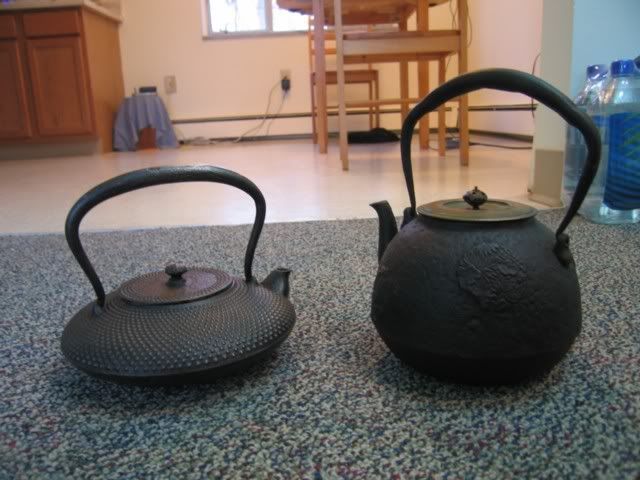
Some of you may remember my Ebay misadventure post. Well, here are the kettles in question

The right hand one is the leaky one. The left hand one is the dirt cheap one that I bought in a hunch, somehow feeling that the first (i.e. right) one might be problematic. The right hand one is still leaky — I tested it. I’m going to try to get it fixed somehow, although, thankfully, the guy who sold it to me agreed to refund every penny of the cost and did so, including shipping. Gotta give it to him for being straight.

The reason I bought any at all was because my glass kettle broke on the way from Taiwan to here. Everything else was ok in my luggage, including the cups that Aaron gave me — in that case, a bit of a miracle because the wooden box they were stored in was totally smashed, but somehow the cups were ok. The glass kettle, however, was in a box that didn’t look damaged at all, but when I opened it, it was shattered. So I needed a replacement.

The left handed kettle works, in so far as one can boil water in it. However, it has some rust in it. That’s not the real problem. The real problem is that even after a number of tries boiling water and what not, water boiled using this kettle still comes out yellowish with a smell that most reminds me of chamomile. Anybody with a suggestion on how to get rid of such a smell? I’m thinking using some sort of chelation agent to get rid of the rust and see where that takes me…. suggestions welcomed.

So the hunt for a replacement kettle continues.

→ 6 CommentsCategories: Objects · Old Xanga posts
Tagged: ,

Loose mixed puerh

January 17, 2008 · 1 Comment

A surprise visitor today outside the window; this is what you get for living in the middle of nowhere

Just because there’s a pretty deer out there who was quite nervous about a human being moving around doesn’t mean I don’t drink my tea today

This is a random bag of puerh that I found in my tea closet. I don’t know where it came from — I didn’t label it (as I normally don’t — a bad habit) and I now don’t remember where it’s from. From the looks of it, it is some traditionally stored loose puerh, most likely from some Hong Kong shop, and very likely Vietnamese in origin.

When the dry leaves hit the warmed pot — indeed, smells like Vietnamese loose puerh.

The stuff is standard, although, I think this is better than the border tea I bought in Taiwan. It’s got a little more softness, and a sweeter taste in general. Quite decent for regular consumption, as long as one’s not too picky.

An examination of the wet leaves tells me why that might be the case

You might be able to tell from the picture with all the leaves that there are actually two types of leaves in this mix — some are greener, more flexible, and softer in feel, while the others are tough, inflexible, and darker in colour. The darker stuff look more like the border tea leaves, whereas the greener softer stuff look like Yunnan leaves I’ve seen before…. is that a coincidence? Probably not.

→ 1 CommentCategories: Old Xanga posts
Tagged:

Aged fenghuang shuixian

January 16, 2008 · 3 Comments

This is a tea I picked up in Beijing way back. I was told it’s an aged dancong, but having had it a few times, some with friends, we’ve decided that it’s probably an aged shuixian — but probably of the Phoenix Mountain (fenghuang shan) variety, rather than the Wuyi ones. The size of the leaves are big, as they generally are from that area, and there’s a bitterness to it that a Wuyi doesn’t usually have. Reminds me of that fairly fickle Fenghuang Shuixian I tasted a little while ago. Maybe if I leave that around for 10 or 15 years, it’ll be like this one.

Otherwise, there’s a plummy sweetness that I think is a classical “aged oolong” taste. There’s a bit of a spicy finish to this one, somehow. I don’t think it’s been stored too carefully, so it might have picked up some random notes. There’s also a little sour early on, but just a little and not enough to detract from the overall experience.

What does detract from the overall experience though, and what is so commonly going through my mind these days, is “why the hell did I not buy more of this when I had the chance?”. Oh well, I will just have to worry about that until next time I go to Taiwan or China.

→ 3 CommentsCategories: Old Xanga posts
Tagged: