A Tea Addict's Journal

Why do we bother?

March 24, 2007 · 9 Comments

Sometimes I wonder why we bother at all with young puerhs.

I’m attending a conference these next few days, and today during lunch with some current and former colleagues, the topic of tea came up. Eventually it got onto the subject of puerh, and aged puerh, and other aged foodstuffs, and one person asked “can’t you just buy a bottle of scotch and age it too?” Well, you can’t, because you need to buy a whole barrel of the stuff to age to make it even drinkable, or something like that. I have never heard of anybody drinking raw whisky.

And in some ways, this is more similar to puerh than the usual analogy of wine. After all, a fine Bordeaux is still, from what I understand, very drinkable now, even when new. It just gets better with age, but it doesn’t need age to be a good drink now.

Puerh, however, is not quite like that. Sure, there are some puerhs that are decent to drink now, and I think generally speaking people are acquiring more of a taste for younger puerhs, but the fact is that the drink is designed to be aged — it’s the aged stuff that you’re after, not the young stuff. Many of us who buy young cakes are not buying for the “drink it now” category, but rather the “let it sit and get better” category, and it dawned on me that in some ways, it’s rather absurd. This is not like buying a case of wine and let it sit at home. Rather, it’s more like buying a raw barrel of whisky and hope that in 10, 15, 20, 30 years, it will get better with age and become a great barrel of whisky (yes, I know, that’s only the minimum age of the whisky in the bottle). The young product, with a super high alcohol content, etc, is not really what you will call whisky. The law, at least, governs that scotch needs to be aged for at least 3 years, and generally more…

Now…. the difference is that nobody ever buys full barrels of whisky or wine, take them home, and age them in their own rooms. That’s insane — the costs, the trouble, and the risks. Yet, we do it all the time with young puerh cakes. We run all the risk, and we don’t even know for sure, in many parts of the world, whether this stuff will age well at all. A Hong Kong tea merchant told me that he’s sold a container of puerh to Australia before, and within a year he took it all back, because the tea’s quality went down… it got worse over time in the rather dry climate there. Lots of people from Hong Kong believe that a tea only ages well in a wetter environment.

Who’s right? Who knows. People in Beijing think that maybe in 10 years, in addition to HK storage, Taiwan storage, Malay storage, we will have things like Beijing storage with a distinctive taste to it. I’m just afraid that Beijing storage might be bad, dry, rough young puerh with funny tastes. I’ve had one or two of those, and I’m afraid of seeing more.
→ 9 CommentsCategories: Old Xanga posts · Teas
Tagged: , ,

Revisiting Best Tea House dancong

March 23, 2007 · 1 Comment

I haven’t had this tea in almost a year. Last time I had it was probably sometime in May 2006 or so.

This is actually the last bit of the tea I have left. I probably should’ve bought some in Hong Kong, but then, I can always go back and buy some more. This is their second most expensive selection. In terms of price/quality ratio, I find this to be a better deal than the Song Zhong Dancong, which is slightly too expensive for my tastes. This is half the price for more than half the quality. I’ll take it.

With this tea… it’s the same honey like fragrance, without the nasty greeness of an unroasted dancong that I find a little unattractive. The roasting gives it a good balance between the sweetness of the tea and the fragrance, without feeling like it’s been tempered with by the addition of artificial flavours. When drinking those non-roasted dancongs, I always feel like they are somehow unnatural…. too fragrant.

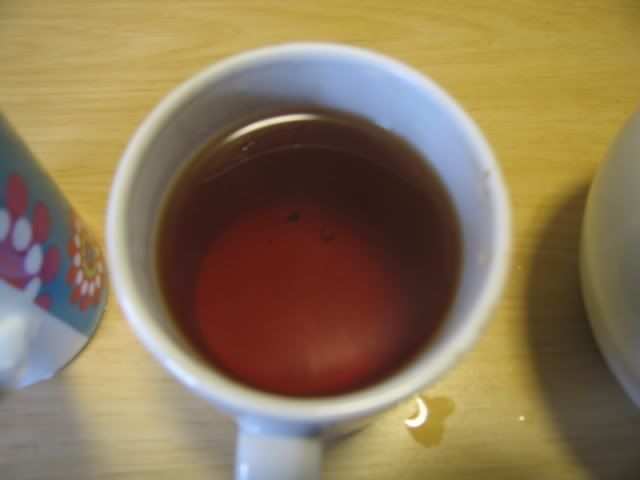
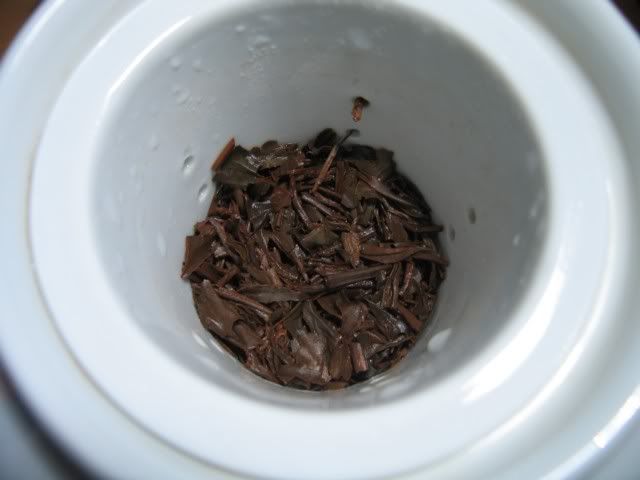
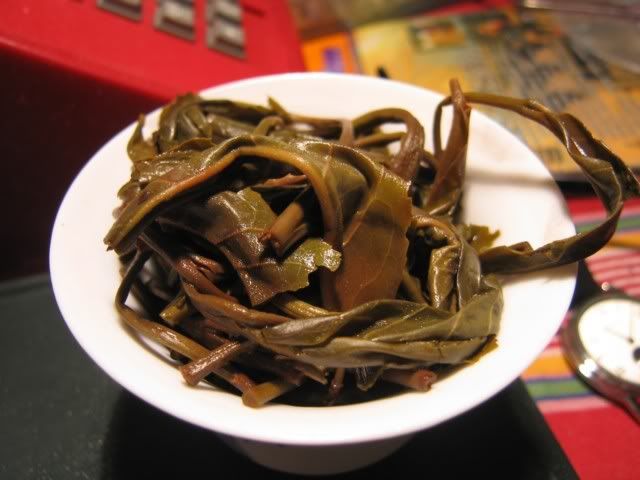
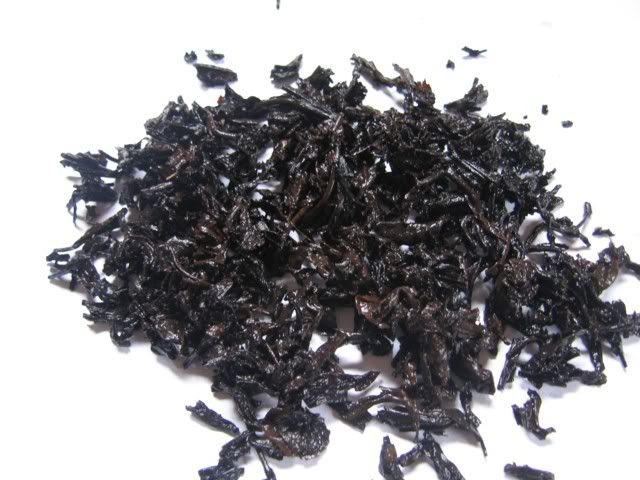
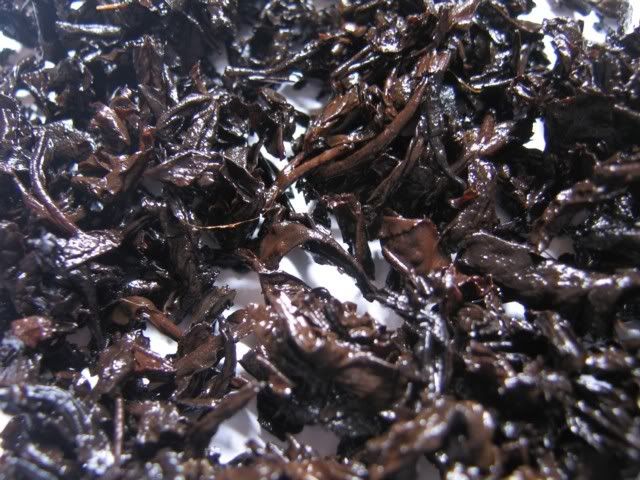
The only downside to this tea is that it doesn’t last too many infusions. After about 4-5 it starts dying, and since dancong tend to have a slightly bitter edge to them, it decreases the appeal of the tea significantly after that. Of course, today’s was especially bad because there were lots of broken bits of leaves in the tea — what always happens when it’s down to the last brew. As you can see….

→ 1 CommentCategories: Old Xanga posts · Teas
Tagged: ,

2006 2nd SE Asia Puerh Trade Fair Memorial Cake

March 22, 2007 · 1 Comment

I tried the SE Asia trade fair cake today, the sample of which came from Hou De. This tea is also made by Chen Guang He Tang, the same company (really, same guy) who made the two Yiwus I tried a few days ago.

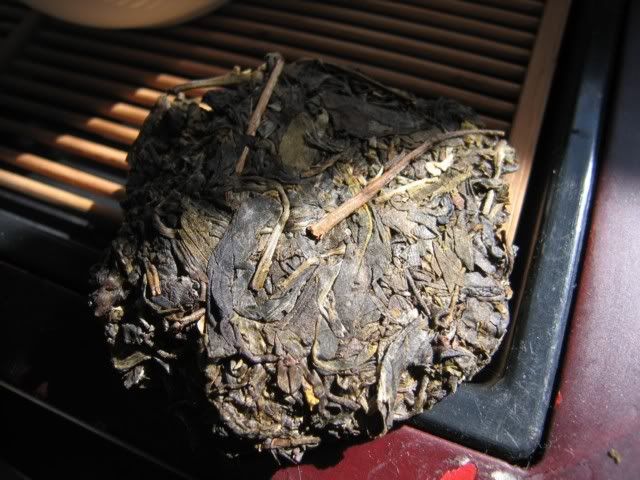
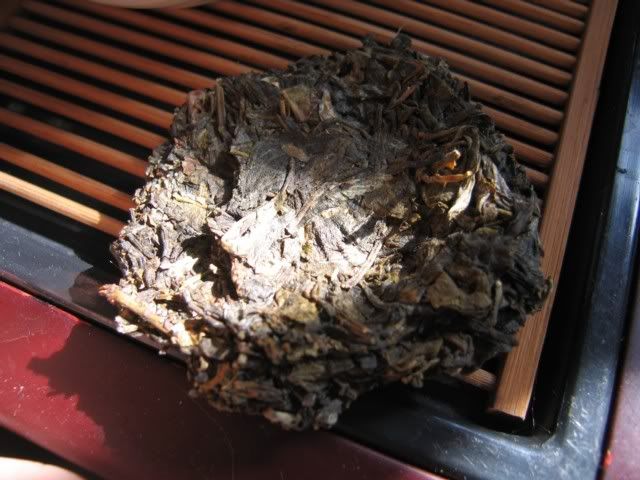
I got the center of the cake, with a neifei to boot. The piece is literally the centerpiece…

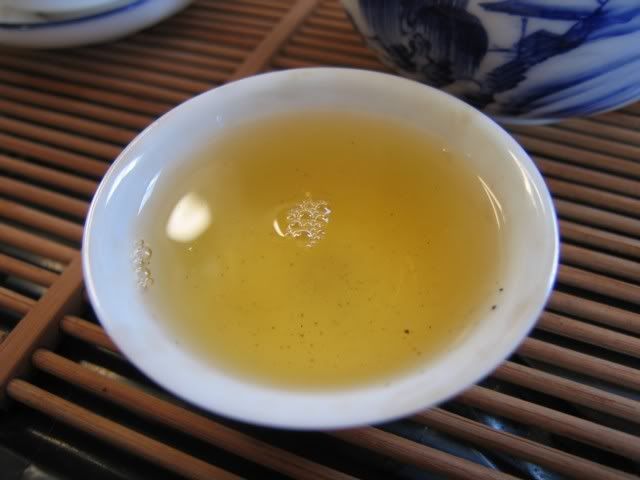
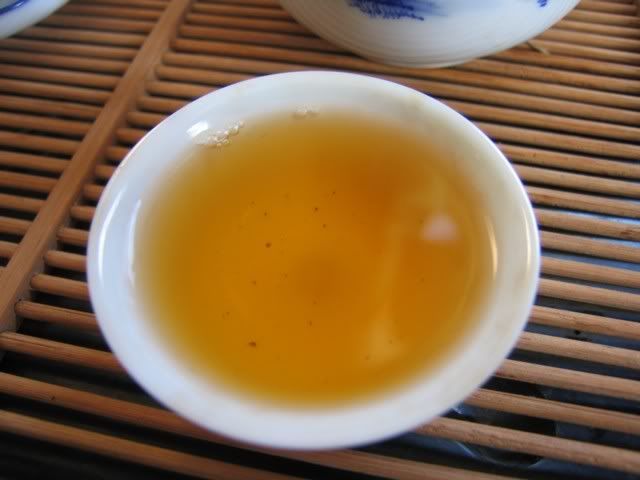
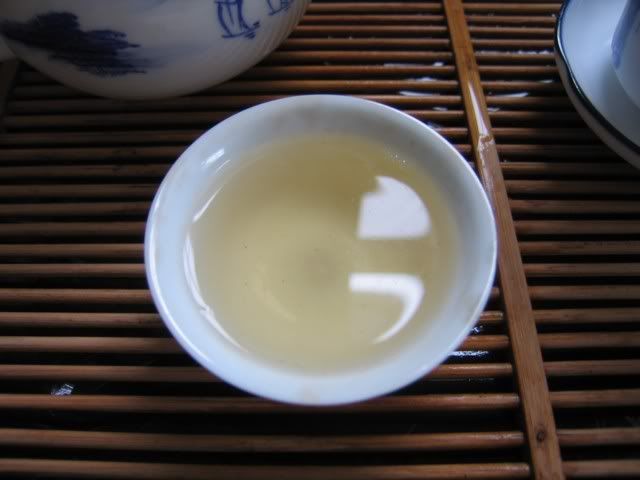
I added a moderate amount of tea to the gaiwan and brewed. The first two infusions were a little strange… there was a strange metallic note to the tea, and also a sort of vegetal taste that I don’t usually find in younger puerhs. In fact, I felt like I was drinking vegetable water at one point. The tea is not very thick, although not too thin either. It’s bitter, and remains so throughout. The vegetable taste goes away after a while, turning into a more traditional Menghai area tea taste. There’s always some huigan to the tea, and the level of huigan is somewhere between the Yiwu Yecha and the Yiwu Chawang.

Sweetness doesn’t really show up until at least 7-8 infusions in. The tea starts showing some sweet notes then on the tongue. Bitterness persists though. The tea was never too rough on the tongue — quite smooth, in fact, despite the bitterness.

Overall I think this is an above average cake, but not a whole lot better than that. One of those teas that is only enjoyable after some years of aging, I think. Right now it’s really too bitter to be a pleasure to drink. If the bitterness is obvious to me, then it must be even more obvious to those who don’t drink this sort of thing regularly, since I generally find myself rather insensitive to tea-related bitterness these days when compared to other people.

2nd infusion

4th infusion

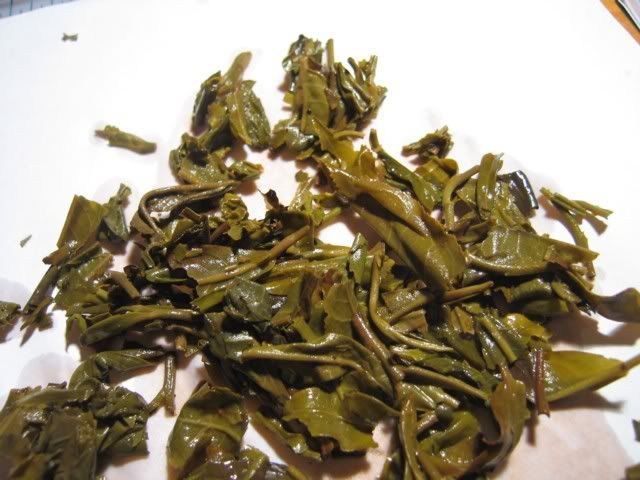
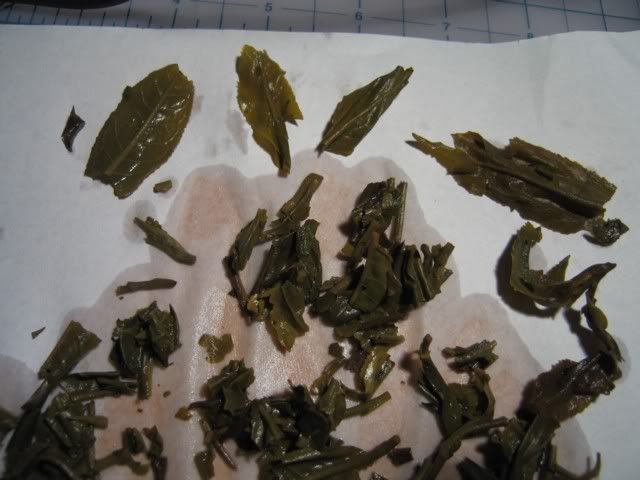
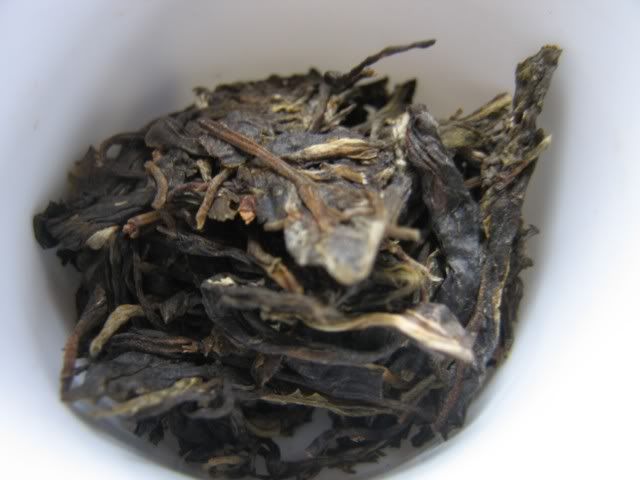
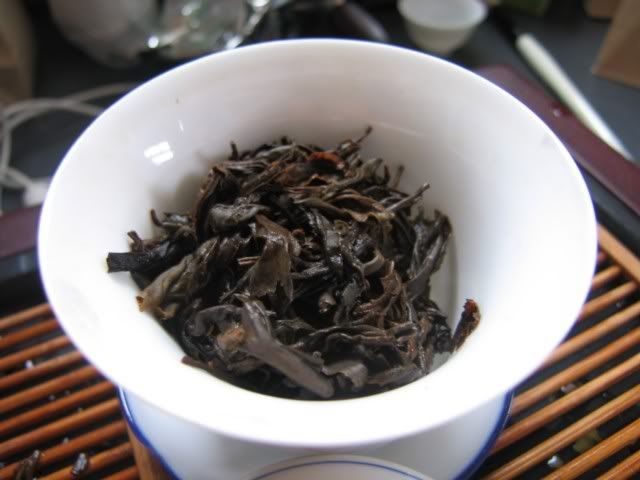
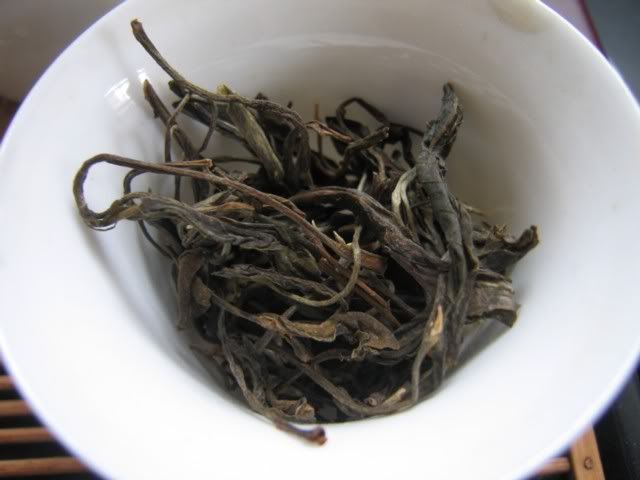
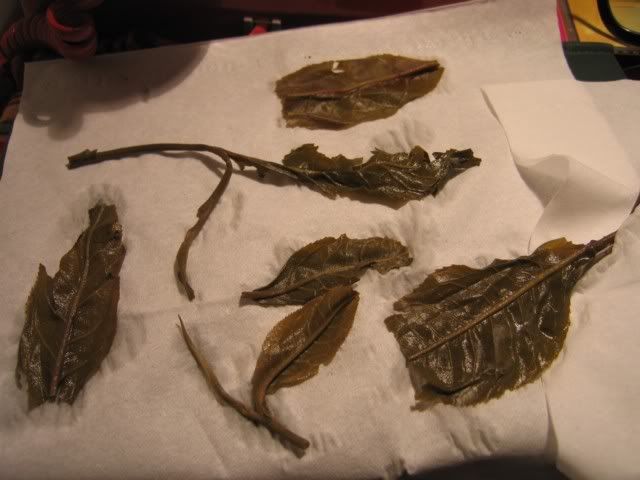
One thing I’ve noticed about these Chen Guang He Tang teas is that they consist of leaves that are more broken than usual.

In the whole gaiwan I couldn’t really find any leaves that were intact. These were the best looking ones

I suspect this has to do with the level of rolling they went through during processing. I suspect these teas are more heavily rolled than the usual ones we see in the market these days. Heavy rolling, according to what I’ve read, also contributes to the higher level of bitterness apparent in his teas. If this is true that heavy rolling is involved, then obviously Mr. Chen thinks that heavy rolling is good for aging. Is it? Only time will tell, I suppose.

On the other hand, I find that a lot of the leaves of his teas are actually quite thin and fragile to handle when wet. They seem to break more easily. Maybe it’s just a question of the general quality of the leaves… and that the stuff he uses are somehow thinner? Not sure.

→ 1 CommentCategories: Old Xanga posts · Teas
Tagged:

Karma tea cafe

March 20, 2007 · Leave a Comment

I went to the Karma tea cafe today that I talked about a few days ago. Them being a new place, I figured I should go check it out in a little more detail than a take out mug.

My girlfriend and I looked at the tea menu. There were many teas on the list, but almost everything is emblazoned with “organic” or “fair-trade”, or both. This makes me think this is a Rishi supplied store, since Rishi does the same thing with both the organic and fair-trade labels.

The tea I had was quite good — a Yunnan gold sort of thing (although there are only a few golden buds in there). Full bodied, nice caramel like aroma, etc. The usual. Smooth, pleasant, and very drinkable.

But I do sometimes wonder about the whole organic/fair-trade thing, especially when it comes to tea. I am no expert on such subjects, but I think these labels are problematic because it always begs the question of what do we NOT have control over, and whether those things aren’t important enough to be significant. Just because a certain tea is labeled organic doesn’t mean that there are no toxins or whatever in them. There was a discussion a while back on RFDT about this problem. I think that while a certain tea can be classed “organic”, it doesn’t mean it is necessarily better than a non-organic tea from the farm next door. After all, a lot of teas that are produced for higher end consumers are organically produced anyway, but getting that certification, especially if you’re a tiny farmer on a small plot of land, is not economical.

There is also the problem of other sorts of pollution that you can’t control. Just because the farm is certified organic doesn’t mean (as far as I know anyway) that the water they use is free of pollutants, that the air is free of soot and suspended particles (there are lots in China), and that sort of thing. They all make their way into the tea, somehow. These are things one can’t control, and IMO, are far more damaging to the tea and the environment that they grow in than any sort of pesticides or fertilizers that one might use. A tea farm next to a highway or downwind from a big steel plant will be soaking up all sorts of nasty stuff no matter what. Then, of course, there’s also the fact that many kinds of teas are grown without the use of such things in the first place.

As for fair trade…. there are good economic arguments for why that is a bad idea. It sounds nice in theory, but ignores some larger problems. I suppose that being from Hong Kong, a prime example of capitalism at work, I believe that market forces work things out in the most efficient manner when free from interventionist schemes. After all, farmers in the famous areas for puerh are some of the highest paid people in Yunnan now, and I don’t think they have any sort of fair-trade certification.

What I seem to see a lot, especially in the US though, is that tea is often associated with precisely this sort of thing. I think it is partly a reflection on the sort of people who drink tea regularly. It is also an image thing – a place like Karma that is a Yogu studio/gym upstairs and serving tea downstairs will be particularly attracted to teas that are supposedly organic or fair-trade. What I worry is that these are labels used by people to fool others into paying a higher price for what is really the exact same thing (or even an inferior thing) that one can get elsewhere. I have heard complaints about Kosher certification for teas — tea is naturally kosher (unless something funny is going on), but some people won’t buy stuff without the label just because they’re not sure or feel insecure. Ultimately, the purpose of these, at least from the view of a cynical observer like me, is to sell more tea and create a better corporate image. The cost of all such things get passed on to the end consumer often without really adding anything to the product.

→ Leave a CommentCategories: Misc · Old Xanga posts
Tagged: ,

Khongea Assam

March 20, 2007 · Leave a Comment

I sometimes get lazy, particuarly when I’m in Cambridge. Today was one of those days, and the tea I drank was an Indian red tea sent to me by Lochan Tea. I brewed it in my girlfriend’s very large teapot, English style…. basically stewing the tea in water for a few minutes.

This is what came out

The tea is full bodied, with an obvious aftertaste that coats the mouth. I liked it quite a bit, although I should do a full tasting with gaiwan and all to tell for sure. There’s a bit of roughness going into the second infusion, which I didn’t like so much. It reminded me of teas that I drink in cheap Hong Kong restaurants serving watered down teas. I think watered down Assam is probably what they used.

Looking down the cavernous teapot…

→ Leave a CommentCategories: Old Xanga posts · Teas
Tagged:

Two Chenguanghe Tang Yiwus

March 18, 2007 · 3 Comments

I, along with a number of other people, have gotten samples from Hou De for the new Yiwu teas they are offering, specifically the Chenguanghe Tang 2006 Fall Yiwus. There are two of them, one called the Yecha, or wild tea, and the other a supposed Chawang, or literally tea king. The Chawang is almost double the price of the Yecha. Since I’ve been drinking a lot of Yiwus these days, I thought I would give them a try.

The samples I got are both close to the center of the cake. Here’s a comparison shot of the dry leaves. The left is the Yecha, and the right is the Chawang:

The only noticeable difference between the two, in terms of their dry appearance, is that the Chawang has more whitish haired leaves, while the Yecha is darker. Other than that though, they don’t look all that different. Both smelled a bit of smoke when dried, certainly foreshadowing a taste of things to come.

I tried the Yecha yesterday with D. It was the first tea we had of the day, so my tongue was not adulterated by other things. I used a generous amount of leaves

Which brewed a decent coloured tea. I think this is the second or perhaps third infusion.

The overwhelming taste, at first anyway, is smoke. It was smokey. In fact, I would say that the first two infusions there was little else going on other than the smoke. Then in the third infusion, the smoke started receding a little, and a little more of the tea came out. However, I generally found this tea to be somewhat on the weak side, without much that appealed to me immediately. Chaqi was not particularly evident, nor was there a strong huigan. There was a bit of it, but it wasn’t lasting. The body of the tea was a bit thin. D didn’t particularly like it either.

The wet leaves… look a little old and thin. I can’t say I was particularly impressed by this tea.

Now, on to the Yiwu Chawang.

I put a very generous amount of tea in the gaiwan. The liquor from this tea is a bit darker than that of the Yecha.

It is also smokey, which is a little unfortunate. I would hope that the tea wouldn’t be so smokey, but it is. It does detract from being able to evaluate it on its own merit, but I suppose smoke is part of the tea now.

The tea is obviously stronger than the Yecha. Not only is the colour of the liquor darker, it is also generally stronger, with a more obvious huigan, and some chaqi. The tea, however, is quite bitter. It’s a little uncharacteristically bitter for a Yiwu, quite unlike a lot of the other ones I’ve had, many of which I personally think are very good teas. I’m not quite sure why that is the case, and I don’t think the fact that this tea is supposedly from Guafeng Zhai has much to do with that. A comparison with, say, the 2004 Yangqing Hao Yiwu would make the difference very apparent. I haven’t tried much of the recent Yiwu offerings from Hou De or any other US vendors recently, so I can’t really comment on anything else.

The Chawang lasted many infusions (I gave up on the Yecha before the tea gave up on me). That in itself is quite nice. I think this is a tea with some good aging prospects, but again… it doesn’t have the familiar Yiwu taste that I’ve come to know as the signature taste of the tea of that mountain.

The spent leaves of the cake show that they were a bit broken. Some is due to the fact that I used some of the shavings in my brewing, but others… I’m not sure what happened. I tried my best to squiggle the teas out of their position so as not to destroy the leaves, but somehow still ended up with a lot of broken bits.

Most of the leaves looked like this

Of the leaves that I could find (there were lots of stems) they were very heavily rolled, which I suppose could’ve contributed to the fact that I couldn’t find many complete leaves. I have also read that heavy rolling contributes to a bitter taste.

In my sample I could only find these leaves…

And this, which was paper thin…. there were another one or two that were also on the very thin side.

It is obvious that the Chawang is better as a tea. I’d even say it’s 2x better than the Yecha. On the other hand…. I’m not entirely sure if there aren’t better teas out there for that price, even in the US market. I know I am prejudiced given my access to teas in a much cheaper market, but even when compared with other teas available in the US market, whether this is good value or not is up to debate. I wonder what everybody else thinks.

→ 3 CommentsCategories: Old Xanga posts · Teas
Tagged:

Tea meeting

March 18, 2007 · Leave a Comment

Yesterday I had tea from 1:30pm to 6:15pm with D, a local tea friend whom I’ve met last time we went to Royal East. We had a whole bunch of stuff…. including
1) Chen Guang He Tang’s Yiwu Yecha from Hou De
2) Lapsang Souchong I got from Beijing
3) 1990s Yiwu loose puerh from Hou De
4) Loose puerh, unkonwn age, from Hong Kong
5) Yiwu cake sample I have from Beijing

I’ll skip over 1, since I still need to taste the Yiwu Chawang to compare it against, and to post my results then. I might do that late tonight.

The lapsang I just find pleasant, and I didn’t use a lot of leaves (it’s very dangerous drinking tea with two people — very easy to overdose). It lasted…. 6 infusions? Something like that. It’s something that can, I think, be enjoyed anytime.

The 1990s Yiwu loose puerh is an interesting piece. D wanted me to try it because he thought it’s nothing like what he’s tried before. When I opened the bag and sniffed, I think I could smell what I know as wet storage smell… that musty, pungent smell that accompanies wet stored tea. The leaves look rather uniform. We used a gaiwan to brew it… and…. after the wash, I smelled it, and there was something odd about the tea. I couldn’t explain what exactly it was, and I don’t think D could either, although he said this is exactly what he thought was odd about it. We tasted it… and the tea is thin, with a little bit of bitterness in the undertones, and not really tasting like any puerh I’ve had before. The thing that it reminds me of is actually a Yunnan hongcha (red tea), or something similar.

The tea looks really good. It looks like a well aged puerh in colour, but when brewed it has none of that taste. Comparing it with, say, the Xizhihao Yiwu 1997, for example, this one is obviously lacking. I think the thing that I am missing is the sweetness that comes from puerh… it doesn’t turn sweet like a puerh should, but instead stays the way it is. We didn’t drink too many infusions of this… about 5 or so, before giving up and moving on.

I pulled out a bag of loose puerh I got in Hong Kong (I bought quite a few different kinds today). I haven’t tried this for quite a few weeks now, and it’s been sitting in the bag since I bought it. When I opened it, there was a strong, pungent medicinal smell coming from the tea. It’s definitely stored poorly as well, I think, and the age isn’t that old. I used my pot to make it, and interestingly enough… there was, underneath everything, a similar taste to the Yiwu loose tea, but with something overlaying that bitterness base. I don’t think the taste was entirely pleasant, and D didn’t think so either. It tasted a bit different from when I tried it in the store, and I thought perhaps it has to do with the fact that what I tried in the store was the surface of a big bucket of tea, whereas this is something that was scooped up. It was also sitting in the bag for a month now… which might make the unpleasant tastes more apparent. I think I need to air this tea out before drinking it.

Since we didn’t go too many infusions on this one, I left it in the pot and brewed it again today. Funny enough…. the unpleasant taste is not apparent anymore, and the tea is infinitely more drinkable. I’m not sure why. The guy who sold it to me told me that I should leave the tea out, all spread out on a flat surface, and let it sit during the days when humidity is high in Hong Kong. Then, take it back in after its gone through a few days of dryness. He thinks this will make the tea much better. I can’t do that, but it’s something to keep in mind.

Lastly, we ended with a sample of a Yiwu tea I got from Beijing. D said he hasn’t really tried a young puerh (under 3 years or so, I suppose) that he actually enjoys, and I thought this could be one that is enjoyable. This tea is… a little odd, in that it doesn’t really have much of the bitterness so characteristic of young puerh, yet not bland either like a lot of bad, un-bitter puerhs tend to be. I don’t really quite know what to make of it, but I bought a few liking the huigan and the overall complexity of the tea.

By the end of the session, we were both rather buzzed with caffeine. It was definitely an enjoyable afternoon, and it is not easy to find tea company around here to both talk about and to drink a lot of tea. I’m hoping that before I go back to China, that we will find time again to get to gether and drink some more tea.

→ Leave a CommentCategories: Old Xanga posts · Teas
Tagged: , , ,

Tea in Harvard Square

March 16, 2007 · Leave a Comment

I’ve been living around Harvard Square now for four years, and really, I’ve been blessed by the number of tea stores that are around this little area. Over the years, it has gotten more tea vendors. This is not to say that they are all of high quality or sell exotic things, but for the US of A, I think my selection here is not too bad.

So what do we have around Harvard Square?

I guess we’ll start with A. Dado Tea. They have a nice tea menu, as you can see. But you can also see that they’re not cheap. 2.25 for a basic cup to go, and very little leaves at that. If you want Korean green tea though, this is the place to go. It’s also nicely decorated/setup so that drinking tea there is actually rather pleasant. It’s also a bubble tea place… and I think that’s where they make their money.

Tealuxe is sort of the original tea store around here, as far as I know. They only sell tea — and one kind of coffee (which nobody buys, as far as I can tell). I remember they used to carry a superb selection of teas, some of which I’ve never heard of, and there was always something interesting to drink there. Unfortunately, I think they overexpanded a few years ago and had to cut back (probably took on more than they can chew). Nowadays, they offer mostly black teas and, horror of horrors, flavoured black teas and herbal teas. Their oolongs and greens are nowhere near what they used to be, and they have yet to offer any kind of puerh. Oh well, that doesn’t matter so much. They’re rather expensive, but good for a reliable cup of tea when I’m in a rush.

Then there’s Peet’s, which stinks of coffee when you walk in. The tea menu, however, is not bad, and has some really strange things. There’s this one tea that I tried recently called “Imperial Red”, and I honestly have no idea what it is. In some ways, their offering of teas might actually be the best among all the stores in Harvard Square now, surprisingly enough. As much as I’d hate to admit that a coffee store is selling decent tea, this one actually does. I should probably go visit their home in Berkeley at some point.

There are a whole bunch of places that sell pretty decent teas, but which are not listed in the google results, because they are primarily coffee joints. These places, such as Toscanini’s (an ice cream bar), Cafe Gato Rojo (a cafe in a Harvard building), Cafe Pamplona (a little place in the basement of a house with 6ft clearance — if you’re too tall, you won’t be comfortable there), among others. They are all supplied by a business called Mem Tea (G). It’s a great service, as they are just a wholesaler doing mostly restaurant and cafe business, but the consumers, like me, get to drink loose leaf teas that are actually decent. These places, if not for the existence of Mem Tea, would all be selling me teabags of various kinds, most likely Stash or Twinnings or Lipton or some other such thing. Instead, they use the “loose leaf in a bag” system and have various kinds of teas on offer. They don’t do retail, except through stores that buy them, but I’ve met the owner of the thing and he is quite a nice person. I’m always glad to see those signature tea containers that they use, because it means I can order a reasonable cup at that place.

There’s a new store in town that isn’t even on the maps yet, at the corner of Massachusetts Ave. and Remington St., called Karma…. something. They’re downstairs from a Yoga Studio of the same name, and offers tea up front. It’s a sleekly designed place, and I tried one tea there already… a Yunnan black of some sort. It’s not bad. I couldn’t figure out where they source their teas. Sometimes it’s obvious where a store gets their teas, but this one isn’t. I might go back again and try something else they have to see if it’s up to any good.

So, while the offerings around here isn’t fantastic, I have a feeling that this is probably better than most. At the very least, I can always count on a cup of tea that is brewed with loose leaf tea and not have to worry about the horror that is a teabag. Then again, when I’m despearte enough, I can even drink McDonald’s tea…

→ Leave a CommentCategories: Information · Old Xanga posts
Tagged: ,

Yiwu maocha again

March 16, 2007 · 3 Comments

I was wondering what to drink today, and while I was contemplating, I took out the gaiwan that my girlfriend put in a box. I opened it up, thinking I’ll warm the cup and then decide… and found there was tea in it!

It was obviously maocha of some sort. I wasn’t sure just by looking at it what it was. I thought maybe this was one of the Hou De samples I got that I forgot about. Then I sniffed it… it’s a Yiwu all right. It must be what’s left of the Yiwu maocha that I gave to her in Paris.

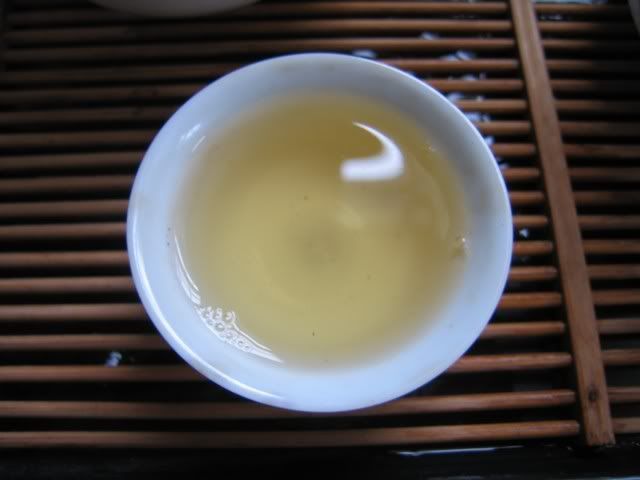
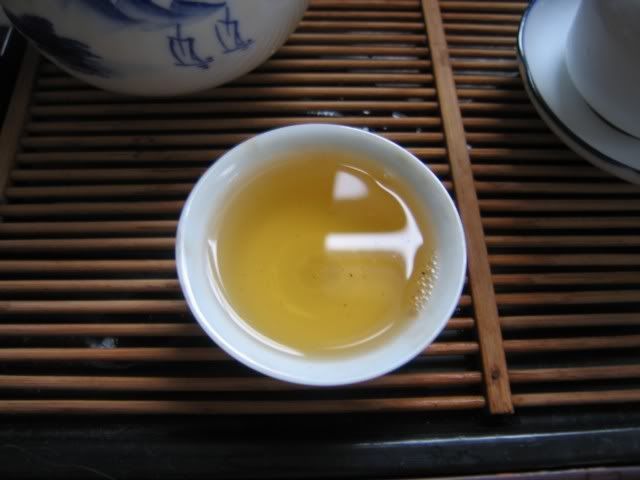
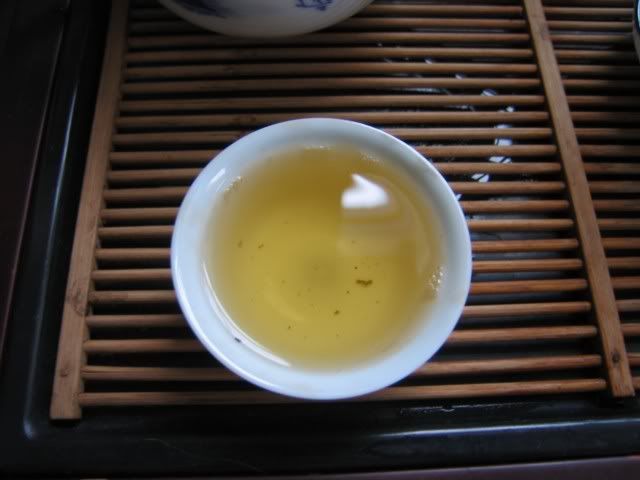
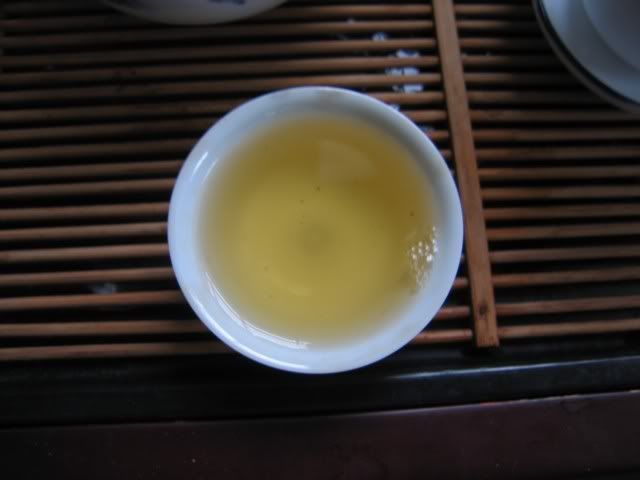
So, what the heck… I’ll drink it (I brought the whole bag of the maocha over). I took pictures of the first five infusions

The first two infusions were weak and slightly bland in the mouth, but delivered a wonderful aftertaste that lingers. The third infusion got rougher on the tongue, but a much stronger taste. The taste of this tea has by now definitely changed from when I first obtained it. Whereas previously it was rather nice and sweet, the sweetness is now giving way to something else, something a little more robust, a little more bitter too. The tea, in some ways, is passing through the very early phase of green-tea like taste into something a little stronger, but only just. From the third infusion onward the taste stayed more or less similar for a few infusions, before it started slowly descending into sweet-water, the usual ending for a young puerh. When brewed for 20 minutes or so, the tea can still give you a good infusion of tea after 15 infusions or so. It’s no longer a powerful cup, merely flavoured water.

One thing that was interesting is that the tea, when dry, smelled just like a Yiwu should. The liquor, however, doesn’t smell quite the same way. It’s odd. The tea is less sweet in taste than it is in dry smell. I’m not sure what to make of that.

Of course, a tasting is not complete with pictures of the wet leaves

→ 3 CommentsCategories: Old Xanga posts · Teas
Tagged:

As promised

March 14, 2007 · 7 Comments

A better look at the GYG leaves, after I finally emptied the pot after two days….

You can see the unevenness of the colour of the leaves… some are darker, some lighter. I don’t know if it has anything to do with the fact that I used three pieces — pieces that could’ve been from different cakes. It could just as well be differentiation in aging within the pieces themselves. The tea is very tightly compressed, so that is entirely possible.

Anyway, these days my tea drinking isn’t terribly interesting. It’s mostly been loose-tea-in-a-bag of various kinds, because that’s what’s most convenient when I have to run around. Today, for example, I had a Ceylon Breakfast from a place called Timeless Teas. They’re a store on Newbury Street in Boston, and underneath them is a cafe (that is always full) that serves their tea (although most of the business is coffee).

These people specialize in Ceylon teas. I really haven’t tried many of their offerings, which are definitely Ceylon tilted. The tea I had today, brewed in a big pot, was a “Ceylon Breakfast”. It was…. mild, sweet, pleasant to drink, but not that exciting. It’s probably BOP or even lower in grade, although I’m no expert in such things. The tea, while pleasant, was utterly uninteresting. It’s simply not a great cup, merely an average one.

Of course, I’m being picky. I’m also not drinking it the way I normally would, so the comparison is hard to make. That said, any store that sells loose leaf tea is not a bad thing. I really ought not to complain.

The next few days I hope to do some tastings, because a few samples arrived.

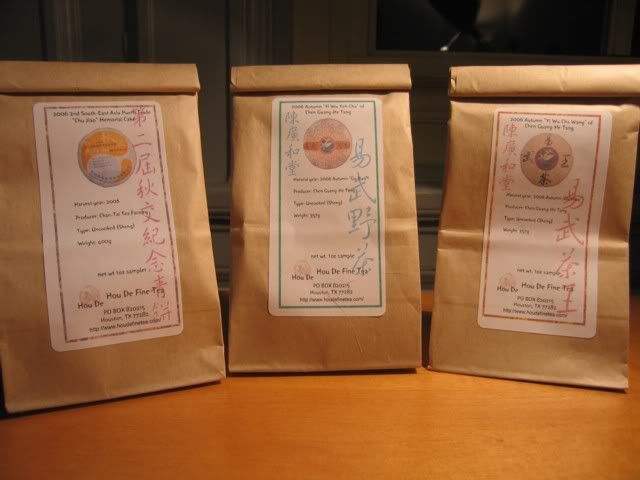
The two Yiwu on the right are what I ordered, and Guang of Hou De threw in the extra, a sample of the Malaysia Trade Fair commemoration cake, on the left. Commemoration cakes are rarely my thing, since they are hardly worth the money (i.e. there’s always a commemoration cake premium built into the price). At the same time, it might be worth trying it out just for the sake of trying it out.

I am planning on doing the two Yiwu tasting soon, in the next few days, and posting on the LJ Community. I know a few others will join in on that. If you have a sample of this, have tasted it, or are about to, it might be good for all of us to do that and exchange views on it.

→ 7 CommentsCategories: Old Xanga posts · Teas
Tagged: , ,