A Tea Addict's Journal

Notes from Kyoto

December 27, 2012 · 2 Comments

I’ve been to Japan quite a few times by now, but there are always things that you notice on trips that you didn’t before.

1) Restaurants, at least here in Kyoto, almost all seem to serve hojicha or genmaicha as the tea of choice. Of the ones that I’ve gone to so far, that has always been the case. Some of these places are not exactly crap restaurants either, and the hojicha, as far as I can tell, are pretty decent. In one case, it was the most interesting hojicha I’ve ever had. I think sencha perhaps doesn’t go as well in many ways with a lot of cuisine, and I can sort of see why. Hojicha is a bit more neutral, and probably does a better job of making food go down easier than sencha could.

2) There really are a lot of teaware stores here. Last time I was here I ran into a teaware store near Daitoku-ji that sold me a few coasters that I think are really quite nice. This time, walking around the main shopping districts here in Kyoto, there are many more teaware shops that sell quality stuff. The prices range from reasonable to very expensive, and it all depends on what you’re going for. If you want a run of the mill kyusu, a few thousand yen will do. If you want a nice chawan from someone who’s probably a bit more than unknown, you’re going to have to shell out a few hundred thousand yen. Chawan styles that are most commonly sold here seem to be kyo-yaki that are very colourful and full of makie decorations with vibrant colours. There are your rakuyaki, of course, and there’s even a whole store devoted to just selling rakuyaki in Gion, and other styles are also sold here, but kyo-yaki is definitely the most common one. To just give you an idea:
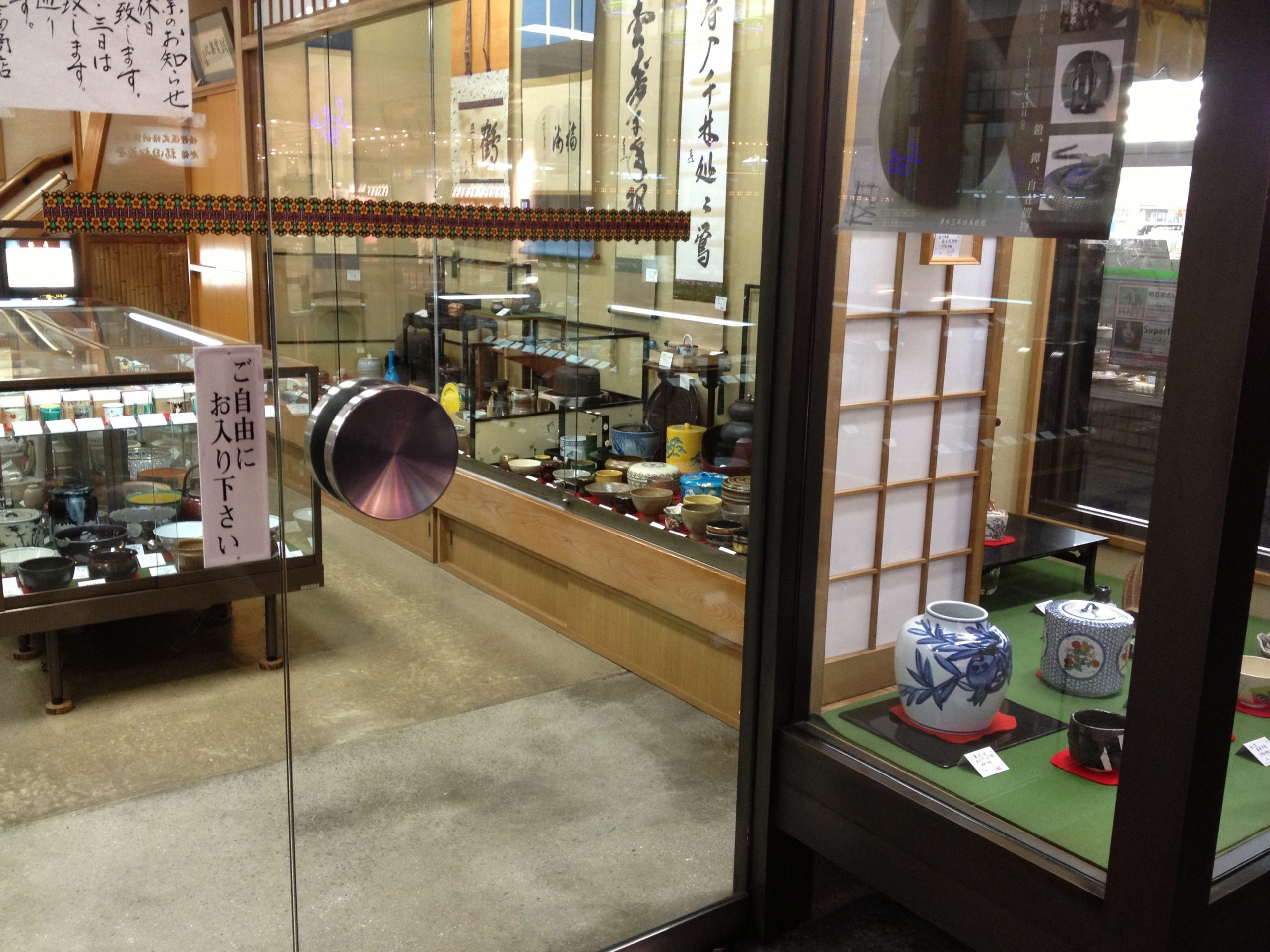
This is just another teaware store. For those who like browsing, if not buying for stuff, there’s no better place than Kyoto. You don’t find the same concentration of such stores elsewhere in Japan – you have to have a better idea of where to look.

3) I don’t drink much of Japanese tea at all, especially the green stuff, so I don’t usually shop for them. Prices, however, are expensive, and I think most of the high end stuff you’ll never see in the US. Prices on the high end seem to be somewhere in the 3000yen/100g range. Granted, this is retail in a touristy city in Kyoto, but like teas in Taiwan, China, and elsewhere, I think the outcome is the same – the best stuff stays at home.

Categories: Information
Tagged: ,

Kitano Tenmangu and Shōkōken

December 25, 2012 · 3 Comments

We are spending a quick few days in Kyoto, and one of the nice things about Kyoto is that there’s tea pretty much literally everywhere you go. Today we spent a little time at Kitano Tenmangu, an important Shinto shrine for the god Tenjin, the deification of the person Shigawara no Michizane, but more importantly, the shrine was also the site of Toyotomi Hideyoshi’s famous Grand Tea Ceremony, held in 1587 and was supposed to run for 10 days, even though it ended up only being about two days. It was, for the most part, a grand show of power and patronage by Hideyoshi, but there was some tea involved as well.

Among the collections of Kitano Tenmangu are a number of artifacts related to the tea ceremony, as well as some good looking raku ware chawans. More interestingly, there’s a painting of the scene of the Grand Tea Ceremony, which also lists the famous teaware of the time that was used during this ceremony and who was present at which particular seating. Alas, no pictures allowed in the museum.

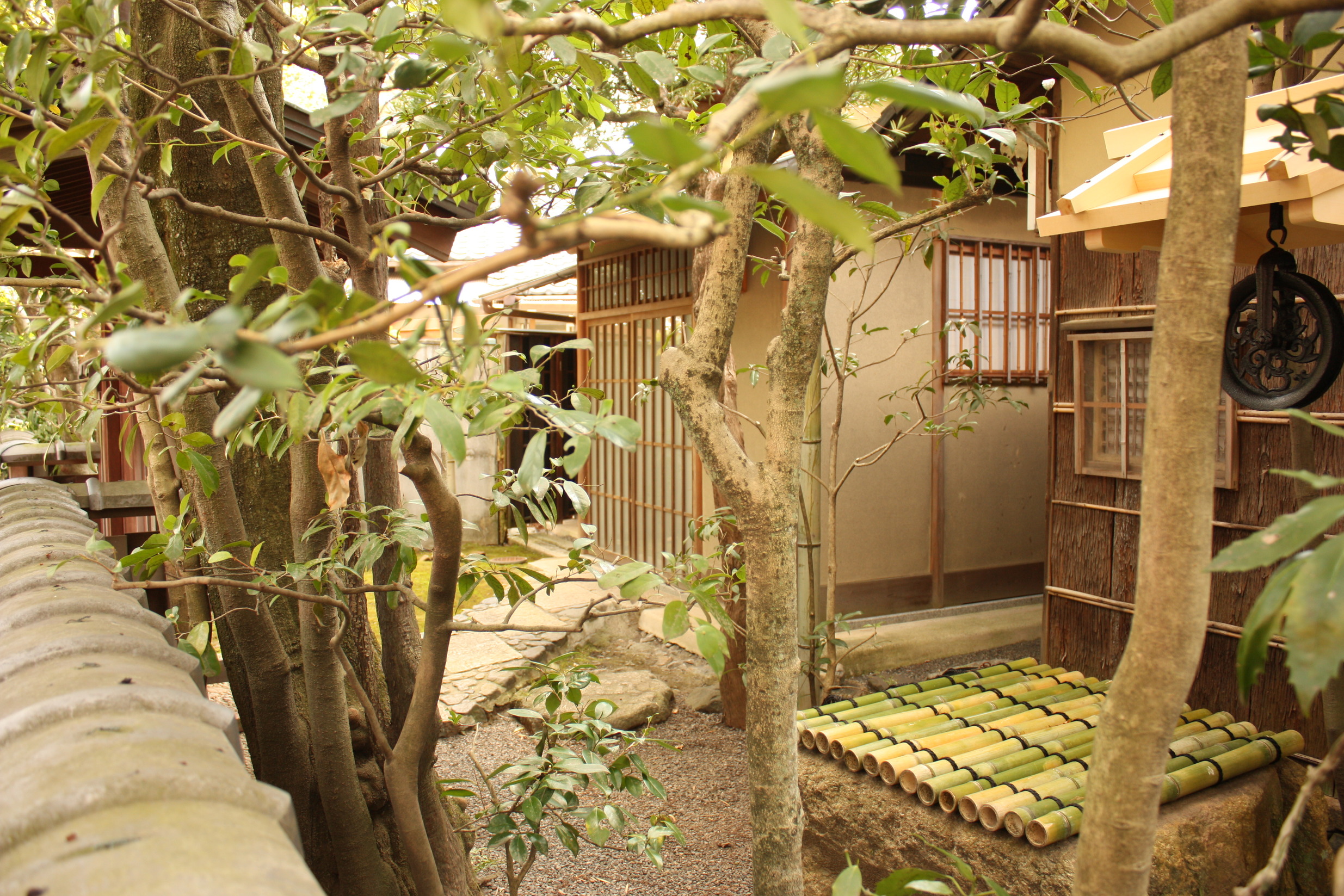
There’s also a nice teahouse that wasn’t very obvious given the hubbub surrounding the shrine, as it was the flea market/fair day. The teahouse is called Shōkōken.

The sign suggests that this is the original building used by Hosokawa Tadaoki, a daimyo and a student of Sen no Rikyu, during the Great Tea Ceremony. But looking around, at least on the web, it seems as though the original building was moved to Kotoin in Daitoku-ji, and the one here might then be a re-creation. Either way though, the well is the original one they used.

The house is quite big for a teahouse – and has a nice garden.

As with a lot of other interesting sites, however, this teahouse is not open for viewing, so all you can do is to climb over the wall – at least climb high enough to see inside. It’s bitterly cold right now, so I don’t imagine it being a very pleasant experience to drink tea in such an environment, but in warmer days, I’m sure a tea session here would be exceedingly enjoyable.

Categories: Information
Tagged: , ,

Ways to cheat in tea

December 20, 2012 · 13 Comments

It’s been a busy few weeks, what with grading, trying to finish a few papers, so on so forth. One of the papers I was trying to write and still in pretty shambolic state is one on the Taiwanese industry. Among the more interesting documents I’ve come across are a set of articles of association for the Taipei Tea Merchants Association. They were always concerned with inferior, fake, or just bad tea, among other things. Taiwan teas, even back in the early 20th century, had a premium over mainland Chinese tea, and they were very keen to keep it that way. So, in an effort to prevent problems, they listed what was not allowed in terms of teas that they sell. These are:

1) Powdered tea – this is not matcha wannabes, but rather teas with significant amounts of powdered tea leaves mixed in to make the tea heavier, so you can sell for more. When the buyer gets it, he’ll notice that it’s mostly powder – and therefore overpaid. This is like you getting that last bag/bit of tea from the bottom of the barrel, and feeling cheated, but on a massive scale.

2) Tea stalks – this one is pretty self explanatory, I think. Can’t sell tea stalks as tea leaves.

3) Sun-exposed tea – probably also obvious – tea that has been exposed to the sun for long periods of time, at least that’s what the name implies

4) Fake tea – it’s not clear how this fakeness is achieved – is it not tea leaves at all? Something else?

5) Soaked tea – this is the best – dried used tea leaves being sold again. It actually does sort of work. Try drying out the leaves you’ve drunk, for some leaves it can look remarkable like new tea leaves and presumably someone can try to sell it in dried form. You will still even get some taste out of it, it’ll just be really watery.

6) Fire-burnt tea – tea that is too roasted/charred

7) Tea that has been adulterated with other materials, including spoiled, rotten teas, dirt, dust, etc

There’s also another category of tea – Tangshan cha, which is the term they used for mainland Chinese teas. In this case, it’s mainland tea being sold as Taiwan teas.

So it’s good to know that the tricks that vendors can be up to haven’t really changed all that much over the last hundred years. Buyers of puerh are quite familiar with this stuff, and buyers of other teas have also run into this sort of problem before. The way they solved it? Made it mandatory to sell/buy through a central exchange, to have regular inspectors (full time) who go and check the farmers/vendors, to make everyone a member of the tea production association, so they are more accountable, and to also educate the farmers. It worked.

Categories: Information
Tagged: ,

2005 Chenguanghe Tang Menghai Yesheng and storage conditions

December 13, 2012 · 10 Comments

Some of you might remember this post, where I talked about the differences between what I had and what a tea friend Ira had bought. The tea is Chen Zhitong’s 2005 Chenguanghe Tang Menghai Yesheng. Chen Zhitong didn’t press this cake himself – it was supposedly something that another factory made, but he just bought the whole lot and rewrapped it in his wrapper.

The differences between the two cakes look like night and day – one looks a bit fuzzy and probably moldy, whereas mine doesn’t. Hster ended up sending me a sample of Ira’s wet version, so I finally got to try it.

I didn’t take any photos, but the results are, to say the least, interesting. First of all, the tea looks and tastes like a traditionally stored tea. The leaves, when brewed, are of a brownish red hue, as any traditionally stored tea would. The liquor is dark, very dark. The taste includes some of that sharp-ish taste that you expect from something that came out of traditional storage not too long ago. If you put it side by side with my version of the same tea, you wouldn’t recognize them as the same thing. Storage conditions, as we all know, does matter.

The tea from Ira, right now, is not the most interesting nor good. The taste from the storage is a bit sharp, and a bit pungent. However, I can tell that this tea has legs, and it has a good body. Give it a few years, after airing out for some time, I think, and it will taste quite decent. It is entirely possible that ten years from now, Ira will have a good, tasty cake to drink. In fact, I think for someone who lives in the cold Bay Area, having something like this may actually be better, long term, than trying to dry-store your own cakes. Those may taste young forever, whereas something like this may age quite gracefully over time.

Of course, the character of the tea has been changed permanently, and they are on fundamentally different courses for aging. What this tea has lost in storage is the fragrance of the naturally stored version. On the other hand, it gained a heaviness that is otherwise absent. Whether you like one or the other is really up to you.

The real mystery, though, is what happened – did Guang’s lot just go through traditional storage at some point? That seems doubtful. It’s also possible that some of his did, while others didn’t. I’m honestly not sure what happened, and I’m surprised he didn’t mention that his cakes have been in more humid storage. In fact, I wonder if he even knows it, if, for example, a new tong he opened happened to be from a different source under a different storage condition.

Either way, it was a most interesting sample.

Categories: Teas
Tagged:

Saturday tasting with friends

December 1, 2012 · 3 Comments

I was going to meet Tim from the Mandarin’s Tearoom today at this place, but by the time I got there Tim had to go already, so missed him. On the menu today:

1) Some random, new puerh that’s pressed into these chocolate shaped squares. Awful, awful tea. Tastes like green tea, and completely lacking in any sort of real aftertaste. It’s probably Lincang tea. Not sure of its cost, but this isn’t going to end well. Avoid newfangled pressing techniques, really.

2) Chenyuanhao 07 Laobanzhang – this tea is a disappointment. After last week’s pretty awesome Yiwu, I was expecting quite a bit, but this tea, well, isn’t that good. It’s not awful, but it doesn’t compare to the Yiwu offering. Well, I guess Mr. Chen does spend all his time in Yiwu overseeing his productions there, because clearly he wasn’t in Lao Banzhang.

3) Mid 2000s private pressing Yiwu from some shop in Macau. This is a private pressing, made with probably Yiwu materials. It’s nice, expensive, but also a bit off – it’s a bit rough and thin, and not very interesting. The person who brought the sample said this is not how it usually tastes, and we suspect the prolonged wetness in the weather recently has something to do with it. I wouldn’t buy it based on this one tasting, but maybe there’s more to it than that.

4) 2003 Henry Trading “Serious Formula”. Hou De had this tea for a little while. This is not a bad tea. It’s punchy. This is a naturally stored version. It’s still relatively cheap, I believe, for a lightly traditionally stored version, but I’m not sure how much it is now for the natural storage ones, but I’m pretty sure it’s cheaper than some newfangled gushu cakes from 2012. It’s nice, but there are lots of teas like it and so if it’s expensive at all, might not be worth the trouble.

5) 1992 Brick, unknown origin. Nice, decent aged taste. Not the best thing in the world, and considering it’s a brick… not much you can ask for. Supposedly a private pressing, although seems a little early for that sort of thing. I only got to try the tail end of the tea, so my comments on this is skewed.

6) 1950s Red Label. It’s hard to comment on something like this, since it’s THE benchmark for all subsequent teas. This is probably the driest stored Red Label I’ve had – no hint of traditional storage. It’s very refreshing, still, and quite nice. Reminds me of some of the gushu stuff that you can get now, but of the best quality – really a tea that is worth drinking, but maybe not at the price that these things now go for. It was brewed a bit weak. Nevertheless, good tea, obviously.

Categories: Teas
Tagged: ,

Rare? Boutique?

November 30, 2012 · 7 Comments

What, exactly, does it mean when someone says a tea is rare? Or boutique? Is that a word that is completely meaningless, or does it actually mean something?

I ask because these are words (along with competition, artisan, etc) that we see, all the time, when people describe the teas they sell. They all suggest a degree of care and quality that you shouldn’t find in what we can call “mass-produced” or factory made teas. But are these terms really what they seem?

Tea farms in China and Taiwan are, still, to a large extent, run by smallholding farmers who all have a small plot of land and farm their own land in their own method. Since the 1980s, there have been an increasing concentration of land in the bigger corporations that sell tea, such as Ten Ren, but generally speaking, most of the teas that people like us drink are coming from smallholding farmers. They are sometimes tea families that have been making teas for generations, but in other cases, they may have just happened to be farming tea somehow – such as some families in Yunnan, who were sitting on tea trees that were more or less worthless a few decades ago, but are now printing money with their teas.

Since that’s the case, it is quite safe to say that a lot of teas are, by definition, rare, because you’re not going to get the exact same thing anywhere else, never mind next year. On the other hand, that’s a definition of “rare” that completely defeats the purpose of the word – it’s only rare insofar as it is a tea that you can’t easily obtain anywhere else, but rare, in and of itself, doesn’t mean anything regarding quality. I can produce a rare oolong by getting some fresh leaves from a farmer and doing my own processing, but I can assure you it’s going to taste terrible. It’s rare though.

The other definition of rare can be that it’s a tea that is uncommon, and thus of higher quality. Something like Oriental Beauty may fall into this category, but I can also tell you that there are varying grades of Oriental Beauty – only the best ones are really sort of rare. The rest are a dime a dozen. Likewise, an older puerh may indeed be rare, and applying that term to, say, an 80s Traditional Character bing is probably not very accurate – things like this are still available easily, if you know where to look, and you can still buy these things by the kilos so long as you have the money to pay for it. Is that rare? Maybe.

Likewise, boutique (or using related words, such as workshop, etc) is just another way of saying “not big factory”. Words like this have been abused by some vendors. Calling a factory that makes tea by the ton a “workshop”, for example, is probably not very accurate. What, then, qualifies as a boutique? Personally, I’m really not sure. I suppose a one-man operation pressing cakes is probably a boutique. People like the couple who press their own cakes probably also qualifies as a boutique, even though I’m pretty sure they end up pressing more than a ton of tea a year (2500 bings – not that hard to do). Again, since so many tea farmers are small time, small plot farmers, boutique is a term that can be widely applied without meaning very much. I’m not sure where that line is, and I think it’s a term that is best avoided.

As for artisan (OED just informed me that artisanal is not a word) – what is that, exactly? I suppose all tea makers are artisans of some sort, even though many of them now use machines almost exclusively for processing, rather than doing it by hand. In areas where hand-made tea is more common, such as Yunnan, it is perhaps useful to use that to denote something hand made – but wouldn’t the term “fully hand made” be much more descriptive? After all, some guy who uses a machine to roll his tea but does everything else by hand is still an artisan, even though he uses tools to assist him. Or is he?

Sometimes these words are unavoidable. It’s rather hard to describe a non-factory making some puerh cakes, or when you are trying to talk about a farmer making his own oolongs. It’s a fine line between reporting what a tea is, and hyping it to goose sales. After all, just like prices, where higher is not always better, not all artisan-made and rare tea is going to be good.

Categories: Teas
Tagged:

Saturday tastings with friends

November 24, 2012 · 16 Comments

For the past few months I’ve been spending some Saturday afternoons with a couple who run a small tea shop and who press their own cakes every year. The wife is the 3rd generation from a tea family, and they have been in this line of work for a long time, with the tea to go with it, I should add. I enjoy drinking tea with them, partly because unlike lots of people in the tea business here, they’re quite willing to share their thoughts on particular teas frankly. I drink a lot of samples of various things with them, since it’s always good to get second and third (and sometimes more) opinions on teas.

Yesterday I went as usual, and had five teas, in chronological order of when the teas are supposed to have been produced:

1) 2010 Youle, producer unknown, private pressing – nice, strong, a bit rough, but pretty good tea, if it weren’t so damn expensive (something like 700 RMB for a cake)

2) 2008 Chenyuanhao Yiwu Gushu mushroom – awesome, juicy, thick, very Yiwu, maybe slightly too soft in approach, but very good and full. Stored in Malaysia throughout, it still tastes young, probably because it’s a mushroom, but it’s going to turn a corner soon and it’s going to be a good tea.


The Henglichang in a cup

3) 1997 Henglichang Bulang. So we meet at last. This is a sample from a friend, and I believe the whole cake is now sold out. There are lots of reviews online, so colour me prejudiced. The tea is bitter, very bitter, without the bitter transforming into anything sweet. It is not traditionally stored, as some have suspected – it has the colour, but none of the taste. Something is weird, and my friend commented that it might be a mix of different teas pressed together to make something look more aged. We stuck with it for many infusions, although the later ones we only had a small sip each. There’s no real complexity and offers none of the surprises of a well aged tea. After trying this, now I know why this tea is a complete unknown this side of the Pacific. There are lots of options for late 90s teas, and this one isn’t a representative example of a good one.

4) Early 90s Yiwu from David Lee Hoffman. David Lee Hoffman probably needs no introductions. I’ve had a few teas from him before, usually coming via friends who send me samples of what they bought, although the last time I tried his teas was before he started the Phoenix Collection. I can’t seem to find this on his tea list, and I think it’s this thing. This tea has very little taste, and what little it does have suggests something no older than 3-4 years. It has a very thin body, no aftertaste, and no real aroma to speak of. Calling this “tea” is a bit charitable. There are two possibilities – either you believe Hoffman’s claims that this tea is from the early 90s, in which case you should never buy aged teas from him because (judging from this and other examples I’ve had) his cave is where puerh goes to die, or you don’t believe his age claims, in which case you shouldn’t be buying this in the first place. Either way, the conclusions are the same. I don’t care how many years he’s been in the business, but I’ve never had a tea that tastes anything like what a puerh can be given his age claims. You’re better off buying something three years old from Yunnan Sourcing.

Top right – Henglichang, bottom right – Chenyuanhao, left – Hoffman

5) 80s 7582 cooked. This tea has been naturally stored, and frankly, not terribly interesting. It’s nice, smooth, tasty, and the leaves were originally relatively lightly cooked, but really, I’d rather pay $25 USD for a two or three years old Dayi that has lost its pondy taste than paying hundreds for an 80s cooked that tastes only slightly better. The value proposition is just not there for old cooked tea, especially if it hasn’t been through traditional storage. It’s for people who like to burn money.

6) 1960s Guangyungong. This is a tea from my friend’s family storage. Stored naturally throughout without ever having been in traditional storage, and it shows. The liquor is a golden colour, and aroma is quite nice and intense with a smooth aftertaste and good qi. Very elegant and pleasant to drink, and much more interesting in many ways than the usually heavily traditionally stored GYGs out there. Too bad it costs an arm and a leg, but it’s very nice tea.

Categories: Teas
Tagged: ,

Traveling tea set

November 22, 2012 · 4 Comments

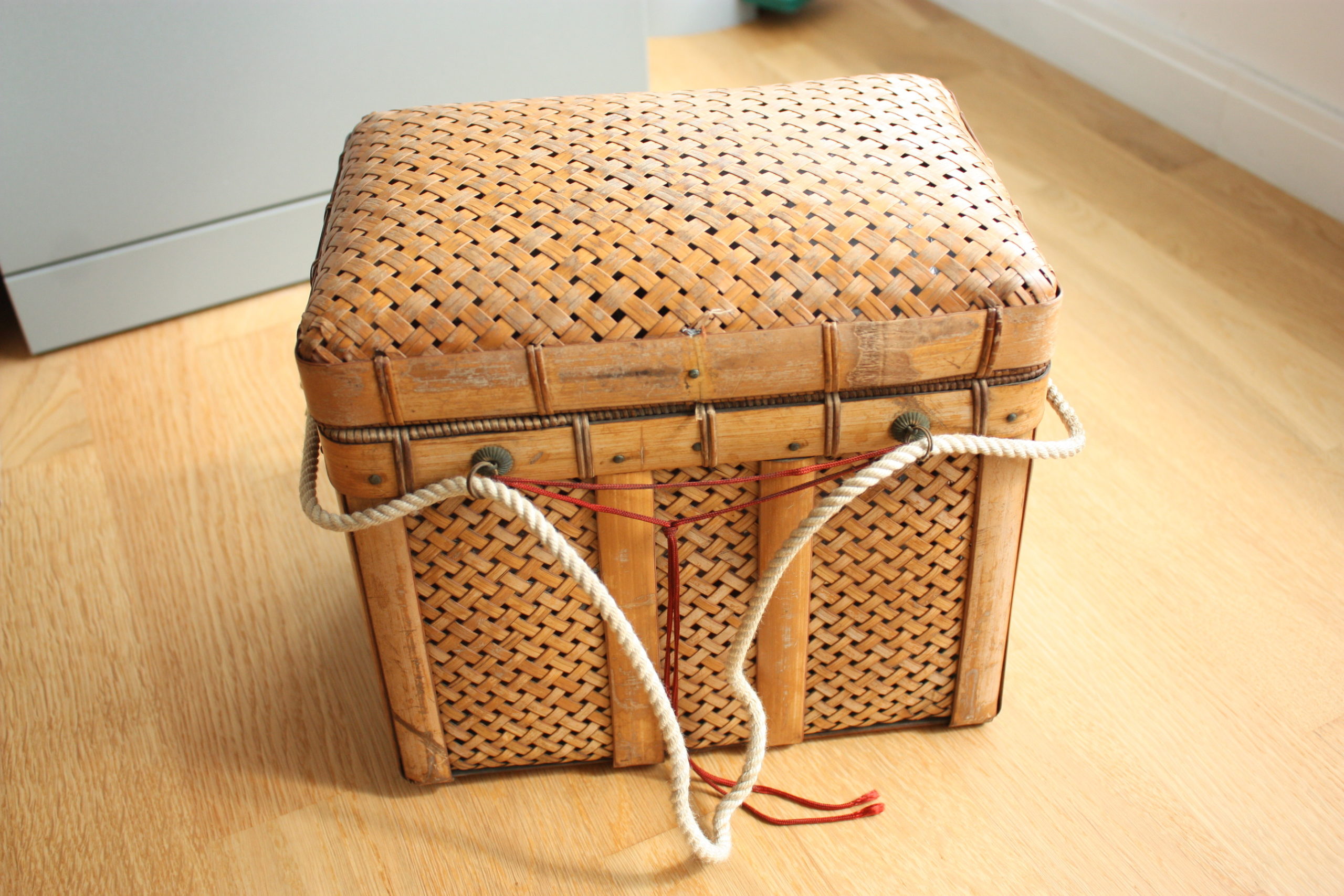
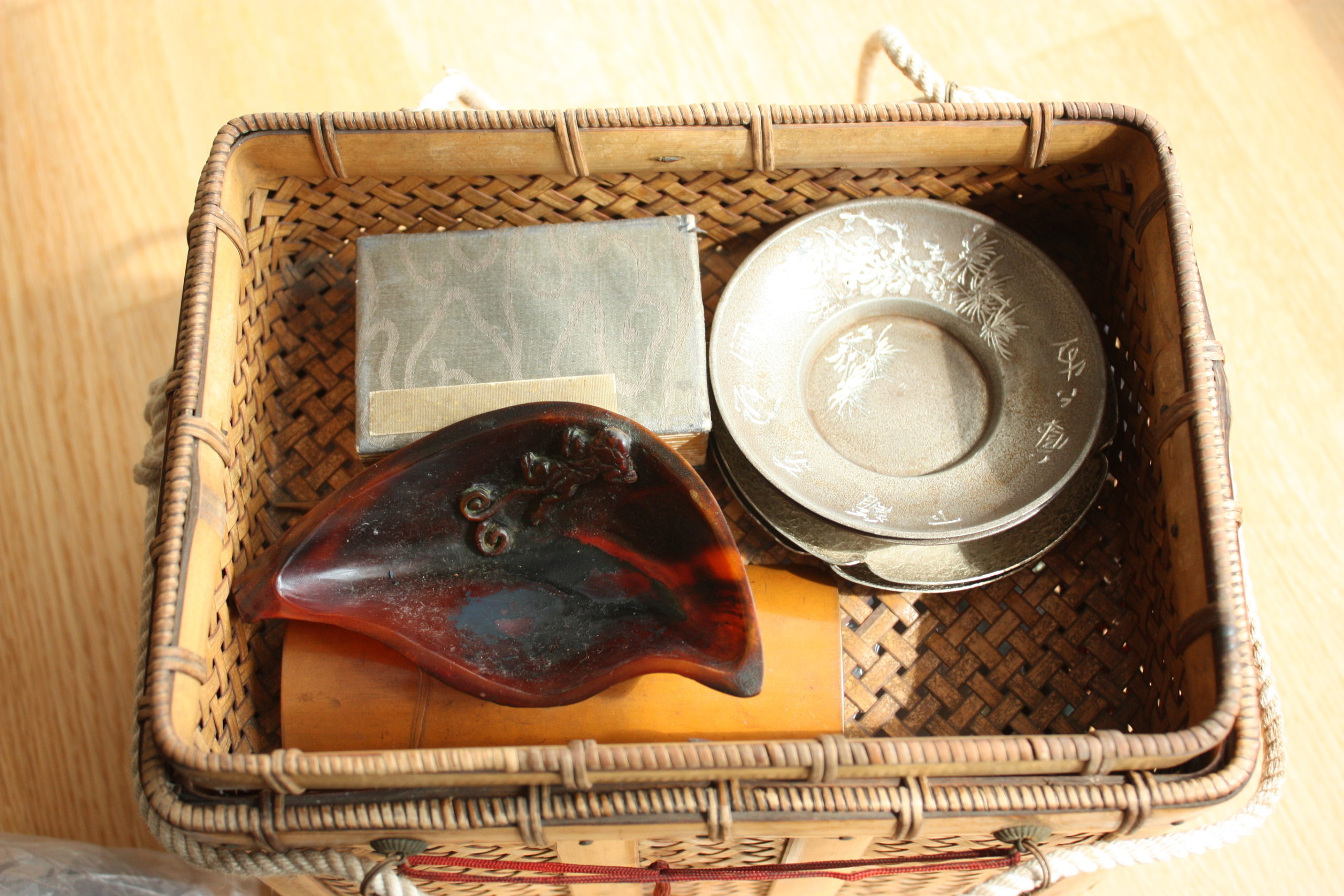
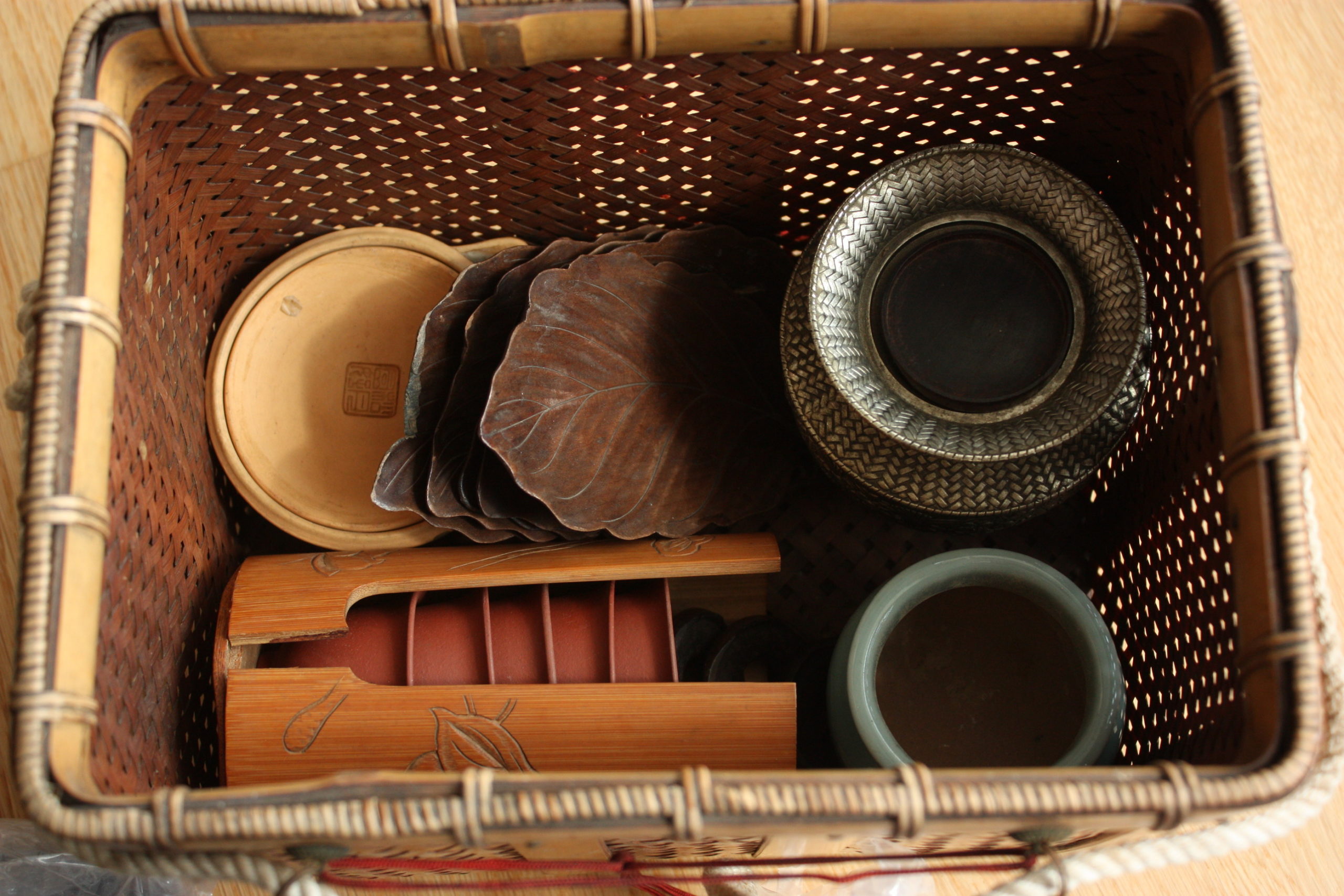
Having obtained this recently – I’m still trying to make sense of all the parts. So far, identified objects are: chataku (2), dishes (2), metal tea scoop, dry leaves presentation vessel (I think – the red/black thing), watercolour painting booklet, signed Baishi laoren 白石老人. Can’t tell if that’s real or not. For the bottom section: 5 yixing cups in bamboo holding them together, 5 small wooden chataku (are they supposed to be used on top of the metal ones?), 5 leaf-shaped dishes, 1 shiboridashi, 1 chaire, made with pewter and missing the original lid (with a replacement wood lid instead) and what looks like an incense burner of some sort (bottom right). Not shown here is a dried lotus that’s extremely fragrant.

I’m trying to figure out how one should be using this for tea. The parts that are easily identifiable are good enough. The rest I presume are for incense burning and also for snacks. One would also have to carry some sort of kettle and a stove. Having a tea picnic is not easy.

Categories: Objects
Tagged:

2003 Zipin hao

November 13, 2012 · 11 Comments

There are lots of cakes out there made by famous personages, most of whom are from Taiwan. The quality of these things vary from very good to very poor, especially when factoring in the price involved, which is almost always high, because there is usually a substantial premium charged for these things, precisely due to the fame of the person who made them. This cake, the Zipin hao from 2003, was made by Zhou Yu of Wistaria House.

I distinctly remember seeing this at Wistaria the first time I visited in 2005. Back then, my thought was “my god, this thing is expensive”, which it was. I can’t quite remember how much it was, but it was heads and shoulders above what a normal cake sold for back in the day, and being a poor graduate student, I balked and never bought it. Nor did I try it at the time, because instead I spent my money drinking some loose Tongqing hao from Wistaria instead. It was good, and the Zipin was forgotten.

I had picked up a cake of their 2007 Hongyin last time I visited, and this time I went back to Wistaria again during my most recent trip to Taipei, and remembered this cake. When I inquired how much, the price was shocking – shocking low, relatively speaking anyway for something approaching 10 years and made by a famous tea master. At 4200 NTD, it’s not cheap for a single cake, but compared to a lot of new stuff, its price is more than reasonable. I bought one.

The dry leaves really don’t look too good. The cake’s front looks like someone stomped on it. Six Famous Tea Mountains’ pressing skill was never great, and it’s evident here too. But then, we don’t judge teas by their looks.

How does it taste? One word – good. It’s got this nice, long lasting aftertaste. It has qi. It has body. I brewed it pretty light, because these days I’m trying to limit my caffeine intake, but the tea still delivered. It’s no longer youthful, and exhibits a taste that is typical of something that’s been around for its age and stored in a wettish climate. The wet leaves look good too.

At this point, one must wonder – why bother buying new cakes of teas that are the same price as this, when there’s something like this to be had? At the same price, you can have something from a reputable tea master aged 10 years, or you can buy some new cake of supposed old tree material (a sometimes questionable claim) and chance it ten years from now. To me, the choice seems pretty obvious.

Categories: Teas
Tagged: ,

Buying tetsubins

November 4, 2012 · 19 Comments

Buying tetsubins is a treacherous business. There are all kinds of problems that can arise in the process. I’ve probably bought about a dozen of them now, over the past few years, so have a reasonable sample size to talk about. The first issue, when buying them used anyway, is that the pictures are not always clear, so you are taking a gamble, and the size of your gamble depends largely on the quality of the pictures.

The first tetsubin I ever bought was a cheap little hobnail thing that I bought off eBay for about $20. It was cheap, it was small, but it was a tester, so to speak. At that point I didn’t own a tetsubin, and wasn’t sure of its usefulness in tea brewing. When it came, it had issues – specifically, the water tasted funny. It was sweet and yellow, and I think it was tea residue. The previous owner used it as a teapot (or something similar) and the water therefore was infused with whatever leftover flavours in the tetsubin. I eventually treated it by baking it in the oven – all the volatiles got burned out. I also discovered, while baking it, that the surface was covered in some kind of gunk – a layer of substance that I’m not sure what it is, to this day. Some of it might have been the paint/coating on the surface to keep it from rusting, but something else was there too – something that melts a little at low heat and was sticky when touched. It all got baked away, which was a good thing. Still, it was too small to be practical, but as a proof-of-concept, it worked, so I resold it on eBay for the same price I bought it for, and moved on.

The second was also an eBay purchase, the one right next to the hobnail one in the above-linked post, in fact. That one had a major problem – a tiny little hole, to be exact, that was right in the center of the bottom of the tetsubin. It was tiny, so not visible in any pictures, and it wasn’t pointed out in the listing, but it was there, and it rendered the pot unuseable. That was a pain, and another way that a purchase can go wrong.

I’ve had a number of good purchases since then, and in fact, the third tetsubin I ever bought is also the one I still use most days. It works – it’s lighter, relatively rust free (although more rusty now than when I bought it) and it’s good to look at. Still, there have been issues in the ones I’ve bought since. Sometimes, they’re so rusty as to make the tetsubin hard to use – it’s a real pain to clean, and an investment of time. Sometimes, the sizes are not clearly marked, so when they show up, it’s a real surprise – not always a pleasant one. Other times, there have been repairs done that wasn’t mentioned, and while it might still be usable, it’s good to know if your tetsubin has been fixed or not.

A recent acquisition was a bit of a gamble – the interior shots were iffy, and so I wasn’t sure what to expect. Thankfully, it turned out all right.

A bit rusty inside, but that’s solvable.

Which gets to the other major problem with these things these days – price. Whereas a few years ago, tetsubins were relatively cheap affair, that’s no longer the case. These days anything half decent is at least a few hundred dollars, and anything with any amount of decoration will set you back way more. Trying to find those bargains are hard now, and trying to find bargains in good condition, more difficult still. This is mostly driven, like everything else, by Chinese demand – a tetsubin like this can easily sell for 10,000 RMB in China, advertised as an antique of some sort. It is indeed good for boiling water in, but those prices are ridiculous. Alas, that’s the reality we live in these days, just like the prices for tea.

Categories: Objects
Tagged: ,