A Tea Addict's Journal

Storage problem

March 3, 2007 · 5 Comments

I am looking for a place to store my teas in Hong Kong, and there’s a cabinet in the house that will do the job well, I think. One problem though — it smells of varnish still, mostly because the door is rarely open. What can get rid of the varnish smell quickly? Any thoughts? Will charcoal do it? Should I go buy a bag of charcoal, open it, put it in the cabinet, and so when I return to Hong Kong next time, I can stick my tea (from Beijing) in the cabinet without having to worry about them all smelling like varnish?

I don’t have many days left in Hong Kong, so I might do a little last minute shopping around, although mostly, I am just going to hang out at home. Then it’s back to Cambridge for me.

→ 5 CommentsCategories: Information · Old Xanga posts
Tagged: ,

Diagnosing strange teas

March 2, 2007 · Leave a Comment

When drinking a large variety of teas, one ends up encountering a lot of stuff that is surprising, and most of them are not pleasantly surprising. Since teas are unlabeled, with unknown source and unknown provenance, what the vendor tells you is all you really know about it until you’ve tried it. Even then, it’s not always obvious what happened to the tea to cause it to be the way it is.

I had two teas today, both of which were a bit off.

The first was a puerh sample I have from somebody. I no longer remember who gave it to me, what it was, or really anything about it. I brewed it up at the BTH, hoping to try it and see if I can remember anything from it. The tea tasted like a Menghai tea. What struck me, however, was the extreme cloudiness of the tea. It looked like a chicken soup with the chicken meat ground up in it. The tea was really, really cloudy…. I was a little afraid of drinking it, even (and that’s a rare thing). Cloudiness is supposed to be a product of high moisture content in the tea, but this was just a little too high. Rosa said that apparently some tea makers, at least she heard anyway, made teas that were mixed or coated with a sort of rice liquid. This gives the tea more body when you drink it, but of course, it clouds up the tea. I seriously wonder if this was done to this particular tea. The cloudiness didn’t improve until maybe the 6th infusion. The taste of the tea was fine… not too bad, in fact. I could feel the power of the tea, although it’s a little unstable. Overall though, I don’t think I’d buy something like this.

The second thing was a special grade Tieluohan, a Wuyi tea from the BTH. I brewed it like I normally would… and it was sour. The second infusion was so sour, I was tempted to stop drinking the tea right then and there. I persisted. The third infusion, with really just a flash infusion, was better. Then the sourness dissipated into a sort of fruity tartness. There’s a strong note of fruity taste throughout the tea, but the sourness was just…. not really acceptable.

It’s only been opened for two months at most, so I’m not sure where the sourness is coming from, but I suppose moisture could’ve done it. However, sourness is really quite nasty in any sort of tea, and I would not buy sour teas from now on. That was just sour. What happened?

Diagnosing teas can also be fun though.

→ Leave a CommentCategories: Information · Old Xanga posts
Tagged: , , ,

Old teashops

March 1, 2007 · 12 Comments

I went to Saiwan with B, a HK tea friend, today, to find teas, old teas.

Saiwan is even further West than Sheung Wan, where Bonham Strand is, and is home to many, many, many stores that sell various kinds of Chinese delicacy, dried seafood, medicine, and that kind of thing. There are basically lots of old stores in that area. I’ve never been there until yesterday. It’s a very very interesting area to visit.

The teashop in question looks rather old. There are more in that area, many of them are “upstairs” teashops that only cater to wholesale businesses. In fact, right above this teashop is one such wholesale store, and according to the guy at the teashop downstairs, those wholesalers do big business. Each order is something like 100 jian of tea or more, and their annual business, per wholesaler, can be something like $3 million USD. Not a small sum at all.

The teas we ended up buying were of the broken cakes variety. I got some broken GYGs, vintage unknown. They tasted good enough, and similar to the one sample I tried in Beijing. I think the guy who gave me that bit also got it from these people. It’s quite a bargain and I’m really quite happy with it.

More interestingly, we also tried a poo-poo puerh. This is tea that is, basically, the feces of bugs that eat teas. In fact, the name of the tea given by this teashop is exactly that — “bug shit tea”. Not exactly an elegant name, by any stretch of imagination. Yet, this is really quite a novelty item.

The bug shit tea is basically collected as a by-product of regular storage of tea in large quantities in a wetter storage facility. Wet-storage facility is generally located on a mountain slope in a basement or some such, which means greater level of natural moisture and probably better retention of such moisture. The bugs, I guess, grow naturally in such an environment. When they take out the tongs of tea to sell, they take apart the packaging for the tong of tea, and brush off all the dust and what not. When they do that, however, in the bottom of the tong there will be collected some bug droppings. This is what they collect for this tea. They are really tiny pellets, each about… half an mm in diameter? Black, smelling like old puerh, and unremarkable. When you brew it, you do it using about half a teaspoon of tea, put it in one of those mesh filters that you use to filter your tea, and pour water. The water will drip through the filter very very slowly…. eventually going through.

The liquor is VERY thick. It’s quite strong in taste initially, yielding a rather aromatic tea with smooth texture. The taste is clean. It doesn’t last too many infusions. No, I don’t have any stomach problems right now, many hours after the fact. The tea is really quite interesting. The mom of the family that owns this shop is now 87, and she drinks this everyday. These are truly old tea hands…. with experience that none of us can ever match.

Sorry, no pictures. I wasn’t prepared with a camera.

We ended up with a good bounty of loose puerh of various kinds, and B also bought a few oz of the poo-poo tea. We then went to the BTH to sit and chat for a little more. It was, all in all, quite a fun day.

→ 12 CommentsCategories: Old Xanga posts · Teas
Tagged: ,

Back to the regularly scheduled programme

February 28, 2007 · 2 Comments

Of course I didn’t live in a tea vacuum in the past three days. One can hardly avoid tea in Hong Kong, especially for a tea fanatic like me.

Aside from the restaurant teas I’ve had the past few days, I’ve had a long (and I mean long) list of teas from various places.

Of most interest was a Yiwu cake I had at one of the Sheung Wan teahouses. It was very, very good. It was also very expensive for what it is (3 years old). I’m debating whether to get a few cakes of it or not. The good thing is, it displays similar characteristics as the tong of tea I bought recently, so I think I am in the right territory in terms of finding really good Yiwu. The downside is I’m not sure if I can find such good tea again even if I go to Yiwu, and I am not sure given the way the market operates there, if I can actually find the teas I want.

I also had some other interesting stuff. Some of it is loose aged stuff… one of which was quite decent, and which I might stock up a bit on for personal consumption. Others were so so, or downright poor.

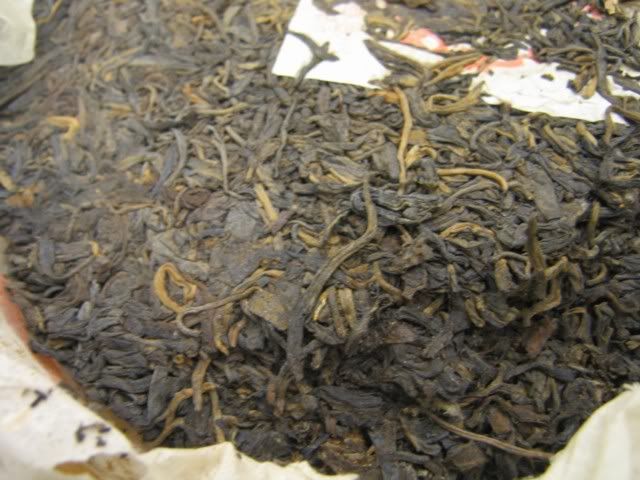
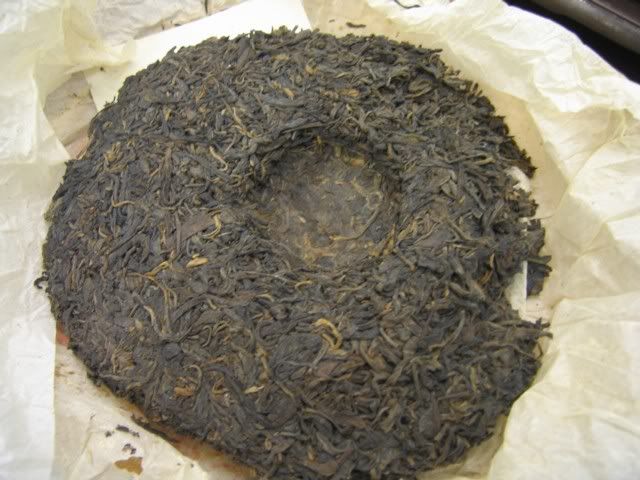
Among the bad stuff I’ve had was a cake of puerh, allegedly from the early 1980s, that is on sale at the BTH for what seems to be a ridiculously cheap sum of $200 USD. Now, early 80s tea for $200 is, I assure you, very very cheap.

Let me show you some pictures

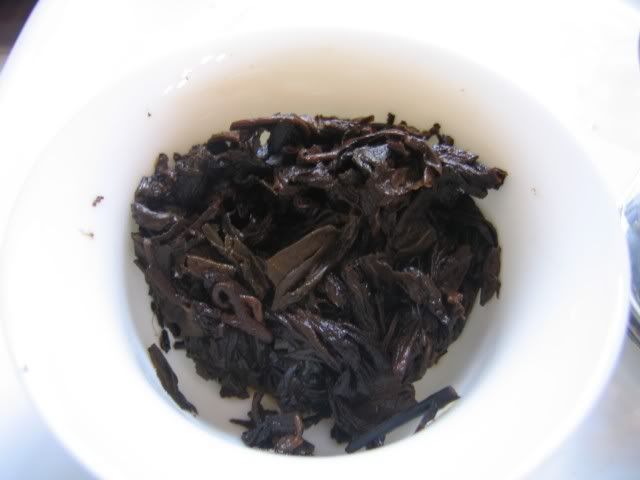
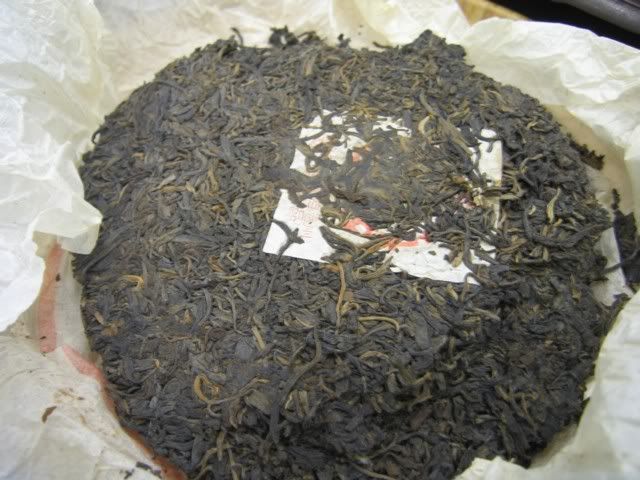
Looks good enough, right? I think it’s a 7542 type of tea. Not entirely sure. It’s wet stored all right, since it’s got the signature wet stored look — a slight coating of white stuff on the tea.

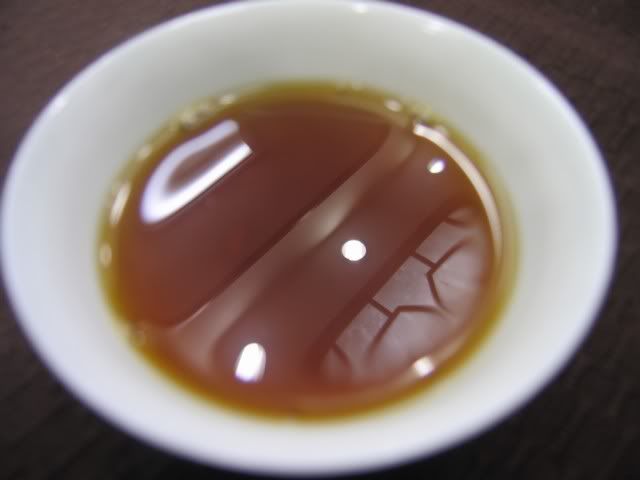
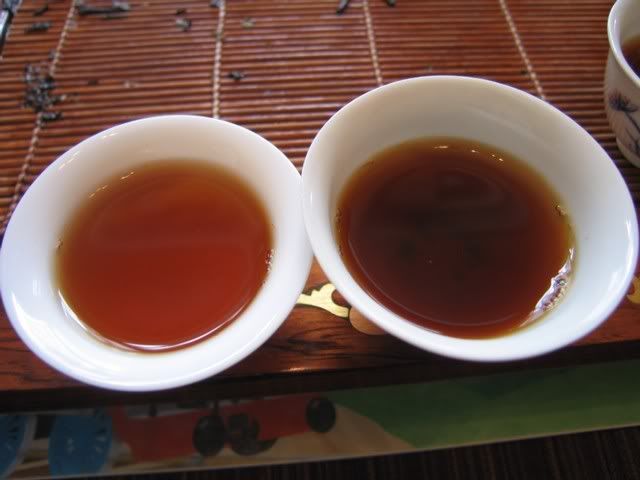
Well…. the first infusion had an odd taste in it, and was somewhat rough and bitter. It was thin. Yet…. the colour looks great

Yet…. something was wrong with the tea. After another 4 infusions, we stopped. It was just…. not good. It was bitter, thin, and had some weird tastes. There’s a reason why it’s cheap….

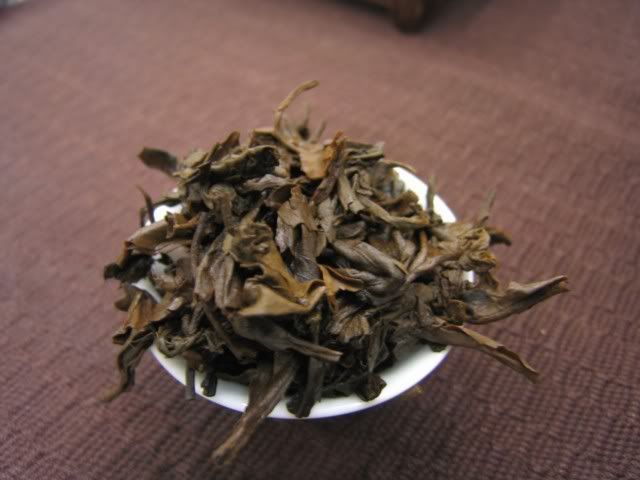
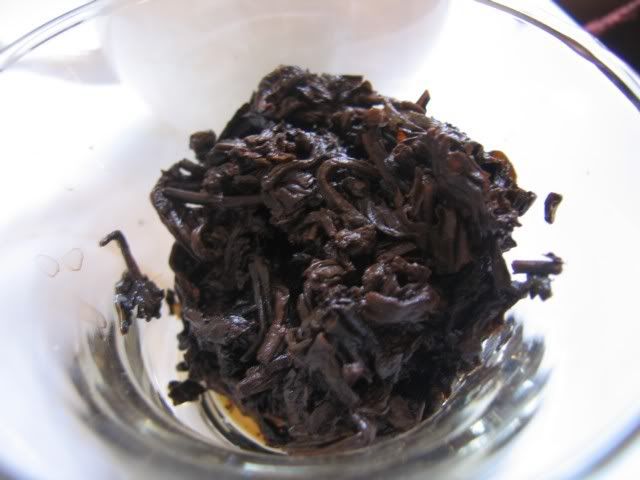
Even the wet leaves look good

This is definitely stuff that can fool a beginner.

→ 2 CommentsCategories: Information · Old Xanga posts · Teas
Tagged: ,

How I got started: passing the point of no return

February 27, 2007 · 2 Comments

If I had bought a whole bunch of puerh at that time, around 2000-2001, I would’ve been a rich man by now. Instead, I didn’t, and kept drinking my tieguanyin mostly. I also had some greens, some whites, and some puerh. The puerh I drank was, for the most part, loose stuff (or broken bits of cakes) bought from teastores of various kinds. I remember going to Sunsing as well, and this was in their very early days. I tried some of their teas, but didn’t really like anything there. I was still, at the time, getting to know all the teas and was in the curious phase. I tried everything and anything that came my way, and was rather undiscerning when it comes to buying.

Work kept my interest in tea from developing any further. I was drinking tea more regularly by now, and chugging down some sort of oolong at work brewed in a sort of a mug, in the “throw leaves into cup, add water” style. At home, I would make other stuff, things that are more interesting — highly roasted oolongs, greens, puerh… but at this point I was still only using my oversized gaiwan (too big, but I still have it). I think by the end of the year though, I was starting to get bored.

Between my job and grad school, I obviously had more free time and I think my interest in tea took a leap. By the time I entered grad school, I had my first yixing teapot. I was drinking even more varied kinds of tea, falling in love with Wuyi teas as well as exploring my way through puerh. I also bought my first tea for aging… a brick of tea that is still sitting in the same box, scarcely drunk, and waiting to be aged. In retrospect, it wasn’t a good buy, but what can you do. It’s tuition.

I remember I would come home for lunch everyday, and if I had classes at 2pm, I would drink tea until then after lunch. Otherwise, I would be sitting there in a more leisurely manner and drink my teas. I went through lots of boxes of loose puerhs of different varieties, but raw, young puerh was not to my taste. I thought they were not very nice to drink (and I still largely hold that view). I usually only drank younger puerhs at teahouses whenever I was in Hong Kong, but it was usually because somebody else was trying stuff, not because I wanted to. I simply did not find them attractive. Of course, I should’ve probably bought more teas for aging, but again…. oh well

It was around this time when I think I cut my habit of drinking green teas. I would have a box of green at home, but I rarely touched it, instead opting for the very nice BTH dancongs or some roasted oolongs or the like. My taste was changing.

It was not too long before I started this blog when my transformation from being a mere tea drinker to a tea addict was complete. That summer I went to Taiwan and Beijing, and I think when I was in Taiwan I was exposed to more kinds of tea and a different kind of teashop culture. I didn’t really teashop in the mainland, so it wasn’t very formative (I had yet to discover Maliandao). When I visited Kung Fung Yung of Taipei, however, I had the first young puerh that I actually liked. I bought a cake of it, and now that I look at the pictures again, I think it might have been a Jingmai cake. The shop didn’t tell me where it was from, but I thought it was a good tea and would probably age into something even better. This was the beginning of a trend.

The rest of my tea experiences are well documented by my blog, and I think the very existence of the blog and the act of blogging has helped me along greatly in not only the appreciation but also the understanding of teas. Memories of teas I’ve had after I started my blog are much better ingrained in my brain than memories of teas before I started blogging. The pictures help, but the act of writing about them also helps. I think I would be confused for a lot longer with regards to younger puerh, given the dizzying array of teas at Maliandao, if it weren’t for my blogging. I also think that I would never have done some of the things I’ve done, such as tasting two teas using the same parameters with two gaiwans simultaneously, if it weren’t for my blog. Of course, I would never have met a lot of the people I’ve met over the course of this year if it weren’t for my blog either.

I suppose the next step for me is to figure out how teas are actually made, not only puerh, but other kinds as well. I may very well be making a trip to Yunnan in the spring, and if time allows me, I will try to visit a tea farm when I go back to my hometown in May or June. When I am in Taiwan in the second half of this year, I want to go see a farm there as well. If nothing else, I think it will add an important dimension to my understanding of teas. If people reading this blog get something out of it as well, so much the better.

→ 2 CommentsCategories: Misc · Old Xanga posts
Tagged:

How I got started: the fall

February 26, 2007 · 5 Comments

I basically did the same thing for two years, until one time in my junior year in college…

I was visiting New York City. I remember distinctly I went to Great Wall, a Chinese market in the Chinatown there. I was really just browsing around, but then… I saw a small display of the teas they sold. They put them in glass jars, and one of them stood out. First, it had a non-standard sticker on the jar, saying “Lion Peak Longjing — fresh from Hangzhou”. The other was its sticker price…. which was something in the area of $160 USD per pound. Not all THAT much in retrospect, but at that time, I thought it was a lot.

Despite that, I thought I’d try it out, to see why the sticker price is so high. As those of you who’ve been reading this blog knows, I still do that these days. It’s a bad habit.

Anyway… I went home and tried the tea…. and….. obviously, the tea bug bit me. The tea was GOOD. Very good. Much better than the “longjing” I was drinking a lot at the time. I started demanding better tea. Since Ohio wasn’t exactly the greatest place for tea, I only got better teas once in a long while when I visited a real city. I was still using my Republic of Tea teapot. I also remember buying some crap tea from the local Chinese market. They even gave me a tuocha for free. I obviously didn’t know what to do with the tuocha at that point (from what I can remember now, it was a raw tuocha). I should’ve kept it. Instead, I think it got thrown out in one of my many moves since then. Sigh.

I got my first gaiwan in my senior year. It was bought from the TenRen (gasp!) in New York, of all places. It wasn’t cheap, but I really, really liked it. It was one of those red gaiwans that has a sort of metallic glaze. It was broken within a year. I was mad, very mad, for quite a while.

I also started drinking oolongs and tieguanyins more at that point. I remember distinctly trying out different kinds of tieguanyin, and I thought I was getting a little more knowledgable in drinking tea. I still drank a lot of longjing, but I was starting to get bored of it, not to mention the astronomical prices of good longjing. Tieguanyin, in comparison, seems much cheaper….

Sometime around then, I discovered the Best Tea House in Hong Kong. They had a branch in Causeway Bay back then, not too far from Times Square in Hong Kong, and that’s also where I met Tiffany. I remember one summer when I was on my vacation, I went there a lot drinking tea. I also took my first and only tea classes there, learning the basics of gongfu brewing. I also got my first dip in good, non-restaurant style puerh at that time….

→ 5 CommentsCategories: Misc · Old Xanga posts
Tagged:

How I got started: the beginning

February 25, 2007 · Leave a Comment

My first active memory of tea was sometime when I was still a little kid, and I remember a house guest coming and we served them tea in some ugly looking glasses, leaves floating in the water. It was some sort of green tea. My guess is it was some sort of longjing.

My grandfather always drank tea, and he still does today, everyday. Tea, as I’ve noted before, surrounds you in Hong Kong. Everywhere you go, there is tea. Kids, however, rarely drink them. I remember a schoolmate in primary school (I was probably about 8) saying with a sour face that “tea is really bitter!”. I concurred — I didn’t find it very fun to drink it.

It really wasn’t until college when I started taking an interest in the drink. All through high school I drank no tea, basically. I would drink them when it was available in a restaurant, as in going to dim sum and what not, but I would never brew myself a cup.

Then when I went to college, I remember buying myself a teapot from the school’s co-op. It was a Republic of Tea teapot, with a plastic mesh filter. I thought that was convenient. I probably bought some earl grey or some other tea also, but then, I asked my sister to ship me a little bit of tea from Hong Kong. I think she bought me two kinds, a longjing and a jasmine pearl. I liked the jasmine pearl, although I do remember overbrewing them (adding too much leaves, in retrospect) and having to contend with this extremely bitter brew. I also remember having my first ever caffeine overdose — after a long night of essay writing (back in the day when I was very inept at the job of BSing my way through any essay topic) and having been pumped up by caffeine, I went to bed, only to wake up an hour or two later…. and with my legs shaking uncontrollably. It was rather frightening, and I never got to that point again drinking tea.

Maybe it just means my tolerance got higher.

Even then, I didn’t drink tea everyday. I drank once in a while… maybe once every few days? Once a week? Something like that. I noticed that the plastic infuser started taking on the smells of jasmine, and basically whatever else I brewed in it before. It also started to get stained… brown stains from the blacks I was drinking, no doubt. I drank it all out of a white mug.

Making hot water was a bit of a chore, as there was obviously no kitchen in my open-double dorm room with green carpet. I remember I brought along with me a percolator from home, and I used that to heat up water to make. Aside from nasty tasting water in Ohio, even after Brita (I distinctly remember my first sip of water there, unfiltered, tasted like swimming pool water), the percolator gave the water a lovely plastic smell. It was great for making tea.

→ Leave a CommentCategories: Misc · Old Xanga posts
Tagged:

Disneyland with niece and dad

February 23, 2007 · Leave a Comment

Which means no tea… until 7pm. I was, needless to say, having a bit of a caffeine withdrawal headache, since 4pm, in fact.

I came back and drank some of the Ying Kee puerh in a cup… it serves the purpose. It’s mostly cooked stuff, I think, with some raw mixed in, and just… well…. it downs well, if nothing else. The other great alternative is drinking some Wuyi tea, with a low amount of leaves in the cup. That also works well.

My girlfriend, who’s Korean, tells me that Koreans don’t have the ability to drink tea with leaves in the cup — apparently to lots of people it’s quite a difficult thing to do. In Hong Kong at least, and definitely in China as well, you learn how to use your teeth to filter out the leaves while getting the liquor into your mouth. With some teas, like biluochun, it’s quite difficult. With others, like Wuyi or puerh, it’s also doable.

At the end of the day…. that’s how most people in China drink their tea.

→ Leave a CommentCategories: Old Xanga posts · Teas
Tagged: , ,

A rather eventful day, tea or otherwise

February 22, 2007 · 4 Comments

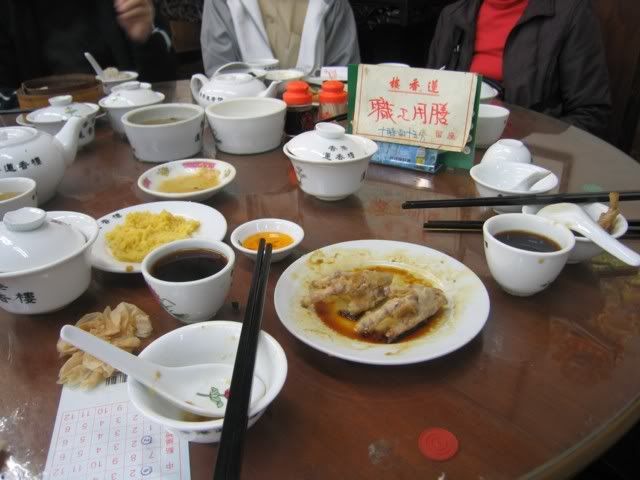
I started my day early with a breakfast at Lin Heung Lau in Sheung Wan, Hong Kong. One of the old style Hong Kong “Teahouses”, it’s a place where you go very early in the morning, sit there for a few hours while reading the paper, order a few dim sums and eating them at a leisurely pace (very very slow — you do not order a whole bunch and chow them down and head out. That’s not the point). You meet people you know and talk to them. You chat with the waiters. You enjoy the tea while you’re there.

This is our remnants (the steamers were taken away by the time I took the picture). Yes, the things on the dish are remains of what were chicken feet. The tea is wet stored puerh. The other people at the table we do not know, but some of the met up with each other, evidently friends of some sort, and were chatting, but they didn’t come together and it was obvious that they didn’t plan on meeting at the place. It’s really a neighbourhood place where people just go and meet others who they know anyway. We saw lots of “Gong Hey Fat Choy” greetings from various people to one another. It was very interesting to go today, and I think I will go again, although I might bring my own tea next time. By the way, the little card on the table says “Table reserved for staff meal — 10:45am”

(Not tea related, but interesting nonetheless) Then after lunch, in a mall, there were teams of lion-dancing people who came to the mall to perform. There’s a website that explains all this in more detail than I should post here, and you can look at it here. There are links at the bottom of the page (don’t ask me about the website’s design) that will lead to more information on this subject. You can, of course, also read the wikipedia article here.

I did take a video of the dancing being performed. Basically, stores put up a bundle of vegetables and a red envelope (with money inside) and hang it somewhere from their door. The lion will stop at every door where such a bundle is hanged, and will do more or less the following in the video that I took:

This wasn’t a particularly energetic version of a lion dance, but it serves the purpose of showing you sort of what you can see. It’s better live, and it’s also better if there are two lions (or even more). This is in the Southern Lion style (explained in more detail in the website I linked to). Quite an unexpected surprise and I spent some time watching them before moving on.

Moving on to tea tasting with K, a friend I met last time when I was in Hong Kong. He had some Zhongcha brand Traditional Character cake, and he wanted to compare it to the samples I had (from YP)… and we did.

YP:

K:

YP left, K right

The verdict is that YP’s is a little better in terms of aroma…. and K’s is slightly smoother. His was probably a little wetter stored, while YP’s was probably stored a little better. They were both quite good, and very, very nice to drink. It just goes down so smooth and sweet. The difference, if drunk separately, wouldn’t be very obvious. His was also compressed a little more (mine has been separated into pieces through traveling). I think it made somewhat of a difference. The colour of the liquor, however, is quite different, and the difference stayed throughout. The darker didn’t necessarily mean it was more flavourful, however. It was just darker. It was really interesting to see how the colour was so different yet the taste was not.

We also had some other stuff, but relatively unremarkable. There was some 15 years old liu an… barely drinkable. I don’t know if I should buy any liu an given the long aging you need before the tea is anywhere near good.

→ 4 CommentsCategories: Old Xanga posts · Teas
Tagged: , ,

Back to the BTH

February 21, 2007 · 1 Comment

Yeah, I know, it’s not very exciting when I’m in Hong Kong, because I just keep going back to the Best Tea House for drinks.

I tried a bunch of stuff there, as usual. I finally got to try the Best Tea House version of the Yuanyexiang, which tastes almost exactly the same as the one I got in Beijing. This is quite reassuring, as I bought it for a fraction of the price they charge in Hong Kong.

Another noteworthy tasting today was another sample cake of the Zhenchunya Hao. This particular one is a little poorly stored — probably got wet at some point, somehow. It looks like a slightly wet stored cake, and it tastes like it too. Funny enough, it also tastes a bit like the Yuanyexiang… I think this is what some might call the “storage” taste. The tea itself, after washing itself off the storage taste, is a little on the fruity side, but it’s not as good as other examples I’ve tried before. Price rise since July 2006 — 60%

I also tried a few different high fire oolongs/tieguanyins. It was interesting to taste them back to back.

As I was contemplating leaving, sjschen came back, and so we proceeded to drink one of the cakes I recommended him to try but didn’t get to last time. I bought a few of these last time I was in Hong Kong, and thought it was good enough for the price. To show you how weird young puerh pricing is, this cake is selling for less in Hong Kong than in mainland (in the only place I’ve seen). Granted, it wasn’t on Maliandao, so the markup is high, but higher than the Best Tea House? It’s odd.

I still think it wasn’t a bad purchase. I won’t say it’s the greatest thing ever, but it’s not too bad. I like the fact that the feeling of drinking this tea lingers on long after you’ve swalloed the tea, and it extends quite far down the throat.

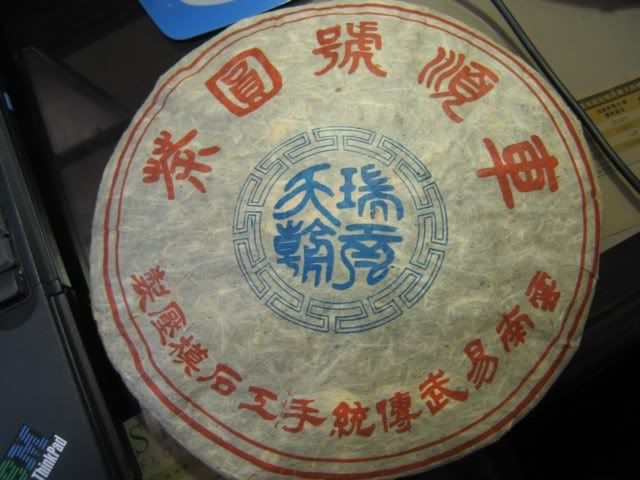
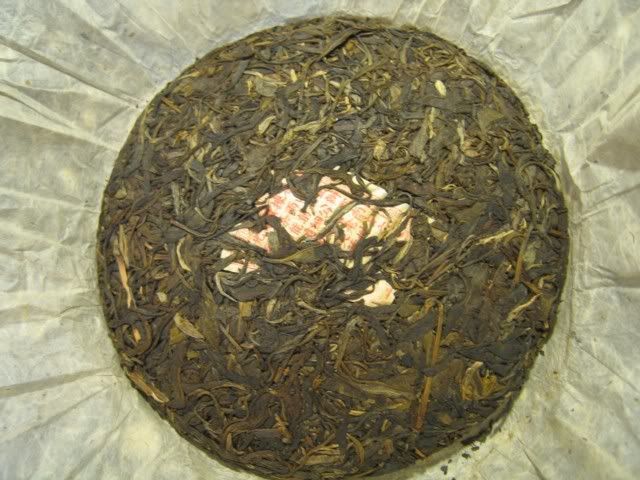
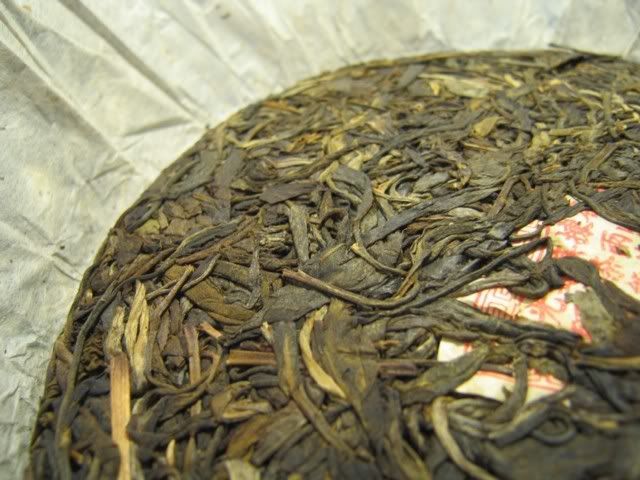
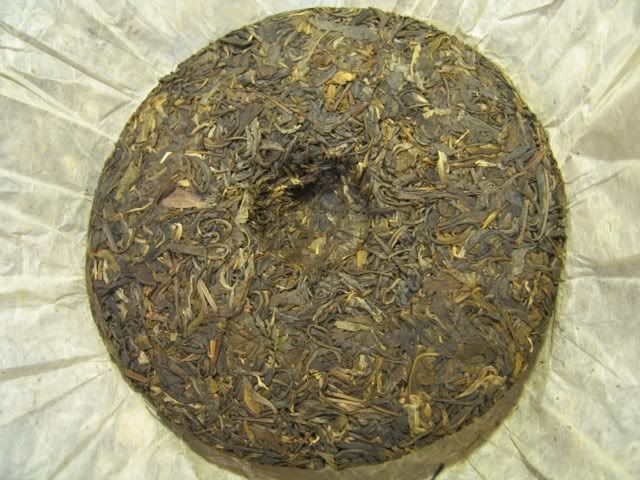
Anyway, some pictures

→ 1 CommentCategories: Old Xanga posts · Teas
Tagged: , ,